Join us on a literary world trip!
Add this book to bookshelf
Grey
Write a new comment Default profile 50px
Grey
Subscribe to read the full book or read the first pages for free!
All characters reduced
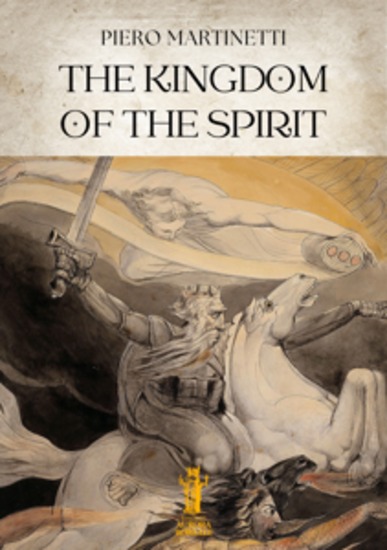
The Kingdom of the Spirit - cover

The Kingdom of the Spirit

Piero Martinetti

Publisher: Edizioni Aurora Boreale

  • 0
  • 0
  • 0

Summary

Piero Martinetti (1872-1943) was a historian of Philosophy and one of the greatest Italian philosophers of the 20th century. He was a unique figure of an independent intellectual, extraneous—by choice—to both the Catholic tradition and the heavy political conflicts that marred his time. A promoter of a "gnostic" vision of Christianity, free from confessional implications, while participating in the general European climate of idealistic revival, he did not share the polemic against positive science of the Neo-Hegelians (for him, philosophy and science were not distinguished by their object, but by their method) and moved increasingly toward a "critical" idealism akin to Neo-Kantianism, but with a clearer emphasis on the metaphysical motive of transcendence.As Cesare Goretti recalled, Piero Martinetti «He used to say of himself that he was a neo-Platonist who had migrated too soon into our century».The Kingdom of the Spirit, one of the most beautiful philosophical reflections of all time, considered by Boris Yousef to be worthy of a Plotinus or a Porphyry, included in the 1926 collection Piero Martinetti. Saggi e discorsi (Piero Martinetti. Essays and Speeches), constitutes the text of the inaugural speech for the 1908-09 academic year read by the Piedmontese philosopher in the Great Hall of the Scientific-Literary Academy on November 9, 1908.«The origin of every living being is due to the triumph of a form, of a unifying principle that forces a group of inferior energies to cooperate towards a goal of a higher order: and in this form, ancient wisdom already recognized something analogous to the spirit».
Available since: 08/23/2025.


Other books that might interest you

  • Mob Rule in New Orleans - cover

    Mob Rule in New Orleans

    Ida B. Wells-Barnett

    • 0
    • 0
    • 0
    Mob Rule in New Orleans is Ida B. Wells-Barnett’s searing investigative account of the 1900 lynching of Robert Charles and the violent wave of racial terror that swept across New Orleans in its aftermath. With unflinching clarity and journalistic precision, Wells exposes how police brutality, white mob violence, and institutional complicity united to create a deadly storm targeting the Black community. 
    Through firsthand reports, press analysis, and documented testimony, Wells dismantles the lies used to justify racist violence and shines a light on the horrifying consequences of state-sanctioned hate. This is not only a chronicle of one man's tragic fate—it is a landmark civil rights document and a bold act of truth-telling against a nation’s willful blindness. 
    Narrated with solemn respect and emotional gravity by Myriam Berger, this edition honors Wells’ legacy as a fearless crusader for justice and a foundational voice in America’s long struggle for civil rights. 
    A historic warning. 
    A record of courage. 
    A voice that still demands to be heard.
    Show book
  • Totalitarianism Unmasked - Understanding the Mechanics of Absolute Political Control - cover

    Totalitarianism Unmasked -...

    Arlo Holders

    • 0
    • 0
    • 0
    Totalitarianism is a political system in which the state holds total control over every aspect of public and private life, leaving no room for opposition or individual freedoms. Unlike other forms of governance, where political competition and individual rights are somewhat preserved, totalitarianism demands absolute loyalty and conformity. The concept of totalitarianism emerged in the early 20th century, though its roots can be traced back to ancient and medieval periods. In its modern form, it is most closely associated with dictatorial regimes that arose in the aftermath of World War I and throughout the 20th century. 
    The term "totalitarian" was popularized by political theorists in the 1920s and 1930s, notably in relation to regimes like those of Mussolini in Italy and Hitler in Germany. These regimes, alongside those of Stalin in the Soviet Union and others in Asia and Eastern Europe, showcased the terrifying potential of absolute political control. A hallmark of totalitarian states is the extensive centralization of power in the hands of a single leader or party. This centralization permeates every part of governance, from the military to the legal system, and extends into the social and cultural spheres, where the government seeks to dictate values, beliefs, and behaviors. 
    One of the key distinguishing features of totalitarianism is the suppression of political opposition. Under totalitarian rule, political pluralism is eradicated, and those who challenge the ruling authority are subject to imprisonment, torture, or execution. This is often achieved through the use of secret police, military forces, and legal systems designed to stifle dissent and maintain control. Another significant aspect is the pervasive use of propaganda to control the population's beliefs and perceptions.
    Show book
  • Silica to Quartz - Whispers of Stone - cover

    Silica to Quartz - Whispers of...

    Johanita Viljoen

    • 0
    • 0
    • 0
    O Reader, so special and dear!  
    Perhaps, in a corner, you sit today,  
    spirit broken, tears rolled, you sway.  
    A grain of sand, swept off, só confused;  
    struggling, searching, your heart suffered, bruised!  
    Many uncertainties weigh on your soul-  
    unexpected illness, violence, death a toll.  
    May poetic words ease your heart's silent plea-  
    heavenly comfort to help you be free!  
    To relax and smile through both joy and despair,  
    read Isaiah 43, find solace in prayer!  
    And may that tiny grain of silica becomes bright,  
    unfolding like quartz, bringing beauty and light!  
    Wishes from my heart, 
    Johanita
    Show book
  • Sigmund Freud Reflections On War & Death - cover

    Sigmund Freud Reflections On War...

    Sigmund Freud

    • 0
    • 0
    • 0
    “Illusions commend themselves to us because they save us pain and allow us to enjoy pleasure instead. We must therefore accept it without complaint when they sometimes collide with a bit of reality against which they are dashed to pieces.” 
    ― Sigmund Freud, Reflections on War and Death 
     
    Here is a classic historical psychology study by Sigmund Freud. Thoughts for the Time of War and Death is a set of twin essays written by Sigmund Freud in 1915, six months after the outbreak of World War I. The essays express discontent and disillusionment with human nature and human society in the aftermath of the hostilities and generated much interest among lay readers of Freud. The first essay addressed the widespread disillusionment brought on by the collapse of the Pax Britannica of the preceding century-what Freud called "the common civilization of peacetime. The second essay addressed what Freud called the peacetime 'protection racket' whereby the inevitability of death was expunged from civilized mentality. Building on the second essay of Totem and Taboo, Freud argued that such an attitude left civilians in particular unprepared for the stark horror of industrial-scale death in the Great War. Freud's account of the centrality of loss in culture has been seen as seminal for his later work, Civilization and its Discontents. Caught in the whirlwind of these war times, without any real information or any perspective upon the great changes that have already occurred or are about to be enacted, lacking all premonition of the future, it is small wonder that we ourselves become confused as to the meaning of impressions which crowd in upon us or of the value of the judgments we are forming. It would seem as though no event had ever destroyed so much of the precious heritage of mankind, confused so many of the clearest intellects or so thoroughly debased what is highest.
    Show book
  • D-Day: The Normandy Invasion - Operation Overlord - The Defining Battle of World War 2 - June 6 1944 - cover

    D-Day: The Normandy Invasion -...

    Liam Dale

    • 0
    • 0
    • 0
    Interested in World War II but short on time for lengthy audiobooks? Let The History Journals be your guide on an hourly history tour. In this edition, uncover the true story of D-Day, the Normandy Invasion. 
     
    On June 6, 1944, D-Day marked the beginning of the end of World War II. Codenamed "Operation Overlord," it caught the German Army off guard as Allied soldiers from around the world stormed the beaches. Despite treacherous weather and stormy seas, the Allies' courageous initiative led to the liberation of France and the march toward victory. 
     
    Discover remarkable stories of courage, from Pegasus Bridge to the warm welcome by liberated French citizens, the brave rangers at Pointe du Hoc, the fierce battle for "Omaha" beach, and the extraordinary Piper Bill Millin. This combined offensive saw Allied servicemen from across the globe becoming comrades in arms, forming an unforgettable chapter in history.
    Show book
  • In Blood and Ashes - Curse Tablets and Binding Spells in Ancient Greece - cover

    In Blood and Ashes - Curse...

    Jessica L. Lamont

    • 0
    • 0
    • 0
    In Blood and Ashes provides the first historical study of the development and dissemination of ritualized curse practice from 750-250 BCE, documenting the cultural pressures that drove the use of curse tablets, charms, spells, and other private rites. This book expands our understanding of daily life in ancient communities, showing how individuals were making sense of the world and coping with conflict, vulnerability, competition, anxiety, desire, and loss, all while conjuring the gods and powers of the Underworld. 


    Bringing together epigraphic, literary, archaeological, and material evidence, Jessica L. Lamont reads between traditional histories of Archaic, Classical, and early Hellenistic Greece, drawing out new voices and new narratives to consider: here are the cooks, tavern keepers, garland weavers, helmsmen, barbers, and other persons who often slip through the cracks of ancient history. The texts and objects presented here offer glimpses of public and private lives across many centuries, illuminating the interplay of ritual and conflict-management strategies among citizens and slaves, men and women, pagans and Christians. Filled with new material and insights, Lamont's volume offers a groundbreaking perspective on ancient Greek social history and religion, highlighting the role of ritual in negotiating life's uncertainties.
    Show book