Join us on a literary world trip!
Add this book to bookshelf
Grey
Write a new comment Default profile 50px
Grey
Subscribe to read the full book or read the first pages for free!
All characters reduced
In The Name Of God State - From Coercive Sterilisation To The Physical Elimination Of Helplessness - cover

In The Name Of God State - From Coercive Sterilisation To The Physical Elimination Of Helplessness

Patrizia Barrera

Publisher: Tektime

  • 0
  • 0
  • 0

Summary

Allowing a ruler to decide unilaterally on an individual's health and reproductive capacity is tantamount to putting his life in his hands. It means authorising him to determine the length and quality of the existence of individuals, groups, social classes, ethnic groups, entire peoples. And to let him style, on the basis of personal and arbitrary convictions, categories of more or less deserving individuals to be allowed to work, express themselves and live, according to fixed rules of behaviour and thought. In short, it means helping him to play the part of God.How does one carry out a massacre? How does one eliminate an entire ethnic group? How do you affect the individual's basic freedoms? And how do you annul their rights? Well, the most obvious way is persecution, war, martyrdom. On closer inspection, extremely effective but also very unpopular methods, capable of generating violent reactions. Especially when, as has already happened in the not too distant past, one oversteps the mark. Since the dawn of time, human beings have used war to achieve such results. In more cunning eras, religious power (of any religion) has done even worse. Then, the modern era arrived, and these crude and bloody methods became obsolete. A certain, evil section of humanity devised more devious and effective expedients to achieve the same ends of destruction: preventing those peoples, individuals, ethnic groups deemed undesirable, from reproducing. This allowed them not only to eliminate the problem at its root, but also to break down the door of human rights, arrogate to themselves indiscriminate powers of control over individual freedoms, and finally act undisturbed over the management of human life. With the approval of the very masses who abhor wars and massacres. Forced sterilisation was and is a formidable and inexpensive method of achieving all this. Allowing a ruler to decide unilaterally on an individual's health and reproductive capacity is tantamount to putting his life in his hands. It means authorising him to determine the length and quality of the existence of individuals, groups, social classes, ethnic groups, entire peoples. And to let him style, on the basis of personal and arbitrary convictions, categories of more or less deserving individuals to be allowed to work, express themselves and live, according to fixed rules of behaviour and thought. In short, it means helping him to play the part of God, hoping never to fall into the category of undesirables that he will one day think of annihilating, in order to correct an inherent error of nature and for the very good of society. Forced sterilisation is only the beginning of this. It is the first step in the destruction of our sense of humanity, of our ability to penetrate into the misery of others without judging them but accepting them for what they are: an enrichment of our existence. If life is formed in the womb, it is in the womb that it must be destroyed. And this is not just a symbolism.PUBLISHER: TEKTIME
Available since: 08/25/2023.
Other books that might interest you

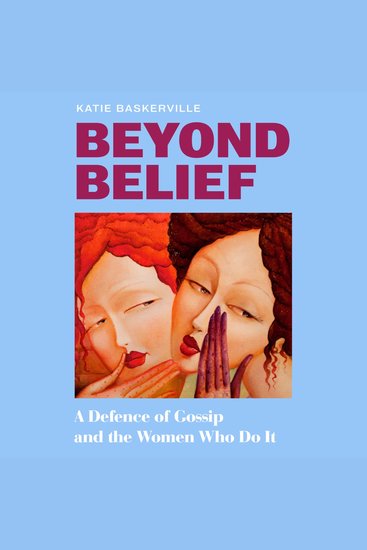
  • Beyond Belief: From a leading feminist journalist comes a fresh perspective on women’s chit-chat in this incisive exploration of why we gossip – new for 2026! - cover

    Beyond Belief: From a leading...

    Katie Baskerville

    • 0
    • 0
    • 0
    A celebration and exploration of gossip, reclaiming it as a powerful tool for building relationships, sharing vital information and enabling women’s voices to be heard. 
    Tittle-tattle. Hearsay. Rumours. Bitching. Tea. 
    Call it what you will: the fact remains that gossip is entwined into our daily lives. From group WhatsApp chats to click-bait headlines, social media snooping to reality television, there is nothing more devilishly delicious, scandalous, and satisfying than a juicy piece of gossip. 
    All-too-often dismissed as the past-time of silly schoolgirls and bored housewives, there’s more to gossip than meets the eye. In today’s world of misinformation, where the voices and stories of women are being silenced, gossip has the power to shatter reputations and destroy credibility. Yet it can also be a vital political tool; a communication style that strengthens relationships and can even act a life-saving measure. 
    Tracing gossip’s roots from old wives’ tales and the witch trials to reality TV, whisper networks and defamation lawsuits, Beyond Belief asks, have we lost the ability to listen; to hear, and to believe women who speak up and speak out? 
    A joyous reclamation of women’s words, this book is for anyone who’s ever uttered the words, ‘You won’t believe this…’ 
    nan
    Show book
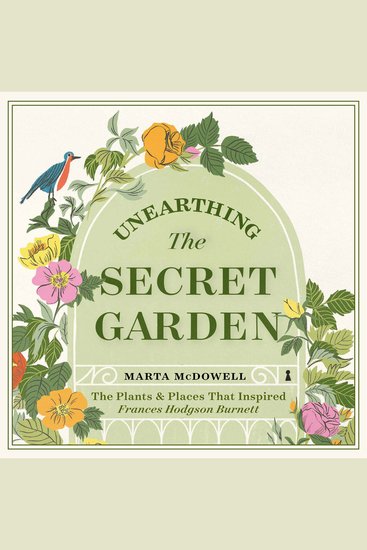
  • Unearthing The Secret Garden - The Plants and Places That Inspired Frances Hodgson Burnett - cover

    Unearthing The Secret Garden -...

    Anonymous

    • 0
    • 0
    • 0
    “McDowell’s gorgeous book opens an ivy-covered door to new information about one of the world’s most famous authors.”—Angelica Shirley Carpenter, editor of In the GardenNew York Times bestselling author Marta McDowell has revealed the way that plants have stirred some of our most cherished authors, including Beatrix Potter, Emily Dickinson, and Laura Ingalls Wilder. In her latest, she shares a moving account of how gardening deeply inspired Frances Hodgson Burnett, the author of the beloved children's classic The Secret Garden.   In Unearthing The Secret Garden, best-selling author Marta McDowell delves into the professional and gardening life of Frances Hodgson Burnett.  McDowell paints an unforgettable portrait of a great artist and reminds us why The Secret Garden continues to touch readers after more than a century. This deeply moving book is a must-read for fans of The Secret Garden and anyone who loves the story behind the story.
    Show book
  • Musings of a Baby Boomer - Life Before X Y and Z - cover

    Musings of a Baby Boomer - Life...

    Kay Hoflander

    • 0
    • 2
    • 0
    An honest, humorous, and refreshing look back on the experiences of a unique generation and the challenges of growing older in the digital age.Musings of a Baby Boomer: Life Before X, Y, and Z is a collection of selected shorts from Hoflander’s weekly newspaper column “Full Circle,” featuring sometimes funny and sometimes philosophical stories with a continuous theme: the reluctant, but generally happy, aging of the Baby Boomer generation. In this collection, Hoflander tells stories about everything from yard flamingos and college move-in day to battling internet bots. She reflects on the simpler times of her childhood and addresses present-day changes to which, as a baby boomer, she adapts: memory loss, evolving technology, and politics. Through it all, she uses humor and wit to remind readers not to take life too seriously—and to focus on the things that really matter.“This book entails family, friends, and wisdom from the perspective of the baby boomer generation! A great read for all! Delightful.” —Teresa Parson, First Lady of Missouri“America needs healing, and instead of destroying our history, perhaps musings from those who have been part of history can provide a way forward. That is what Kay Hoflander's book offers.” —Lieutenant Colonel Allen B. West (US Army, Retired), Member, 112th U.S. Congress, Former Chairman, Republican Party of Texas“Hoflander has the magical skills to hit upon daily life with humor and understanding . . . For younger readers, this book just may help you better understand your parents or grandparents. It is a book for all generations to enjoy.” —Suzanne Skelly, University of Missouri Graduate Educator, Realtor, Genealogist and life-long Bibliophile
    Show book
  • Tulsi Devi - Mistress Of Vrndavana - Divine Servant Of Sri Sri Radha Krsna - cover

    Tulsi Devi - Mistress Of...

    Radha Krsna Das

    • 0
    • 0
    • 0
    "Dear Tulsī, you are much beloved by Lord Kṛṣṇa because your leaves are always at His lotus feet. Dear mālatī flower, dear mallikā flower, dear jasmine flower, all of you must have been touched by Kṛṣṇa while He was passing this way after giving us transcendental enjoyment. Have you seen Mādhava passing this way? O mango trees, O trees of jackfruit, O pear trees and āsana trees! O blackberries and bael trees and trees of the kadamba flower—you are all very pious trees to be living on the bank of the Yamunā. Kṛṣṇa must have passed through this way. Will you kindly let us know which way He has gone?" The Srimad Bhagavatam 
     
    Tulsi Devi (Vrinda - Holy Basil) is a sacred plant in Hindu belief. She is regarded as an earthly manifestation of the goddess Srimati Tulsi Devi, and is as an avatar of Lakshmi, and thus the consort of Vishnu. The offering of her leaves is mandatory in the worship of Bhagavan Sri Krishna. Tulsi is regarded as the holiest of all plants and a bridge between heaven and earth. A traditional prayer teaches the creator Brahma and the Ganges resides in her branches, all holy pilgrimage centers in her roots, all deities are in her stem and leaves, and the Vedas are found in the upper part of her branches. The Tulsi herb is a center of household devotion, and is often referred to as the "women's deity" and "a symbol of wifehood and motherhood." Vaishnavites consider it as the manifestation of god in the plant kingdom. Tulsi Devi is one of Krishna’s most intimate servants coming to bless us all with extraordinary fortune. She has delicate purple and green leaves, flower tassels (like miniature temple spires), and an arresting, sweet fragrance famous for attracting the minds of yogis to Krishna’s service via Bhakti Yoga. Tulasi’s wood is carved into the Japa beads on which devotees chant Krishna’s holy name.
    Show book
  • How to Eat - An Ancient Guide for Healthy Living - cover

    How to Eat - An Ancient Guide...

    Abigail Reno

    • 0
    • 0
    • 0
    Today, we're stuffed with dietary recommendations from every direction. Social media, advertising, food packaging, diet books, doctors—all have advice on what, how much, and when to eat. This would have been no surprise to ancient Greeks and Romans. Their doctors were intensely interested in food, offered highly prescriptive dietary advice, and developed detailed systems to categorize foods and their health effects. How to Eat is a delectable anthology of Greco-Roman writings on how to eat, exercise, sleep, bathe, and manage your sex life for optimal health. It also gathers ancient opinions on specific foods of all sorts, from how to deploy onions to cure baldness and cabbage to get sober to whether lentils are healthy and why arugula increases your sex drive. 


    With lively new translations by Claire Bubb, How to Eat features voices from medicine, philosophy, natural history, agriculture, and cooking, including Hippocrates, Pliny the Elder, Galen, Seneca, Plutarch, and Cato. 


    While medicine and science have obviously changed enormously since the classical world, and some Greco-Roman beliefs about diet now appear hilariously off the mark, How to Eat reveals that much of their advice still resonates—and all of it is fascinating.
    Show book
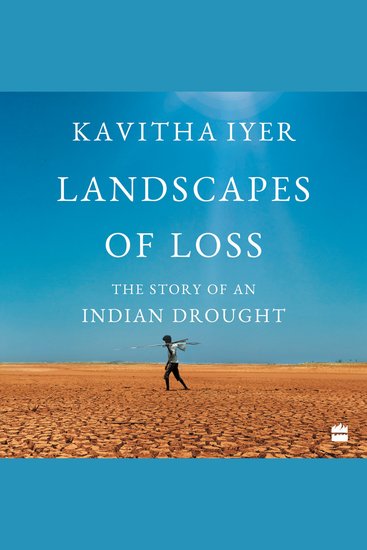
  • Landscapes of Loss - The Story of an Indian Drought - cover

    Landscapes of Loss - The Story...

    Kavitha Iyer, Shivani Vakil Savant

    • 0
    • 0
    • 0
    WINNER OF THE TATA LITERATURE LIVE FIRST BOOK AWARD (NON-FICTION) 2021 
     
    Maharashtra, India's richest state by GDP, has its eyes set on becoming the country's first trillion-dollar economy by 2025. At the same time, Marathwada -- a historically backward part of the state adjoining the distressed Vidarbha region -- has seen a surge in farmer suicides. 
    At the heart of the crisis is a cyclical drought that has persisted for almost a decade. Relief packages and loan waivers have not reversed the trend. On the contrary, the stories of dystopia grow more tragic every year as thousands of farmer families flee to the big cities, while those who stay back are plagued by bad credit and crop loss. 
    Landscapes of Loss tells the story of Marathwada through the accounts of its people: marginal farmers, Dalits, landless labourers, farm widows and children. It lays bare the complex factors that have brought the region to this pass -- a story representative, in many ways, of the agrarian unrest in large parts of rural India.
    Show book