Join us on a literary world trip!
Add this book to bookshelf
Grey
Write a new comment Default profile 50px
Grey
Subscribe to read the full book or read the first pages for free!
All characters reduced
The Paths of Power - Navigating Political Dynamics - cover

The Paths of Power - Navigating Political Dynamics

Pasquale De Marco

Publisher: Publishdrive

  • 0
  • 0
  • 0

Summary

In this thought-provoking exploration of power, we delve into the intricate dynamics that shape our world. From the corridors of power to the intimate spaces of our personal lives, power exerts its influence in countless ways. This book offers a comprehensive examination of power, unraveling its complexities and revealing its profound implications for individuals and societies.

Through a multidisciplinary lens, we explore the nature of power, its origins, and its manifestations in various spheres of human existence. We examine the relationship between power and politics, economics, social structures, and personal relationships. By understanding the different dimensions of power, we gain insights into how decisions are made, how societies function, and how change can be effected.

With captivating storytelling and incisive analysis, this book delves into historical and contemporary examples of power dynamics. We encounter leaders who have wielded power for good and those who have abused it. We witness social movements that have challenged power structures and individuals who have stood up to oppression. These stories illuminate the complexities of power and inspire us to reflect on our own roles and responsibilities in shaping a more just and equitable world.

This book is essential reading for anyone seeking to understand the intricate workings of power. It is a valuable resource for students of politics, sociology, history, and psychology, as well as for anyone interested in personal development and social change. With its engaging writing style and thought-provoking insights, this book promises to deepen your understanding of power and empower you to navigate its challenges and opportunities.


If you like this book, write a review!
Available since: 06/02/2025.
Print length: 159 pages.
Other books that might interest you

  • Danger Zone - The Coming Conflict with China - cover

    Danger Zone - The Coming...

    Michael Beckley, Hal Brands

    • 0
    • 0
    • 0
    It has become conventional wisdom that America and China are running a "superpower marathon." Yet Hal Brands and Michael Beckley pose a counterintuitive question: What if the sharpest phase of that competition is more like a decade-long sprint? 


    The Sino-American contest is driven by clashing geopolitical interests and a stark ideological dispute over whether authoritarianism or democracy will dominate the twenty-first century. But both history and China's current trajectory suggest that this rivalry will reach its moment of maximum danger in the 2020s. 


    China is at a perilous moment: strong enough to violently challenge the existing order, yet losing confidence that time is on its side. Witness its aggression toward Taiwan, its record-breaking military buildup, and its efforts to dominate the critical technologies that will shape the world's future. 


    The Chinese challenge will most likely prove more manageable than many pessimists currently believe—but during the 2020s, the pace of Sino-American conflict will accelerate, and the prospect of war will be frighteningly real. America, Brands and Beckley argue, will still need a sustainable approach to winning a protracted global competition.
    Show book
  • The Cancel Culture Panic - How an American Obsession Went Global - cover

    The Cancel Culture Panic - How...

    Adrian Daub

    • 0
    • 0
    • 0
    In this incisive new work, Adrian Daub analyzes the global spread of cancel culture discourse as a moral panic, showing that, though its object is fuzzy, talk of cancel culture in global media has become a preoccupation of an embattled liberalism. There are plenty of conservative voices who gin up worries about cancel culture to advance their agendas. But more remarkable perhaps is that it is centrist, even left-leaning, media that have taken up the rallying cry and really defined the outlines of what cancel culture is supposed to be. 


    From French crusades against "le wokisme" via British fables of the "loony left" to a German obsession with campus anecdotes to a global revolt against "gender studies": countries the world over have developed culture war narratives in conflict with the US, and, above all, its universities—narratives that they themselves borrowed from the US. 


    Who exactly is afraid of cancel culture? To trace how various global publics have been so quickly convinced that cancel culture exists and that it poses an existential problem, Daub compares the cancel culture panic to moral panics past, investigating the powerful hold that the idea of "being cancelled" has on people around the world.
    Show book
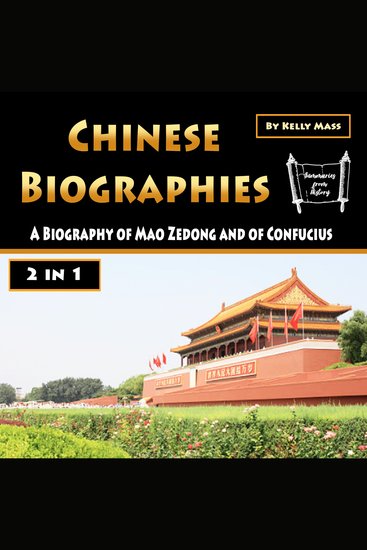
  • Chinese Biographies - A Biography of Mao Zedong and of Confucius - cover

    Chinese Biographies - A...

    Kelly Mass

    • 0
    • 0
    • 0
    This is a book combo with the following subjects: 
    Mao Zedong has had a tremendous impact on the Chinese nation. During his Great Leap Forward, he was responsible for more deaths than both Hitler and Stalin, making him the biggest mass murderer in history. Mao Zedong, typically called Chairman Mao, was a Chinese communist revolutionary who functioned as the starting dad of peoples's Republic of China (PRC), judgment as the chairman of the Chinese Communist Party from 1949 till his death in 1976. Maoism is a Marxist-- Leninist dogma that includes his theories, army operations, and political programs. What happened during the Great Leap Forward? Why did so many farmers starve to death? And what else did Mao Zedong do during his reign? You will find out more about those and other questions in this book. 
    Confucius was a Chinese thinker and political leader who was considered as the apotheosis of Chinese sages. Confucius' theories and philosophy, commonly seen as one of the most essential and prominent individuals in human history, created the structure of East Asian civilization and civilization, and stay appropriate across China and East Asia today.  
    Confucianism, his philosophical theories, highlighted personal and governmental morality, social connection precision, justice, generosity, and genuineness. Confucianism was instilled in Chinese civilization and way of living; for Confucians, daily life was a spiritual arena. Throughout the Hundred Schools of Thought age, his disciples contended efficiently with lots of other schools, only to be repressed in favor of the Legalists throughout the Qin dynasty. Confucius' ideas were formally approved in the new administration following Han's success over Chu after Qin's collapse. Confucianism developed into a system known in the West as Neo-Confucianism, and later as New Confucianism, at the time of the Tang and Tune dynasties.
    Show book
  • Government by the Unelected - How It Happened and How It Might Be Tamed - cover

    Government by the Unelected -...

    Dr. R.J. Pestritto

    • 0
    • 0
    • 0
    “Much alarm has been raised among Establishment media and politicians about President Trump’s efforts to cut the federal bureaucracy and to force its top officials to be more loyal to him and to those who voted for him. How did we come to find ourselves in a situation where our top national administrators – who exercise immense governing power in our country – think of themselves as independent of the elected president? Why does it create alarm among our elites when the president expects those running the administrative state to carry out his political program? The roots of this entitled attitude go back many decades, and are part of the original Progressive project to comprehensively reshape American government. We are now in the midst of the first serious effort since the 1930s to restore some measure of democratic accountability to national administration. In this Provocation, Ronald J. Pestritto explains how we got to this moment, and what the prospects are for the current effort to turn things around.”  
    Show book
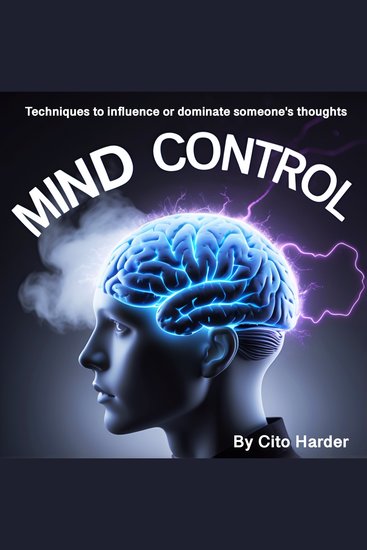
  • Mind Control - Techniques to Influence or Dominate Someone's Thoughts - cover

    Mind Control - Techniques to...

    Cito Harder

    • 0
    • 0
    • 0
    Mind control is the practice of influencing, manipulating, or dominating an individual’s thoughts, behaviors, or perceptions, often without their conscious awareness. Throughout history, different societies have employed various forms of psychological influence to control groups and individuals, from religious indoctrination to political propaganda and media conditioning. While some forms of persuasion are ethical and openly acknowledged, mind control often operates in subtle, deceptive ways, making it difficult for individuals to recognize or resist. 
    At its core, mind control exploits human cognitive vulnerabilities. The mind is naturally susceptible to suggestion, repetition, and emotional influence. When exposed to specific messages or ideas repeatedly, a person may begin to internalize them as truth, even in the absence of logical evidence. This principle is used in advertising, politics, religious movements, and personal relationships to shape opinions and behaviors. Whether through fear, guilt, reward, or isolation, those seeking control can manipulate their targets into conforming to specific beliefs or actions. 
    One of the most effective tools of mind control is misinformation. By distorting reality or presenting selective facts, individuals or institutions can shape perceptions to suit their own agendas. Governments have historically used propaganda to maintain control over populations, while corporations use psychological tactics to influence consumer behavior. In personal relationships, emotional abusers use manipulation techniques such as gaslighting to make their victims question their own perceptions and reality.
    Show book
  • A Swiss Foreign Policy for the 21st Century - cover

    A Swiss Foreign Policy for the...

    Thomas Bernauer, Katja...

    • 0
    • 0
    • 0
    Switzerland is facing critical foreign policy challenges. Its relationship with the EU is still unsettled, the geopolitical landscape is changing rapidly, and technological innovation brings additional dynamics into play. This book provides a forward-looking guide for all those concerned with Swiss foreign policy issues, and an overview of Swiss foreign policy along its key areas. It deals, for example, with foreign trade, international financial markets, migration, environmental policy, humanitarian cooperation, and peace promotion and security policy. The contributions are written by academics and practicioners. They shed light on the respective global or regional context in which Switzerland's foreign policy operates, and analyze achievements, challenges,  opportunities, and risks as well as potential ways forward. Published on behalf of the Swiss Society for Foreign Policy.
    With forewords by Foreign Minister Ignazio Cassis and National Councilor Christa Markwalder, President of the Swiss Society for Foreign Policy, and contributions by: Thomas Bernauer, Fritz Brugger, Aymo Brunetti, Gilles Carbonnier, Francis Cheneval, Cedric Dupont, Katja Gentinetta, Isabel Gunther, Paula Hoffmeyer-Zlotnik, Joelle Kuntz, Sandra Lavenex, Philipp Lutz, Matthias Oesch, Pascal Sciarini, Charlotte Sieber-Gasser, Cedric Tille, Andreas Wenger, Achim Wennmann, Sacha Zala.
    The German version of «A Swiss Foreign Policy for the 21st Century» is available as «Eine Aussenpolitik für die Schweiz im 21. Jahrhundert».
    Show book