Join us on a literary world trip!
Add this book to bookshelf
Grey
Write a new comment Default profile 50px
Grey
Subscribe to read the full book or read the first pages for free!
All characters reduced
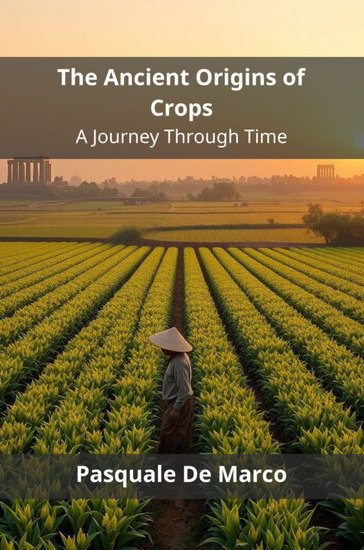
The Ancient Origins of Crops - A Journey Through Time - cover

The Ancient Origins of Crops - A Journey Through Time

Pasquale De Marco

Publisher: Publishdrive

  • 0
  • 0
  • 0

Summary

Crops are the foundation of human civilization. They provide us with food, fiber, and other essential resources. But where did crops come from? And how have they evolved over time?

In this fascinating book, we will explore the ancient origins of crops and their journey through time. We will learn about the first farmers who domesticated wild plants, the challenges they faced, and the innovations they developed. We will also explore the role that crops have played in shaping human history, from the rise of civilizations to the development of modern agriculture.

This book is a comprehensive and accessible introduction to the evolution of crops. It is written in a clear and engaging style, and it is packed with fascinating information. Whether you are a student, a farmer, or simply someone who is interested in the history of food, this book is sure to captivate you.

**Here are some of the things you will learn in this book:**

* The origins of agriculture and the domestication of wild plants
* The major crop plants and their wild ancestors
* The science of crop evolution
* The challenges facing crops in the 21st century
* The importance of crop diversity
* The cultural significance of crops

This book is a must-read for anyone who wants to understand the origins of our food and the role that crops have played in shaping human history.


If you like this book, write a review!
Available since: 06/02/2025.
Print length: 160 pages.


Other books that might interest you

  • Meditation For Sleep - cover

    Meditation For Sleep

    Meditation Masters

    • 0
    • 0
    • 0
    "Meditation For Sleep" is a soothing audiobook designed to guide listeners into a deep, restful slumber. Narrated with a calming voice and accompanied by relaxing background music, this meditation focuses on relaxation techniques to ease the mind and body. It includes guided imagery and breathing exercises to help release tension and promote tranquility. The audiobook provides a serene listening experience, perfect for bedtime routines. Ideal for anyone struggling with insomnia or seeking to improve their sleep quality.
    Show book
  • Climate Hope - Stories of Action in an Age of Global Crisis - cover

    Climate Hope - Stories of Action...

    David Geselbracht

    • 0
    • 0
    • 0
    Climate change is a problem so enormous and complex—with threats so frightening in their implications—that many of us fend off confusion and hopelessness by simply turning away. Meanwhile, with delayed action, missed targets, and increasingly dire reports at the international level, a notion that the crisis is intractable continues to spread. And the proposed solutions can be just as daunting. They often involve jargon about gigatons of carbon and kilowatt-hours of electricity. In a deeply polarized political environment, any sense of the common purpose required to make these work seems to dissolve into denial or paralysis. With all this fear and conflict, the question must be asked: How do we find the tools and the hope we need to tackle such a wickedly difficult issue? 


    In Climate Hope, journalist David Geselbracht blends in-depth research, expert interviews, and on-the-ground reporting in multiple countries, revealing remarkable efforts to identify the causes and impacts of climate change—and devise crucial ways to address them. The scale of the challenge is clear in the range of fields he covers, from glaciology and climate science to law and diplomacy. But in drawing these approaches together, he shares stories of hope, awe, and wonder that encourage us to confront this long-term, world-warping phenomenon with a renewed sense of purpose and possibility.
    Show book
  • Endemic birds of Costa Rica - cover

    Endemic birds of Costa Rica

    Leandro Arias Salazar

    • 0
    • 0
    • 0
    For people living in Costa Rica or visiting the country for the purpose of researching, observing, and photographing wild birds, this work is a fundamental starting point. It describes relevant data for the conservation, research, and recreational enjoyment of 108 species of birds that have a limited geographic distribution, meaning they can only be observed in this part of the world.
    
    For each of the species covered in the work, a description is included with useful data related to their habitat, behavior, distribution, and conservation status. In addition, more than 180 high-quality photographs are included, which, together with a detailed description of the anatomical aspects of each species, are intended to facilitate their identification. The data included come from field observations for more than a decade, as well as from the most up-to-date scientific literature.
    
    Also included is a section on the main regions and specific sites in Costa Rica recommended for observing endemic birds. Furthermore, the areas of endemism are characterized, ranging from southeastern Honduras to western Panama. The reader also has a registration list to record the species observed and the code of ethics for bird watchers proposed by the Ornithological Association of Costa Rica, so that the human-bird relationship is as harmonious as possible and allows the permanent enjoyment of this activity, which constitutes the main purpose of the work.
    Show book
  • Rewriting the History of the Black Death - Unveiling the Truth Behind Medieval Misconceptions - cover

    Rewriting the History of the...

    John Harpoon

    • 0
    • 0
    • 0
    The Black Death, one of the most devastating pandemics in human history, left an indelible mark on the medieval world. From the mid-14th century, this catastrophic event wiped out an estimated one-third of Europe's population, with ramifications extending far beyond the immediate loss of life. Its legacy endures, not only in historical accounts but also in the cultural, social, and economic transformations it triggered. 
      
    The pandemic’s unparalleled scale of mortality created a sense of collective trauma that shaped the mindset of medieval society. Fear, uncertainty, and grief were pervasive, leading to widespread shifts in religious devotion and philosophical thought. For some, the plague strengthened their faith, prompting public acts of penance and increased church attendance. For others, it inspired skepticism about religious authority, paving the way for future reforms and dissent. This dual response reflects the Black Death's role as both a destroyer of tradition and a catalyst for change. 
      
    Economically, the pandemic dramatically altered the medieval labor market. The decimation of the population led to acute labor shortages, forcing landowners to offer better wages and conditions to retain workers. This shift empowered peasants and contributed to the gradual erosion of the feudal system, giving rise to a nascent middle class. The newfound leverage of laborers sowed the seeds of social mobility, challenging the rigid hierarchies that had long defined medieval life.
    Show book
  • Genetics - The Invisible World Microbes Health and Global Impact - cover

    Genetics - The Invisible World...

    Jeron Iris

    • 0
    • 0
    • 0
    Microbiology is the branch of science that deals with the study of microorganisms, which are organisms that are too small to be seen with the naked eye. These organisms include bacteria, viruses, fungi, algae, and protozoa. Although these tiny life forms are invisible to the unaided eye, they play a vital role in the environment, human health, and various industrial processes. The field of microbiology encompasses a broad range of topics, from the structure and function of microorganisms to their interactions with humans, animals, plants, and the environment. 
      
    One of the primary aspects of microbiology is understanding the diversity of microorganisms. Bacteria, for example, are among the most abundant and diverse organisms on Earth. They exist in numerous environments, from the human body to extreme habitats like hot springs and deep-sea vents. Viruses, on the other hand, are unique in that they cannot replicate on their own and require a host cell to reproduce. Fungi and protozoa, while distinct from bacteria, also contribute significantly to ecosystems and human health, with some acting as pathogens and others playing key roles in decomposition and nutrient cycling. 
      
    The study of microbiology is crucial for several reasons. Microorganisms are central to processes such as digestion, fermentation, and the nitrogen cycle. They are also responsible for many diseases, which makes understanding their biology essential for developing effective treatments and preventive measures. Advances in microbiology have led to the discovery of antibiotics, vaccines, and other life-saving technologies. Additionally, microbiology has applications in biotechnology, where microorganisms are used in the production of food, medicines, and biofuels, as well as in environmental management through processes like bioremediation.
    Show book
  • HBR's 10 Must Reads on Trust (with bonus article "Begin with Trust" by Frances X Frei and Anne Morriss) - cover

    HBR's 10 Must Reads on Trust...

    Harvard Business Review

    • 0
    • 0
    • 0
    Business success begins with trust. 


    Trust is the basis for all that we do as leaders and as organizations. Employees who trust their employers are more productive and creative. Businesses that earn their customers' trust maintain better relationships and reap better results. Meanwhile, breaches of trust between companies and the public are becoming more frequent—and more costly. 


    If you read (or listen to) nothing else on trust, listen to these ten articles. We've combed through hundreds of Harvard Business Review articles and selected the most important ones to help you build, maintain, and repair trust, both as a leader and as a company. 


    This book will inspire you to: develop trust through competence, legitimacy, and impact; understand the neuroscience of trust; follow through on your commitments to stakeholders; negotiate better with an untrustworthy counterpart; see your company through the eyes of your customers; and rebuild relationships after a breakdown of trust.
    Show book