Join us on a literary world trip!
Add this book to bookshelf
Grey
Write a new comment Default profile 50px
Grey
Subscribe to read the full book or read the first pages for free!
All characters reduced
Opening the Pandora's Box - cover

Opening the Pandora's Box

Pasquale De Marco

Publisher: Publishdrive

  • 0
  • 0
  • 0

Summary

In a world where the human services field is facing unprecedented challenges, The Unconscious at Work offers a lifeline to caregivers, managers, and leaders seeking to navigate the complexities of their work. This comprehensive guide explores the hidden stressors and unconscious processes that contribute to stress and burnout, providing practical strategies for creating a more supportive and sustainable work environment.

Drawing on decades of experience in the human services field, the authors take readers on a journey of self-discovery and personal growth. They illuminate the emotional toll of caregiving, the impact of trauma and crisis on workers, and the challenges of working in a constantly changing environment. Through real-life case studies and thought-provoking insights, the book sheds light on the hidden dynamics at play in human services organizations.

The Unconscious at Work is more than just a guide to stress management; it's a call to action for systemic change. The authors advocate for a culture shift that prioritizes the well-being of caregivers, promotes resilience, and fosters a sense of community and support. They offer practical tools and strategies for leaders to create a more supportive workplace, including effective communication, collaboration, and conflict resolution techniques.

For caregivers, the book provides invaluable self-care strategies and resilience-building exercises to help them navigate the challenges of their work and find fulfillment and meaning in their chosen field. The authors emphasize the importance of self-awareness, mindfulness, and seeking professional help when needed.

The Unconscious at Work is an essential resource for anyone working in the human services field. It's a book that will challenge your assumptions, inspire you to grow, and empower you to make a positive impact on the lives of others. With compassion, empathy, and a deep understanding of the human condition, the authors provide a roadmap for creating a more sustainable and rewarding career in caregiving.


If you like this book, write a review!
Available since: 06/02/2025.
Print length: 156 pages.

Other books that might interest you

  • Stories from Kathasaritasagara series -15 - From various sources - cover

    Stories from Kathasaritasagara...

    Anusha HS

    • 0
    • 0
    • 0
    The book Kathasaritsagara has been created by Soma Deva. It consists of 21,500 shlokas. 
    This book Kathasaritsagara has been divided into 18 lambakaas, and those 18 lambakaas are still more divided into 125 Tharanga's. 
    Some lambakaas are very big, while some are very small. 
    If there are 115 Shlokas in the 11th Lambaka, there are around 4925 Shlokas in 12th Lambaka. 
    During ancient times from the mouth of Lord Shiva, this story got birth. Those who listen to this story will experience all sorts of worldly pleasures. They will be blessed by Lord Shiva and at last reach jnana Loka by the blessings of lord shiva.
    Show book
  • A Question of Standing - The History of the CIA - cover

    A Question of Standing - The...

    Rhodri Jeffreys-Jones

    • 0
    • 0
    • 0
    The mission of the CIA has always been intelligence. Seventy-five years ago, in the year of its creation, the National Security Act gave the agency, uniquely in world history up to that point, a democratic mandate to pursue that mission of intelligence. It gave the CIA a special standing in the conduct of United States foreign relations. That standing diminished when successive American presidents ordered the CIA to exceed its original mission. When they tasked the agency secretly to overthrow democratic governments, the United States lost its international standing, and its command of a majority in the United Nations General Assembly. Such dubious operations, even the government's embrace of assassination and torture, did not diminish the standing of the CIA in United States public opinion. However, domestic interventions did. CIA spying on domestic protesters led to tighter congressional oversight from the 1970s on. 


    A Question of Standing offers a balanced narrative and perspective on recognizable episodes in the CIA's history. Famous incidents include the Bay of Pigs invasion, the War on Terror, 9/11, the weapons of mass destruction deception, the Iran estimate of 2007, the assassination of Osama bin Laden, and Fake News. The book also defends the CIA's exposure of foreign meddling in United States elections.
    Show book
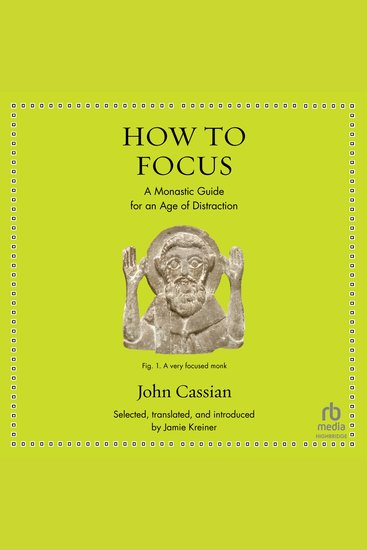
  • How to Focus - A Monastic Guide for an Age of Distraction - cover

    How to Focus - A Monastic Guide...

    John Cassian, Jamie Kreiner

    • 0
    • 0
    • 0
    Distraction isn't a new problem. We're also not the first to complain about how hard it is to concentrate. Early Christian monks beat us to it. They had given up everything to focus on God, yet they still struggled to keep the demons of distraction at bay. But rather than surrender to the meandering of their minds, they developed powerful strategies to improve their attention and engagement. How to Focus is an inviting collection of their strikingly relatable insights and advice—frank, funny, sympathetic, and psychologically sophisticated. 


    This wisdom is drawn from John Cassian's Collationes, one of the most influential manuals for monks from late antiquity. The Collationes follow Cassian and his friend Germanus as they travel around Egypt, asking a series of sage monks how they can make their minds stronger. In response, these monks offer a range of techniques for increasing focus, including setting goals, training the body, managing the memory, using mantras, taking breaks, consulting others—and, most of all, being honest about yourself. As Cassian and Germanus eventually realize, we can't escape distraction—but we can learn how to confront it and, eventually, to concentrate. 


    Featuring an engaging new translation by Jamie Kreiner, How to Focus can help even the least monkish of us to train our attention on what matters most.
    Show book
  • Thanks for Your Service - The Causes and Consequences of Public Confidence in the US Military - cover

    Thanks for Your Service - The...

    Peter D. Feaver

    • 0
    • 0
    • 0
    A definitive study on the decades-long run of high public confidence in the military and why it may rest on some shaky foundations. 


    What explains the high levels of public confidence in the US military and does high confidence matter? In Thanks for Your Service, the eminent civil-military relations scholar Peter D. Feaver addresses this question and focuses on what it means for the military. Proprietary survey data show that confidence is partly based on public beliefs about the military's high competence, adherence to high professional ethics, and a determination to stand apart from the bitter divisions of partisan politics. However, as Feaver argues, confidence is also shaped by a partisan gap and by social desirability bias, the idea that some individuals express confidence in the military because they believe that is the socially approved attitude to hold. Not only does Feaver help us understand how and why the public has confidence in the military, but he also exposes problems that policymakers need to be aware of. Specifically, this book traces how confidence in the institution shapes public attitudes on the use of force and may not always reinforce best practices in democratic civil-military relations.
    Show book
  • Inside the Montreal Mafia - The Confessions of Andrew Scoppa - cover

    Inside the Montreal Mafia - The...

    Félix Séguin, Eric Thibeault

    • 0
    • 1
    • 0
    National Bestseller
    		 
    “Inside the Montreal Mafia is an entertaining, illuminating, and often sobering look at the downfall of the Rizzuto crime family … Highly readable and engaging.” — Montreal Review of Books
    		 
    A groundbreaking, exclusive inside look at the North American Mafia and the Rizzuto family
    		 
    For the first time in Canadian history, a high-ranking mafioso agreed to break the code of omertà by talking to journalists. From October 2014 to October 2019, Félix Séguin and Eric Thibault held multiple secret meetings with Andrew Scoppa, getting an exclusive inside look at the inner workings of the North American Mafia. This book is the culmination of their perilous investigation. It sheds light on the life — and death — of one of the most influential organized crime figures in recent years.
    		 
    At exactly 2 p.m., there was a knock at the door. It was him: the source every journalist dreamed of having. The short man was armed and placed his gun on a table.
    		 
    “Are you impressed?” he asked with a broad grin.
    		 
    “Yes. Very much.”
    		 
    Before me was Andrew Scoppa, close confidant of the late mafia boss Vito Rizzuto, international heroin trafficker and cold-blooded killer.
    Show book
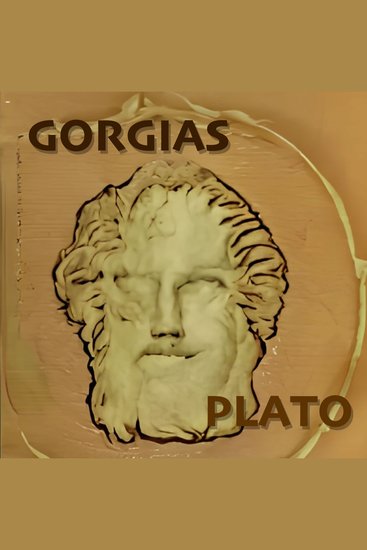
  • Gorgias - Plato - cover

    Gorgias - Plato

    Plato

    • 0
    • 0
    • 0
    Gorgias is a philosophical dialogue written by Plato, set in Athens in the early 5th century BC. The dialogue is named after the renowned Greek sophist Gorgias of Leontini, who is the main interlocutor in the conversation. 
    The dialogue begins with a discussion about the nature of rhetoric and its relationship to truth. Socrates, the main protagonist of the dialogue, argues that rhetoric is merely a skill of persuasion, and that its practitioners do not necessarily possess knowledge of the subject matter they are discussing. Gorgias and his student Polus disagree, and argue that rhetoric can be used to achieve both knowledge and persuasion. 
    The discussion then turns to the question of whether or not it is better to suffer injustice or to commit injustice. Socrates argues that it is better to suffer injustice than to commit it, and that it is always better to do what is right rather than what is expedient. Gorgias and Polus, however, disagree and argue that it is better to be the one who is in power and able to do as they please. 
    The dialogue concludes with a discussion about the nature of happiness and whether or not it can be achieved through the pursuit of power and wealth. Socrates argues that true happiness comes from living a life of virtue and wisdom, rather than from external circumstances such as wealth and power. 
    Overall, Gorgias is a profound exploration of some of the most fundamental questions of philosophy, including the nature of truth, justice, and happiness. It remains one of Plato's most famous and influential works, and is essential reading for anyone interested in the history of philosophy.
    Show book