Join us on a literary world trip!
Add this book to bookshelf
Grey
Write a new comment Default profile 50px
Grey
Subscribe to read the full book or read the first pages for free!
All characters reduced
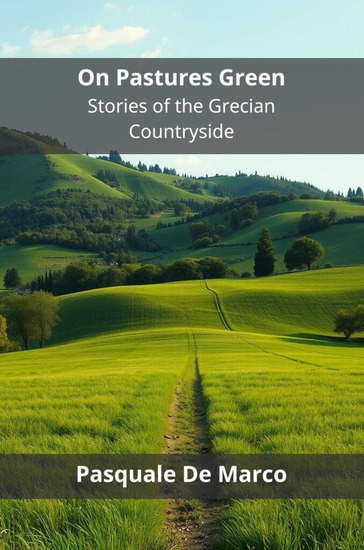
On Pastures Green - Stories of the Grecian Countryside - cover

On Pastures Green - Stories of the Grecian Countryside

Pasquale De Marco

Publisher: Publishdrive

  • 0
  • 0
  • 0

Summary

Journey into the heart of ancient Greece, beyond the city walls and renowned centers of learning, to discover the vibrant and often overlooked world of the Greek countryside. In this captivating book, we unveil the rich tapestry of rural life, exploring its profound influence on the development of Greek culture and civilization.

Meet the farmers, shepherds, and vine-growers who formed the backbone of Hellenic society, and immerse yourself in their daily lives, values, and challenges. Discover the agricultural innovations they brought forth, the religious rituals they practiced, and the communal traditions they cherished.

The Greek countryside was not merely a place of toil and subsistence; it was a realm of beauty, inspiration, and profound connection with nature. Poets and philosophers found solace and wisdom in its landscapes, while artists and sculptors drew upon its imagery to create timeless masterpieces. The countryside was also a stage for political and social struggles, as rural communities asserted their independence and defended their way of life against the encroaching power of the city-states.

Through a detailed examination of archaeological evidence, literary sources, and historical accounts, this book pieces together a comprehensive picture of Greek rural society, shedding light on its economic, social, and cultural significance. Explore the relationship between the countryside and the city, the impact of trade and commerce on agricultural practices, and the challenges posed by climate change and environmental degradation.

Our journey into the Greek countryside is not only an exploration of the past; it is also a reflection on the present and a glimpse into the future. By understanding the agrarian roots of Greek civilization, we can gain valuable insights into the challenges and opportunities facing modern agriculture and rural communities around the world. The lessons learned from the Greek countryside can inspire us to create more sustainable and resilient food systems, to protect our natural resources, and to foster a renewed appreciation for the beauty and bounty of the rural world.

This book is an invitation to reconnect with the land, to rediscover the timeless wisdom of rural life, and to appreciate the enduring legacy of Greek agriculture. It is a celebration of the countryside as a source of nourishment, inspiration, and resilience, and a call to action to protect and preserve this precious heritage for generations to come.


If you like this book, write a review!
Available since: 06/02/2025.
Print length: 163 pages.

Other books that might interest you

  • A Reading of the Inaugural Address of President John Adams - cover

    A Reading of the Inaugural...

    President John Adams

    • 0
    • 0
    • 0
    John Adams (October 30, 1735 - July 4, 1826), born in Braintree, Massachusetts, was an American Founding Father who served as the second president of the United States from 1797 to 1801. Before his presidency, he was a leader of the American Revolution that achieved independence from Great Britain. During the latter part of the Revolutionary War and in the early years of the new nation, he served the U.S. government as a senior diplomat in Europe. Adams was the first person to hold the office of vice president of the United States, serving from 1789 to 1797. The following is a reading of President Adams' inaugural address delivered on March 04, 1797.
    Show book
  • On the Ashes - cover

    On the Ashes

    Gideon Haigh

    • 0
    • 0
    • 0
    In On The Ashes, Gideon Haigh, today's pre-eminent cricket writer, has captured over a century and half of Anglo-Australian cricket, from WG Grace to Don Bradman, from Bodyline to Jim Laker's 19-wicket match, from Ian Botham's miracle at Headingley to the phenomena of Patrick Cummins and Ben Stokes, today's Ashes captains. 
     
    From over three decades of covering The Ashes, Gideon has brought together an enduring vision of this timeless contest between Australia and England - the world's oldest sporting rivalry - from the colonial era to the present day. 
     
    'The best cricket writer in the world' GUARDIAN 
     
    'The Bradman of cricket writing' SUNDAY TELEGRAPH 
     
    'The finest cricket writer alive' THE AUSTRALIAN 
     
    'Australia's finest writer on cricket' THE TIMES 
     
    'The most gifted cricket essayist of his generation' RICHARD WILLIAMS, GUARDIAN
    Show book
  • The Story Economy - How Sharing Your Truth Can Be Your Most Valuable Asset - cover

    The Story Economy - How Sharing...

    William Welser

    • 0
    • 0
    • 0
    How do you value your private data? What about your job? The truth is someone is selling your data, and your job may be among the countless others being lost to AI at record rates. Because of this abuse of technology among many others, most people have lost all agency over their technology, devices, and information. But technologist William Welser IV has a plan to help us regain control.Enter The Story Economy, a guide that provides fresh purchasing power in a world where opportunity feels harder and harder to grasp. Within, Welser outlines the need for an alternative economy where stories can become solutions to overwhelming new problems. His entirely new marketplace allows us to use our stories as currency, putting the data we've voluntarily given to good use—allowing us to purchase goods and services and giving us the power to see exactly where our data is going and to whom.In this exciting and sometimes scary world of AI, Big Tech is using all of its tools against us to create a society in which we're lonely, broke, and lost. We must take back our power and make the technology work for us to close the healthcare, education, and wealth divide—and in the process, foster self-awareness to help us become astute decision-makers and stay ahead of technology. The Story Economy provides the innovative blueprint to get started.
    Show book
  • The Third Battle of Ypres - The History of the Largest Battle in Flanders during World War I - cover

    The Third Battle of Ypres - The...

    Charles River Editors

    • 0
    • 0
    • 0
    With the exception of a few hours on Christmas Day 1914, the shelling, sniping, raids, and bloodshed at Ypres in Belgium never ceased from the moment of first contact between the British Expeditionary Force (BEF) and the Imperial German army. The Ypres salient had formed the previous year during the “race to the sea,” when the opposing armies tried and failed to outflank each other in a series of maneuvers and counter-maneuvers.  
    	The Ypres salient bulged a few miles forward into Belgium, representing the only part of that nation the Germans had not occupied. Held by a mix of British, French, Canadian, Belgian, and colonial troops, this thorn in the Germans’ side had held off massive but clumsily handled attacks by barely-trained German volunteers and conscripts in late 1914 at the First Battle of Ypres. Each side had attempted to launch a major offensive through Ypres at the same time, leading to a blood-soaked encounter battle that, after weeks of futile butchery amid the small farms, hedgerows, canals, and tracts of woodland, devolved into a grim stalemate. Lines of trenches faced each other and sniping, artillery bombardment, and small actions led to an ongoing stream of casualties to the rear and corpses into the new soldiers’ graveyards established conveniently close to the front lines.  
    	The heaviest fighting in the vicinity took place in 1917 during the Third Battle of Ypres, a linked series of battles on the Western Front that took place from July-November of that year. It is still remembered as one of the most notorious battles in British history. British troops, who called this series of battles Passchendaele after the small Belgian village that formed the final objective, continued to use the same tactics that had been employed since early 1915 as they were ordered into frontal attacks on prepared German trenches protected by artillery, barbed wire, bunkers, and machine gun positions.
    Show book
  • Critical Thinking - Think Critically Solve Better Reason Your Way to Victory: Master Logical Fallacies Outsmart Bias Triumph in Problem Solving & Dominate Every Debate - cover

    Critical Thinking - Think...

    Dominique Blake

    • 0
    • 0
    • 0
    Sharpen Your Mind, Master the Game 
    Tired of being misled? Want to outsmart the crowd? This audiobook is your ultimate mental workout. 
    Unleash your inner detective as you learn to dissect information, spot hidden agendas, and make informed decisions. Master the art of critical thinking and problem-solving with our expert guidance. 
    Defeat the logic-bending pros by identifying and dismantling fallacious arguments. Become a formidable debater and leave opponents speechless. 
    Transform your life with newfound clarity, confidence, and the ability to navigate a complex world. Don't just survive – thrive! 
    Inside this audiobook, you'll discover:Proven techniques to overcome cognitive biasesStep-by-step strategies for solving tough problemsA comprehensive arsenal of logical fallaciesReal-world examples to sharpen your skills 
    Are you ready to upgrade your brain? 
    Grab this audiobook now and start your journey to mental mastery.
    Show book
  • Robert Graves' Greek Epics - The Anger of Achilles and Hercules My Shipmate - cover

    Robert Graves' Greek Epics - The...

    Robert Graves

    • 0
    • 0
    • 0
    Robert Graves’ Greek Epics includes the compelling war story, The Anger of Achilles, and the compelling world of Greek mythology in Hercules, My Shipmate. 
    The Anger of Achilles is a novelized interpretation of Homer’s Iliad, told by noted classicist and historical novelist Robert Graves. The war between the Greeks and the Trojans has reached a fever pitch. Offended by Agamemnon, the great Greek warrior Achilles is in his tent, refusing to fight. But then Trojan prince Hector slaughters Patroclus, Achilles’ close friend. Willing or not, Achilles must take revenge for his friend’s death, even if it will result in his own.
    
    In this innovative take on the classic tale, Achilles comes to life in all his vivid rage, bravery, passion, and lust for battle. Combining his advanced expertise in ancient Greek warfare and culture with a talent for telling a compelling story, Robert Graves is the ideal translator to bring this ancient epic of war to a modern audience.
    
    Hercules, My Shipmate is an inventive reimagining of the story of Jason and the Argonauts, this novel by renowned poet and classicist Robert Graves brings heroic figures of Hellenistic myth to life. Graves’ Jason is belligerent, energetic, and full of life, and the society Graves builds for him is outlandish and deeply invested in ancient cults.
    
    Against this primitive, religious backdrop, the charismatic Jason assembles a crew and sets out to retrieve the sacred gold-trimmed fleece that is sacred to Zeus, and that has been stolen by worshippers of the Triple Goddess. Accompanying him is Hercules, a brave warrior known more for his brawn, and his astonishingly good luck, than his brains. Robert Graves builds a compelling world that sets Hellenistic magic and mystery in a surprisingly gritty, realistic setting, a fascinating read for fans of Greek mythology.
    Show book