Join us on a literary world trip!
Add this book to bookshelf
Grey
Write a new comment Default profile 50px
Grey
Subscribe to read the full book or read the first pages for free!
All characters reduced
Math and Mechanism Design - cover

Math and Mechanism Design

Pasquale De Marco

Publisher: Publishdrive

  • 0
  • 0
  • 0

Summary

Journey into the captivating world of mechanisms, where mathematics and technology converge to create intricate machines that move, transform, and interact with our world. This comprehensive guide unveils the underlying principles that govern the motion and behavior of mechanical systems, providing a gateway to understanding the inner workings of the machines that shape our lives.

Explore the fundamental concepts of kinematics, statics, and dynamics, gaining a deeper comprehension of how mechanisms transmit forces, convert motion, and engage with their environment. Delve into the creative process of mechanism design, from brainstorming innovative concepts to translating ideas into tangible prototypes.

Discover the diverse array of mechanisms that surround us, from simple levers and pulleys to complex gear trains and robotic systems. Marvel at the ingenious mechanisms found in nature, where millions of years of evolution have crafted intricate designs for survival and adaptation. Trace the history of mechanisms, from the ancient machines of the Greeks to the sophisticated mechanisms that power our modern world.

With engaging explanations, illustrative examples, and hands-on activities, this book brings the world of mechanisms to life. Whether you are a student, an engineer, a hobbyist, or simply someone with a curious mind, this book is your passport to a fascinating journey into the realm of mechanical motion.

Uncover the secrets of mechanisms and unlock the potential for innovation and discovery. Gain a deeper appreciation for the intricate dance of mathematics and technology that drives our mechanical world. Embark on an exploration of mechanisms today and witness the transformative power of human ingenuity.


If you like this book, write a review!
Available since: 06/02/2025.
Print length: 165 pages.

Other books that might interest you

  • A Brief History of the Female Body - An Evolutionary Look at How and Why the Female Form Came to Be - cover

    A Brief History of the Female...

    Dr. Deena Emera

    • 0
    • 0
    • 0
    From breasts and orgasms to periods, pregnancies, and menopause—A Brief History of the Female Body is a fascinating science book explaining the mysteries of the female body through an evolutionary lens. 


    Let's face it: The female body is an enigma. For teenagers first experiencing their periods, the monthly arrival of mood swings and cramps can be agonizing and inconvenient. With pregnancy—perhaps the most miraculous of bodily events—comes countless potential complications, including high blood pressure, diabetes, premature birth, and postpartum depression. And menopause is equally mystifying. Why do females lose their fertility over time and experience the notorious side effects—like hot flashes, weight gain, and hair loss—while males maintain their fertility forever? 


    Evolutionary geneticist and educator Dr. Deena Emera has spent much of her career studying the evolution of female reproduction. A Brief History of the Female Body draws on her vast expertise as a biologist, her experience as a mother of four children, and her love of teaching to look far into our evolutionary past, illuminating how and, more importantly, why the female form has transformed over millions of years and its effects on women's health.
    Show book
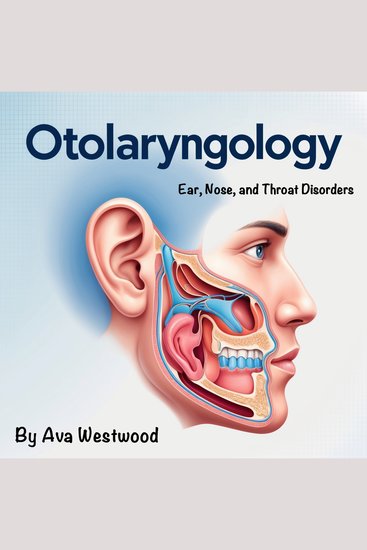
  • Otolaryngology - Ear Nose and Throat Disorders - cover

    Otolaryngology - Ear Nose and...

    Ava Westwood

    • 0
    • 0
    • 0
    The ear, nose, and throat (ENT) are interconnected structures that perform essential functions such as hearing, balance, respiration, and vocalization. Their anatomical complexity allows them to work together efficiently, contributing to overall health and communication. 
    The ear is divided into three main sections: the outer ear, middle ear, and inner ear. The outer ear consists of the auricle (pinna) and the external auditory canal, which collect and direct sound waves toward the tympanic membrane (eardrum). The middle ear houses the ossicles—the malleus, incus, and stapes—which amplify sound vibrations and transmit them to the inner ear. The inner ear contains the cochlea, a spiral-shaped structure that converts sound waves into electrical impulses sent to the brain via the auditory nerve. The inner ear also includes the vestibular system, which regulates balance through the semicircular canals and otolithic organs that detect head movements and spatial orientation. 
    The nose serves both respiratory and olfactory functions. It is structurally divided into the external nose and the internal nasal cavity. The external nose consists of bone and cartilage, while the nasal cavity is lined with mucosa and separated by the nasal septum. Inside the nasal cavity, the nasal conchae (turbinates) filter, warm, and humidify incoming air. The olfactory epithelium, located in the upper nasal cavity, contains specialized receptors that detect odors and transmit sensory information to the brain through the olfactory nerve. Additionally, the paranasal sinuses—frontal, maxillary, ethmoid, and sphenoid—contribute to voice resonance, mucus production, and the reduction of skull weight.
    Show book
  • Your Brain Is Playing Tricks On You - How the Brain Shapes Opinions and Perceptions - cover

    Your Brain Is Playing Tricks On...

    Albert Moukheiber

    • 0
    • 0
    • 0
    Why are we often convinced that we’re right even when we’re wrong? Why are we jealous, or paranoid, even when we have absolutely no reason to be? Why is it so easy for fake news to spread around the globe and fool us? It’s because we don’t see the world as it is, rather we reconstruct it in our mind.
    Show book
  • Intuitive Eating Principles - A Revolutionary Approach to Weight Loss and Well-Being With Intuitive Eating - cover

    Intuitive Eating Principles - A...

    Behnay Books

    • 0
    • 0
    • 0
    Is dieting and counting calories making you crazy? Intuitive Eating Principles book is here to help you. 
    You’ve probably tried every diet out there. You may have even tried counting calories or spending hours in the kitchen cooking healthy meals. But somehow, you always find yourself back at your old eating habits. If weight loss is your goal, it’s time to try intuitive eating. This approach to weight loss focuses on eating foods that are satisfying and feel good in your body. So if counting calories or meticulously planning every meal isn’t working for you, it might be time to try intuitive eating principles. It will teach you how to change the way you think about food and eat without feeling deprived or crazy. 
    Intuitive eating is a diet mindset that encourages people to eat in a way that feels satisfying, rather than trying to restrict or eliminate food groups. This approach can help people lose weight without dieting or feeling deprived. Intuitive eating involves learning to pay attention to your own body and how it responds to foods. When you eat intuitively, you will feel full sooner and eat less overall. You may also find that you are more likely to stick to a healthy diet overall because you’ll feel satisfied with less food. If you’re struggling to lose weight, give intuitive eating a try – it might be the key to your success. 
    Intuitive eating is a way of life that revolves around honoring your body and food. Rather than trying to restrict or change what you eat, intuitive eating allows you to connect with your hunger and fullness signals. This way of eating can help you lose weight and feel more satisfied, which can lead to improved moods and happiness. In this book, you will teach you how to begin practicing intuitive eating, how to develop a healthy relationship with food, and how to stick with it over time.
    Show book
  • The Promise of Psychedelics - Science-Based Hope for Better Mental Heath - cover

    The Promise of Psychedelics -...

    Dr. Peter Silverstone

    • 0
    • 0
    • 0
    "Nearly forty years ago, Dr. Peter Silverstone was a young MD who took up a new position in psychopharmacology research at Oxford University. Since then, the field has bloomed into a spectrum of possibilities that include the use of psychedelics as a treatment for depression, addiction, PTSD, grief, and anxiety. The Promise of Psychedelics is for you—if you or someone you know has not received successful treatment despite trying several mental-health therapy programs and medication. You are not alone: one in five adults suffer mental-health issues that impact their functioning. Psychedelics such as psilocybin, ketamine, MDMA, cannabinoids, and LSD can cause profound, intense changes—not only in what we experience but how we think, how we feel, and what we do. Dr. Silverstone avoids scientific language whenever possible, so you won’t feel overwhelmed. You’ll be introduced to the most recent advances in our understanding of psychedelics: what they are, how they work, what the risks are, and which ones will transform mental-health treatment for millions of patients. You’ll gain an understanding of the complexity of the regulatory approval process and why it takes so long for some of these psychedelics to become legal for therapeutic use. You’ll walk away from The Promise of Psychedelics with a big dose of hope if you’ll pardon the pun. The good news is that we’re on the cusp of a revolution in mental health—one offering hope that many just might soon see the end of mental illness."
    Show book
  • EATING DISORDERS FOOD ADDICTION AND ULTRA-PROCESSED FOOD DEPENDENCY: Defining the Problem - Finding the Solution - cover

    EATING DISORDERS FOOD ADDICTION...

    Marty Lerner Ph.D

    • 0
    • 0
    • 0
    Food Addiction and Ulta-Processed Food Dependency are diseases typified by loss of control over the ability to stop eating certain foods. Scientifically, food addiction is a cluster of chemical dependencies on specific foods or food substances. After ingesting highly palatable foods, such as those containing significant amounts of sugar, flour, excess fat, and/or salt, some people’s brains crave these foods. In addition, the more processed a food or substance is, the greater its addictive potential. Over time, the progressive eating of these foods distorts a person’s thinking and leads to negative consequences they do not want but cannot stop. What follows is a description of these phenomena and how they are like and different from eating disorders. Further, the book explores the utilization of a substance abuse treatment model as it applies to recovering from these addictive and compulsive disorders.
    Show book