Join us on a literary world trip!
Add this book to bookshelf
Grey
Write a new comment Default profile 50px
Grey
Subscribe to read the full book or read the first pages for free!
All characters reduced
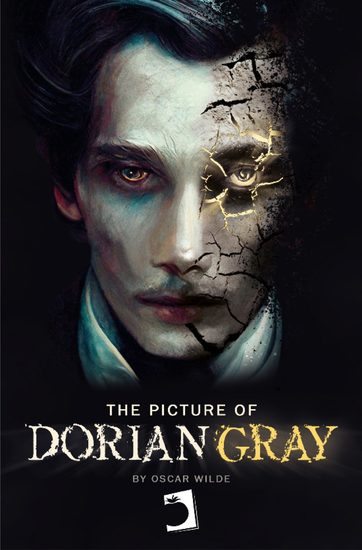
The picture of Dorian Gray - cover

The picture of Dorian Gray

Oscar Wilde

Publisher: Edicions Perelló

  • 0
  • 0
  • 0

Summary

Oscar Wilde's talented pen tells the story of one man's decline. It is a book considered the most moral of immoral stories. This work has earned its author to overcome the description of a writer and be considered almost as a philosopher. Dorian Gray in exchange for eternal youth delivers his soul and ends up being corrupted by the evil influence of his mentor. Highly recommended for readers of all times and geographies.

The fantastic richness finds its most appropriate expression in a luminous and refined style, and the paradox governs and regulates matter and word, scene and dialogue, Wilde tries to show the transfiguration that art operates on reality.
Available since: 02/07/2024.
Print length: 240 pages.
Other books that might interest you

  • Middlemarch (Book 5: The Dead Hand) - cover

    Middlemarch (Book 5: The Dead Hand)

    George Eliot

    • 0
    • 0
    • 0
    Middlemarch (Book 5: The Dead Hand), A Study of Provincial Life is a novel by English author George Eliot, the pen name of Mary Ann Evans. It appeared in eight installments (volumes) in 1871 and 1872. Set in Middlemarch, a fictional English Midlands town, from 1829 to 1832, it follows distinct, intersecting stories with many characters. Issues include the status of women, the nature of marriage, idealism, self-interest, religion, hypocrisy, political reform, and education. Leavened with comic elements, Middlemarch approaches significant historical events in a realist mode: the Reform Act 1832, early railways, and the accession of King William IV. It looks at medicine of the time and reactionary views in a settled community facing unwelcome change. Eliot began writing the two pieces that formed the novel in 1869–1870 and completed it in 1871. Initial reviews were mixed, but it is now seen widely as her best work and one of the great English novels.
    Show book
  • Emma - cover

    Emma

    Jane Austen

    • 0
    • 0
    • 0
    "Emma" is a novel by Jane Austen, first published in 1815. The story revolves around Emma Woodhouse, a well-off young woman who prides herself on her matchmaking abilities. Despite her best intentions, her meddling often leads to misunderstandings and complications. As Emma navigates the challenges of friendships, romance, and social standings in her small English village, she also undergoes a journey of personal growth and self-discovery. The novel deals with themes of social class, marriage, and individual agency within the context of early 19th-century England.
    Show book
  • Salvaging of Civilization The - The Probable Future of Mankind (Unabridged) - cover

    Salvaging of Civilization The -...

    H. G. Wells

    • 0
    • 0
    • 0
    This scarce antiquarian book is a facsimile reprint of the original. Due to its age, it may contain imperfections such as marks, notations, marginalia and flawed pages. Because we believe this work is culturally important, we have made it available as part of our commitment for protecting, preserving, and promoting the world's literature in affordable, high quality, modern editions that are true to the original work.
    Show book
  • The Mysterious Stranger - cover

    The Mysterious Stranger

    Mark Twain

    • 0
    • 0
    • 0
    The Mysterious Stranger is a story by Mark Twain that tells the tale of a mysterious stranger who comes to a small town and changes the lives of its residents. It is difficult to understand what exactly is happening. However, it seems as though the stranger is a force for good, and he helps the townspeople to become better people. Ultimately, the mystery of the stranger's identity remains unsolved, but his impact on the town is clear.
    Show book
  • Across the Moors - From their pens to your ears genius in every story - cover

    Across the Moors - From their...

    W F Harvey

    • 0
    • 0
    • 0
    William Fryer Harvey AM was born on 14th April 1885 into a wealthy Quaker family in Leeds, West Yorkshire. 
    He was educated at the Quaker Bootham School in Yorkshire and Leighton Park School in Reading before university at Balliol College, Oxford.  
    His health was fragile and he poured his energies into writing short stories and in 1910 published his first collection ‘Midnight House’. 
    In the Great War he was with the Friends' Ambulance Unit and then served as a surgeon-lieutenant in the Royal Navy.  There he received the Albert Medal for Lifesaving but lung damage received at that time troubled him for the rest of his life. 
    He continued to write short stories, and even a memoir, but by 1925 ill health had forced his retirement to any outside work.  Three years later he published his second collection which contained his macabre classic ‘The Beast with Five fingers’, only one more collection would come from his pen in his lifetime. 
    For many years of his life he now lived in Switzerland with his wife but a yearning to be home saw them come back to England in 1935. 
    W F Harvey died in Letchworth on the 4th June 1937. He was 52.
    Show book
  • David Swan - From their pens to your ears genius in every story - cover

    David Swan - From their pens to...

    Nathaniel Hawthorne

    • 0
    • 0
    • 0
    Nathaniel Hawthorne was born on 4th July 1804 in Salem, Massachusetts, a town synonymous with the earlier Salem Witch Trials. It was instrumental in Hawthorne’s later use of American Gothic and dark romanticism in his writing. 
    He was a mere four years old when his father died and his mother took him and his two sisters to live with her family and then on to their own home in Raymond, Maine. The young Hawthorne had a passion for fiction and poetry and voraciously read the works of Ann Radcliffe, Henry Fielding and Lord Byron.  
    He was sent to college at his maternal uncle’s insistence. During these years he met and befriended Henry Wadsworth Longfellow and future U S president Franklin Pierce. These friendships were lifelong and to have a crucial impact on his writings and career.  
    At college Hawthorne had made attempts at writing short stories and essays but without opportunities to publish. It was only in 1828 that he finally published his novel ‘Franshawe’ to little success and so he began work as editor for the American Magazine of Useful and Entertaining Knowledge.  
    Hawthorne’s short stories were first published in magazines but in 1837 were collected and published as ‘Twice-Told Tales’. A steady literary career still did not come his way and so he worked in a good position at Salem’s port and married the love of his life Sophia Peabody. They moved to live in ‘The Old Manse’ at Concord, Massachusetts.   
    Finally. in 1850 came spectacular literary and commercial success with ‘The Scarlet Letter’ followed by ‘The House of the Seven Gables’ the following year.  
    In 1852, Hawthorne published a biography of presidential candidate Franklin Pierce. After Pierce’s victory he was appointed consul in Liverpool, a position that offered prestige, money and fame. At the end of this appointment he returned several times to Europe before settling in Massachusetts and resuming writing and publication. 
    During the early 1860’s his health declined and on 19th May 1864 during a trip to Plymouth, New Hampshire. He was 59 and was buried in Sleepy Hollow Cemetery in Concord, Massachusetts.
    Show book