Join us on a literary world trip!
Add this book to bookshelf
Grey
Write a new comment Default profile 50px
Grey
Subscribe to read the full book or read the first pages for free!
All characters reduced
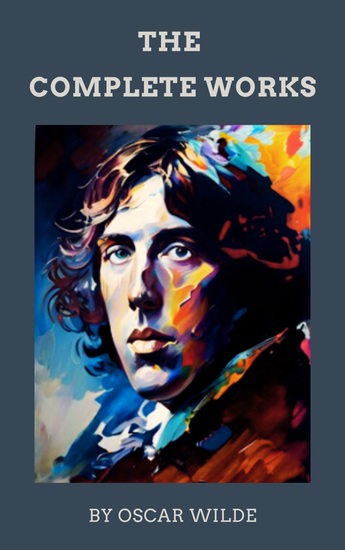
The Complete Works of Oscar Wilde - cover

The Complete Works of Oscar Wilde

Oscar Wilde, Zenith Crescent Moon Press

Publisher: Zenith Crescent Moon Press

  • 0
  • 0
  • 0

Summary

🌟 Enter the dazzling world of Oscar Wilde with The Complete Works of Oscar Wilde, a collection that captures the brilliance and wit of one of literature's most celebrated minds. This eBook brings together Wilde's most iconic works, from the hauntingly beautiful The Picture of Dorian Gray to his hilarious and thought-provoking plays like The Importance of Being Earnest.

📖 Discover Wilde's profound commentary on society, love, and morality, expressed through his unique blend of humor, intellect, and poetic elegance. The collection also includes his essays, poetry, and letters, offering readers a rare glimpse into the mind of this extraordinary literary genius.

✨ Renowned for his sharp wit and timeless themes, Oscar Wilde's works continue to inspire, entertain, and provoke thought across generations. This definitive collection is a treasure trove for fans of classic literature and lovers of clever, heartfelt storytelling.

🎯 Embrace the charm, wit, and wisdom of Oscar Wilde's timeless creations. Click Buy Now and immerse yourself in the literary legacy of a true master.
Available since: 03/26/2025.
Print length: 1216 pages.

Other books that might interest you

  • The Consequences - Stories - cover

    The Consequences - Stories

    Manuel Muñoz

    • 0
    • 0
    • 0
    "Her immediate concern was money." So begins the first story in Manuel Muñoz's dazzling new collection. In it, Delfina has moved from Texas to California's Central Valley with her husband and small son, and her isolation and desperation force her to take a risk that ends in profound betrayal. 


    These exquisite stories are set in the 1980s in the small towns that surround Fresno. Muñoz depicts the Mexican and Mexican American farmworkers who put food on our tables but are regularly and ruthlessly rounded up by the migra, as well as the quotidian struggles and immense challenges faced by their families. The messy and sometimes violent realities navigated by his characters—straight and gay, immigrant and American-born, young and old—are tempered by moments of surprising, tender care: Two young women meet on a bus to Los Angeles to retrieve husbands who must find their way back from the border after being deported; a gay couple plans a housewarming party that reveals buried class tensions; a teenage mother slips out to a carnival where she encounters the father of her child; the foreman of a crew of fruit pickers finds a dead body and is subsequently—perhaps literally—haunted. 


    In The Consequences, obligation can shape, support, and sometimes derail us. It's a magnificent new book from a gifted writer at the height of his powers.
    Show book
  • Chelkash by Maxim Gorky - A small time thief is caught up in a larger scheme testing his willpower and showing the dangers of greed - cover

    Chelkash by Maxim Gorky - A...

    Maxim Gorky

    • 0
    • 0
    • 0
    Alexei Maximovich Peshkov was born on 28th March 1868, in Nizhny Novgorod, Russia. 
     
    Better known as Maxim Gorky he was orphaned at 11 and ran away from home at 12.  At 19 he had already attempted suicide and thereafter travelled, by foot, across the Russian Empire for 5 years. 
     
    His first book ‘Essays & Stories’ in 1898 was a sensation and so began a long career as an author of short stories, novels and plays.  Gorky saw writing as a moral and political act that would help to change the unjust world around him.  He was an ardent early advocate of the emerging Marxist movement and publicly opposed the Tsarist regime leading several times to his arrest.  
     
    In 1904 he began his own theatre but the censor banned every play and Gorky was forced to abandon the project. 
     
    But Gorky was a financially successful author, editor, and playwright and gave monies to political parties as well as for civil rights and social reform.  The brutal shooting of workers, which set in motion the Revolution of 1905, pushed Gorky more decisively toward radical solutions.  
     
    In 1906 he went to the United States to raise funds for the Bolsheviks. Those experiences including a scandal over travelling with his lover and not his wife deepened his contempt for the ‘bourgeois soul.’ 
     
    Gorky now moved to Capri in Italy, both for health reasons and to escape the increasingly repressive times in Russia.  
     
    An amnesty for the 300th anniversary of the Romanov dynasty saw him return to Russia in 1914. His politics remained close to the Bolshevik cause.  But soon, after the 1918 revolution, his essays referred to Lenin as a tyrant for his senseless arrests and repression.  He was soon appealing to the outside world for food aid after the catastrophic crop failure. 
     
    In October 1921 Gorky returned to Italy, now in Fascist hands, and settled in Sorrento until 1932.  His health worsened with the onset of tuberculosis. 
     
    He wrote several successful books there but now decided to find an understanding with the communist regime. Stalin invited him home and his return was hailed as a major propaganda victory.  He was decorated with the Order of Lenin, and a province, a park, and various streets re-named in his honour. 
     
    But he had his faults too.  In 1933, Gorky co-edited a book on the White Sea-Baltic Canal and denied even a single prisoner died during its construction, but thousands had. As well, knowing that some Nazis were homosexual, a phrase was attributed to him that said ‘exterminate all homosexuals and fascism will vanish’.  Although he was himself was quoting another he was decidedly homophobic. 
     
    With the increase of Stalinist repression in 1935 Gorky was placed under unannounced house arrest. 
     
    Maxim Gorky died on the 18th June 1936 from pneumonia.  He was 68. 
     
    Stalin and Molotov were among those who carried Gorky's urn of ashes at his funeral.  
     
    In Gorky’s story, a thief, Chelkash, ensnares a young man into his scheme to steal silk from a ship.  When he then sells the stolen goods he is set upon by the young accomplice.  What happens then is as unexpected as it is remarkable.
    Show book
  • White Nights - cover

    White Nights

    Fyodor Dostoevsky

    • 0
    • 0
    • 0
    White Nights by Fyodor Dostoevsky 
    In the ethereal twilight of St. Petersburg's white nights, a young loner's solitary existence is transformed by a chance encounter with the enchanting Nastenka. Over several luminous evenings, two kindred souls embark on a journey of emotional discovery, sharing dreams, disappointments, and the fragile hope of love. Dostoevsky's poignant novella delves into the depths of human loneliness, unrequited love, and the universal yearning for connection. "White Nights" is an unforgettable exploration of the soul’s battle between idealism and reality, penned by one of literature’s greatest observers of the human condition. 
    Dive into this masterful depiction of passion and despair, and experience the heartrending beauty of an all-too-fleeting love.
    Show book
  • Absolution - cover

    Absolution

    Kimberly Thomas

    • 0
    • 0
    • 0
    Marg's life has always been filled with disappointment and failure. A failed marriage, a mother who always compared her to her perfect sister, then having unfulfilled desires that has her packing up and leaving everything and everyone behind. 


    When she arrives in Oak Harbor, everything is wonderful in this quiet coastal town. Marg finally feels happy, but one thing is certain—your past always catches up with you. When Marg's grandmother dies, it opens the door to the things that Marg has worked so hard to lock away, but they ultimately come flooding back into her perfectly sculpted world. Her mother arrives with a plan to sell the home she's become so attached to and hoarding a secret that could destroy the very fabric of her existence. 


    In comes the Hamilton sisters and a love interest that want to teach Marg the true meaning of love, friendship, and forgiveness. But is it enough? Will Marg be able to handle the truth? Or will it completely shatter her world?
    Show book
  • Rising Warrior - A Jesse McDermitt Novel - cover

    Rising Warrior - A Jesse...

    Wayne Stinnett

    • 0
    • 0
    • 0
    After returning home to the Florida Keys, Jesse moves on to Fort Myers, his hometown on the Southwest Florida coast. There is much work to be done, and Jesse is no stranger to hard work. 
    On a kayak outing with friends, Jesse's daughter finds and rescues a manatee suffering from respiratory problems. The red tide has returned, and fish are dying by the thousands, along with dolphins, manatees, and sea birds. 
    The algal bloom is a naturally occurring phenomenon, but this time it's much worse. Theories abound; it's something left over from the previous spring's coronavirus outbreak, it's caused by pollution, someone is intentionally creating a super-algae.... 
    But there's something far more sinister at work, and it's up to Jesse to find out what it is and put a stop to it.
    Show book
  • A Thousand Deaths - From their pens to your ears genius in every story - cover

    A Thousand Deaths - From their...

    Jack London

    • 0
    • 0
    • 0
    John Griffith Chaney was born on January 12th, 1876 in San Francisco.   
    His father, William Chaney, was living with Flora Wellman when she became pregnant.  Chaney insisted she have an abortion.  Flora's response was to turn a gun on herself.  Although her wounds were not severe the trauma made her temporarily deranged. 
    In late 1876 his mother married John London and the young child was brought to live with them as they moved around the Bay area, eventually settling in Oakland where now, calling himself Jack, he completed grade school. 
    Jack worked hard at several jobs, sometimes 12-18 hours a day, but his dream was university.  He studied hard and borrowed the money to enrol in the summer of 1896 at the University of California in Berkeley. 
    In 1897, at 21, Jack searched out newspaper accounts of his mother's suicide attempt and for the name of his biological father. He wrote to Chaney, then living in Chicago, who claimed he could not be Jack’s father because he was impotent and casually asserted that London's mother had relations with other men.  Jack, devastated by the response, quit Berkeley and went to the Klondike. Other accounts suggest that his dire finances presented Jack with the excuse he needed to leave. 
    In the Klondike Jack began to gather material for his writing but also accumulated many health problems, including scurvy, which together with hip and leg problems he would carry for the rest of his life. 
    During the late 1890's Jack was regularly publishing short stories and by the turn of the century full blown novels. 
    By 1904 Jack had married, fathered two children and was now in the process of divorcing.  A stint as a reporter on the Russo-Japanese war of 1904 was equal amounts trouble and experience. But that experience was always put to good use in a continuing and remarkable output of work. 
    In 1905 he married Charmian Kittredge who at last was a soul and companion who brought him some semblance of peace despite his advancing alcoholism and his incurable wanderlust. 
    Twelve years later Jack had amassed both wealth and a literary reputation through such classics as ‘The Call of the Wild’, ‘White Fang’ and many others. He had a reputation as a social activist and was a tireless friend of the workers.   
    Jack London died suffering from dysentery, late-stage alcoholism and uremia, aged only 40, on November 22nd 1916 at his property in Glen Elen in California.
    Show book