Join us on a literary world trip!
Add this book to bookshelf
Grey
Write a new comment Default profile 50px
Grey
Subscribe to read the full book or read the first pages for free!
All characters reduced
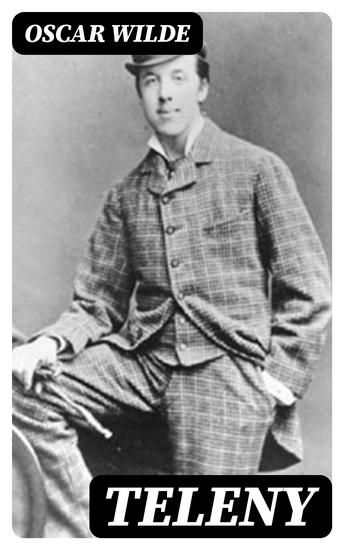
Teleny - Enriched edition Erotica Classic - cover

Teleny - Enriched edition Erotica Classic

Oscar Wilde

Publisher: DigiCat

  • 0
  • 0
  • 0

Summary

Teleny, co-written by Oscar Wilde and his circle, is an audacious exploration of forbidden love and desire, framed within the context of late 19th-century Fin de Siècle literature. This erotic novel delves deeply into the complex and often tumultuous relationship between the protagonist, a young man, and his enigmatic lover, the musician Teleny. The prose is richly evocative and laced with decadent flourishes, embodying the aestheticism that Wilde championed. As a testament to the exploration of sexual identity and same-sex love, the narrative unfolds within a framework of intimate confessions and philosophical musings, critiquing the societal conventions of its time while inviting the reader into a world of unrestrained passion and self-discovery. Oscar Wilde, a prominent figure of the Aesthetic Movement, was renowned for his wit and flamboyant style; his personal experiences with sexuality and society undoubtedly influenced his portrayal of the themes in Teleny. At a time when such relationships were taboo, Wilde's collaboration on this text reflects both his artistic freedom and the tensions surrounding sexual identity within Victorian norms. Wilde's own experiences and the subsequent societal repercussions may offer insights into the complexities faced by the characters in the novel. Teleny is not only an important work for its audacious themes but also a significant piece of literary history that struggles against the constraints of its time. Readers seeking an authentic voice that speaks to love's intricacies and life's hidden passions will find in Teleny a compelling invitation to explore the depths of human emotion, as well as a reflection on the turbulent relationship between art and morality. This novel is essential for those interested in queer literature and the evolution of eroticism in literature.

In this enriched edition, we have carefully created added value for your reading experience:
- A succinct Introduction situates the work's timeless appeal and themes.
- The Synopsis outlines the central plot, highlighting key developments without spoiling critical twists.
- A detailed Historical Context immerses you in the era's events and influences that shaped the writing.
- An Author Biography reveals milestones in the author's life, illuminating the personal insights behind the text.
- A thorough Analysis dissects symbols, motifs, and character arcs to unearth underlying meanings.
- Reflection questions prompt you to engage personally with the work's messages, connecting them to modern life.
- Hand‐picked Memorable Quotes shine a spotlight on moments of literary brilliance.
- Interactive footnotes clarify unusual references, historical allusions, and archaic phrases for an effortless, more informed read.
Available since: 05/25/2022.
Print length: 140 pages.

Other books that might interest you

  • 150 Great American Events - Important Moments in History that Forged a Nation - cover

    150 Great American Events -...

    William J. Bennett, John T. E....

    • 0
    • 0
    • 0
    Almost a decade ago, author and educator William J. Bennett and John T. E. Cribb published a 365-day almanac of our nation's history. Now, in this new two-volume series compiled from The American Patriot’s Almanac, Bennett and Cribb’s masterful grasp of our history offers 150 examples of fascinating details of great American events. 
    A two-volume series compiled from William J. Bennett's bestselling book, revised and updated. 
    150 Great American Events includes:American drama and interesting facts about American figuresObscure details about American historyPatriotic facts to broaden one’s sense of the pastBold personalities and internal conflictsDiscoveries, ideas, and more 
    In these easy-to-read entries, historical American events reemerge not as cold facts or boring details in a textbook, but as authentic events experienced by full-blooded, heroic pioneers whose far-reaching vision forged our nation. Great for history buffs, homeschoolers, teachers, and people who are interested in American history.
    Show book
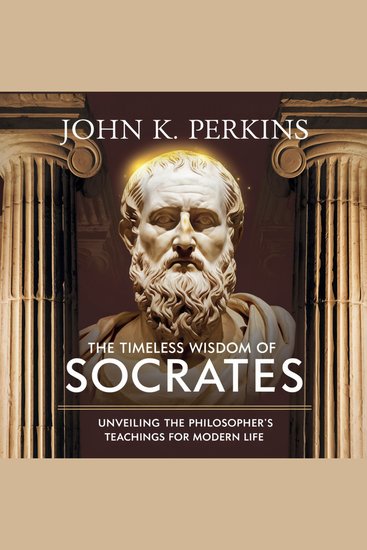
  • The Timeless Wisdom of Socrates Unveiling the Philosopher's Teachings for Modern Life - Applying Ancient Philosophy to Modern Challenges for a More Thoughtful and Ethical Life - cover

    The Timeless Wisdom of Socrates...

    John K. Perkins

    • 0
    • 0
    • 0
    The Timeless Wisdom of Socrates: Unveiling the Philosopher’s Teachings for Modern Life is a thought-provoking exploration of Socratic philosophy and its relevance in today’s world. Through engaging storytelling and insightful analysis, this book delves into Socrates’ timeless teachings, focusing on self-knowledge, critical thinking, virtue, and ethical living. 
    By applying Socratic wisdom to modern challenges, this book encourages deep self-reflection and intellectual growth. Perfect for those seeking clarity, personal development, and philosophical insights, The Timeless Wisdom of Socrates bridges ancient wisdom with contemporary life, providing a roadmap for living with integrity and wisdom.
    Show book
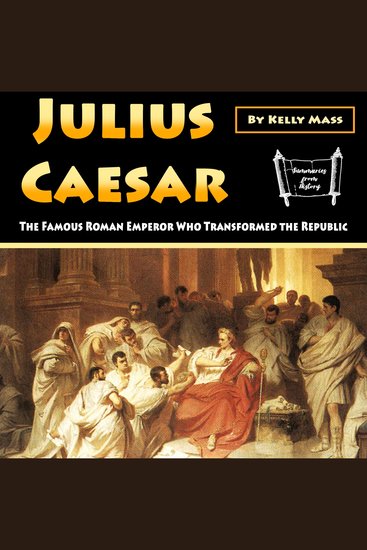
  • Julius Caesar - The Famous Roman Emperor Who Transformed the Republic - cover

    Julius Caesar - The Famous Roman...

    Kelly Mass

    • 0
    • 0
    • 0
    Gaius Julius Caesar remains one of the most influential and recognizable figures in history. A brilliant military commander and astute statesman, Caesar played a decisive role in the events that led to the collapse of the Roman Republic and the rise of the Roman Empire. His life and career were marked by political ambition, military conquests, and transformative reforms that forever changed the Roman world.  
    Born into a patrician family, Caesar rose to prominence in Roman politics through strategic alliances and persuasive rhetoric. In 60 BC, he formed the First Triumvirate with Marcus Licinius Crassus and Gnaeus Pompeius Magnus, known as Pompey. This informal political alliance dominated Roman politics for several years, enabling Caesar to secure the consulship in 59 BC. The Triumvirate sought to advance the interests of the Populares, a political faction advocating for the rights of the common people, in opposition to the Optimates, the conservative faction of the Roman Senate. Powerful senators such as Cato the Younger and orator Cicero resisted Caesar’s growing influence, leading to increased political tensions.  
    To solidify his power, Caesar launched a series of military campaigns known as the Gallic Wars from 58 BC to 51 BC. These campaigns significantly expanded Roman territory, bringing Gaul (modern-day France and Belgium) under Roman control. Caesar's military success earned him wealth, popularity, and the unwavering loyalty of his legions. His invasion of Britain and the daring construction of a bridge over the Rhine River showcased his strategic prowess and ambition. These victories, however, unsettled Pompey, who grew increasingly aligned with the Senate following Crassus’ death in 53 BC. Fearing Caesar’s rising power, the Senate ordered him to disband his army and return to Rome as a private citizen. 
    Show book
  • 84-19 Rhapsodies & co from I - Poems and Notes from a doctor - cover

    84-19 Rhapsodies & co from I -...

    Docteur Cybirdy

    • 0
    • 0
    • 0
    84-19 Rhapsodies & Co from I is naming and shaming world leaders, casting light on post- genomic science, and highlighting the main triggers of the inhuman aspect of the Covid era. With courage and inspired by the fate of Julia and Winston in George Orwell 1984, Docteur Cybirdy reveals through poetry her thoughts and intimate beliefs, prompting an urgent review of the role of post-genomic science in today’s world while instilling hope for a peaceful and serene future for humanity.
    Show book
  • Roman Law and Governance - Foundations of Western Legal Systems - cover

    Roman Law and Governance -...

    Rogan Fish

    • 0
    • 0
    • 0
    The foundation of Roman law was deeply rooted in the customs and traditions of early Roman society. Before formal legal codification, Roman law was based on unwritten customs passed down through generations. These customs, known as mos maiorum or "the way of the ancestors," guided legal practices and social norms. However, as Rome expanded, the need for a more structured and consistent legal system became evident. This led to the development of one of the earliest recorded legal codes, the Twelve Tables, which became the cornerstone of Roman law. 
    The Twelve Tables, established around 450 BCE, were a response to demands from the plebeians for greater legal transparency. Prior to this, laws were primarily controlled by the patrician class, leaving the lower classes vulnerable to arbitrary decisions. The Twelve Tables provided a written and publicly displayed set of laws that covered various aspects of daily life, including property rights, contracts, family matters, and criminal offenses. While these laws were often harsh by modern standards, they were crucial in establishing the principle that law should be known and applied equally to all citizens. 
    Legal interpretation played a crucial role in the early Roman legal system, and the pontiffs, a group of religious and legal authorities, were responsible for explaining and applying the laws. Since early Roman law was closely linked to religious practices, the pontiffs held significant influence over legal matters. Over time, however, legal decision-making shifted from religious authorities to magistrates and elected officials, paving the way for a more secular and systematic approach to governance.
    Show book
  • Havamal - The Words of Odin the High One - cover

    Havamal - The Words of Odin the...

    Olive Bray

    • 0
    • 0
    • 0
    This audiobook features a special tribal ambient version of the full text in addition to the raw narration. 
    These are the words of Odin the High One. Hávamál is presented as a single poem in the Icelandic Codex Regius, a collection of Old Norse poems from the Viking age. The poem, itself a combination of numerous shorter poems, is largely gnomic, presenting advice for living, proper conduct, and wisdom. It is considered an important source of Old Norse philosophy.
    Show book