Join us on a literary world trip!
Add this book to bookshelf
Grey
Write a new comment Default profile 50px
Grey
Subscribe to read the full book or read the first pages for free!
All characters reduced
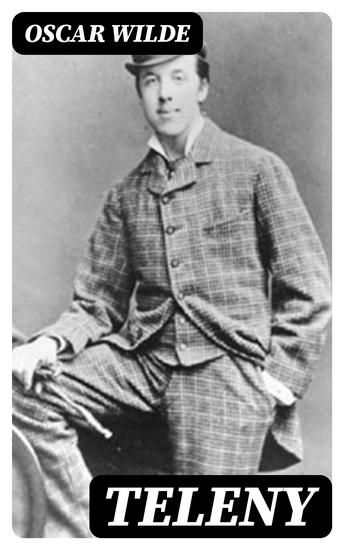
Teleny - Enriched edition Erotica Classic - cover

Teleny - Enriched edition Erotica Classic

Oscar Wilde

Publisher: DigiCat

  • 0
  • 0
  • 0

Summary

Teleny, co-written by Oscar Wilde and his circle, is an audacious exploration of forbidden love and desire, framed within the context of late 19th-century Fin de Siècle literature. This erotic novel delves deeply into the complex and often tumultuous relationship between the protagonist, a young man, and his enigmatic lover, the musician Teleny. The prose is richly evocative and laced with decadent flourishes, embodying the aestheticism that Wilde championed. As a testament to the exploration of sexual identity and same-sex love, the narrative unfolds within a framework of intimate confessions and philosophical musings, critiquing the societal conventions of its time while inviting the reader into a world of unrestrained passion and self-discovery. Oscar Wilde, a prominent figure of the Aesthetic Movement, was renowned for his wit and flamboyant style; his personal experiences with sexuality and society undoubtedly influenced his portrayal of the themes in Teleny. At a time when such relationships were taboo, Wilde's collaboration on this text reflects both his artistic freedom and the tensions surrounding sexual identity within Victorian norms. Wilde's own experiences and the subsequent societal repercussions may offer insights into the complexities faced by the characters in the novel. Teleny is not only an important work for its audacious themes but also a significant piece of literary history that struggles against the constraints of its time. Readers seeking an authentic voice that speaks to love's intricacies and life's hidden passions will find in Teleny a compelling invitation to explore the depths of human emotion, as well as a reflection on the turbulent relationship between art and morality. This novel is essential for those interested in queer literature and the evolution of eroticism in literature.

In this enriched edition, we have carefully created added value for your reading experience:
- A succinct Introduction situates the work's timeless appeal and themes.
- The Synopsis outlines the central plot, highlighting key developments without spoiling critical twists.
- A detailed Historical Context immerses you in the era's events and influences that shaped the writing.
- An Author Biography reveals milestones in the author's life, illuminating the personal insights behind the text.
- A thorough Analysis dissects symbols, motifs, and character arcs to unearth underlying meanings.
- Reflection questions prompt you to engage personally with the work's messages, connecting them to modern life.
- Hand‐picked Memorable Quotes shine a spotlight on moments of literary brilliance.
- Interactive footnotes clarify unusual references, historical allusions, and archaic phrases for an effortless, more informed read.
Available since: 05/25/2022.
Print length: 140 pages.


Other books that might interest you

  • Ejaculate Responsibly - A Whole New Way to Think About Abortion - cover

    Ejaculate Responsibly - A Whole...

    Gabrielle Stanley Blair

    • 0
    • 0
    • 0
    In Ejaculate Responsibly, Gabrielle Blair offers a provocative reframing of the abortion issue in post-Roe America. In a series of 28 brief arguments, she deftly makes the case for moving the abortion debate away from controlling and legislating women’s bodies and instead directs the focus on men’s lack of accountability in preventing unwanted pregnancies.  Highly readable, accessible, funny, and unflinching, Blair builds her argument by walking readers through the basics of fertility (men are 50 times more fertile than women), the unfair burden placed on women when it comes to preventing pregnancy (90% of the birth control market is for women), the wrongheaded stigmas around birth control for men (condoms make sex less pleasurable, vasectomies are scary and emasculating), and the counterintuitive reality that men, who are fertile 100% of the time, take little to no responsibility for preventing pregnancy.  The result is a compelling and convincing case for placing the responsibility—and burden—of preventing unwanted pregnancies away from women and onto men.
    Show book
  • Women and Girls Thrive: Unlocking Hidden Strengths - "Boost your confidence and strength with 'Women and Girls Thrive'—transformative audio lessons at your fingertips!" - cover

    Women and Girls Thrive:...

    Dorian Ashcombe

    • 0
    • 0
    • 0
    Women and Girls Thrive: Unlocking Hidden Strengths 
    Are you eager to advance your career and enhance your knowledge in understanding autism's unique journeys?  
    Looking for a thorough guide that encompasses all the crucial elements to cultivate empathy and support?  
    Your search ends here!  
    This guide is your ultimate companion for expanding your understanding, applying your skills, and participating in meaningful exercises. With this resource, you're set for success. 
    Updated for the latest trends and insights into autism support. 
    Key features of this enriched guide: 
    - In-depth insights into understanding autism's unique journeys  
    - Comprehensive explanations that empower compassion for individuals with autism  
    - Effective strategies for support and advocacy  
    Our guide stands out through its comprehensive coverage, which is vital for your success. Topics are not just briefly mentioned; they are explored with precision and depth.  
    Please note that this guide operates independently and is not affiliated with any official autism organization.  
    Crafted with a straightforward structure and accessible language, our guide ensures smooth transitions between topics. Farewell to complex jargon—welcome clear, precise, and technically accurate content.  
    So, why wait? Click the BUY NOW button, secure your guide, and embark on a journey toward becoming an advocate for understanding and compassion! 
    Explore the hidden strengths that will help women and girls thrive!
    Show book
  • Feudalism and Its Transition - The Evolution of Feudal Systems and Their Collapse (3 in 1) - cover

    Feudalism and Its Transition -...

    Arlo Holders

    • 0
    • 0
    • 0
    This book contains the following titles: 
      - The Feudal System: Feudalism was a dominant social, economic, and political system in medieval Europe that shaped the lives of millions from the 9th to the 15th centuries. Rooted in the decline of the Roman Empire, it emerged as a response to the need for local defense, stability, and order. With the fall of centralized authority, particularly in the wake of the collapse of Roman imperial power, local leaders, and warriors filled the vacuum, giving rise to a new hierarchical structure that became the backbone of medieval society. 
      - The End of Feudalism: Feudalism was a social, political, and economic system that dominated medieval Europe, particularly from the 9th to the 15th century. Its structure was based on the exchange of land for loyalty, military service, and labor. At its core, feudalism established a hierarchical order in which the king, or monarch, granted land, known as fiefs, to vassals (nobles) in exchange for their service. In turn, these vassals would grant portions of their land to serfs or peasants, who worked the land in return for protection and sustenance. This land-based economy was highly localized, with power concentrated in the hands of a few, and much of daily life revolved around agricultural production.
    Show book
  • Caste Uncovered: Unraveling the Truths Behind Societal Divisions - "Elevate your perspective! Experience impactful audio lessons from 'Caste Uncovered' and reveal the truths of society" - cover

    Caste Uncovered: Unraveling the...

    Bastian Kincaid

    • 0
    • 0
    • 0
    Caste Uncovered: Unraveling the Truths Behind Societal Divisions 
    ⭐⭐ Simplified Guide and Explanations Included ⭐⭐ 
    Are you eager to advance in your understanding of societal structures and effectively engage with the complexities of caste? 
    Searching for a thorough resource that equips you with the essential insights to navigate the realities of caste dynamics? 
    Your search ends here! 
    This guide acts as your ultimate resource for deepening your comprehension, honing your empathy, and participating in practical discussions. With this, you’re set for impactful learning. 
    Updated for the latest insights on caste understanding. 
    Key features of this enhanced guide include: 
    - In-depth perspectives on societal divisions and caste dynamics 
    - Comprehensive explanations fostering understanding and empathy 
    - Effective strategies for challenging entrenched beliefs and perceptions 
    Our guide stands out through its extensive coverage, vital for grasping the intricacies of caste. Concepts are explored with careful attention, avoiding superficial treatment. 
    Please note that this guide is not affiliated with any official caste-related organization; it serves as an independent resource focused on your enlightenment. 
    Crafted with a clear framework and accessible language, our guide ensures seamless transitions between topics. Say goodbye to complicated jargon and embrace clear, concise, and technically sound content. 
    So, why hesitate? Click the BUY NOW button, secure your guide, and embark on your journey to understanding societal divisions and fostering empathy!
    Show book
  • The Myths of the Maya - Cosmic Legends and Sacred Rituals - cover

    The Myths of the Maya - Cosmic...

    Julia Blacksmith

    • 0
    • 0
    • 0
    The Maya civilization, one of the most sophisticated and enduring cultures of Mesoamerica, flourished for thousands of years, leaving behind a rich legacy of myth, ritual, and cosmic understanding. Their world was deeply interconnected with the supernatural, where gods, spirits, and celestial forces played vital roles in everyday life. Through sacred texts, oral traditions, and intricate ceremonial practices, the Maya passed down their myths—stories that explained the origins of the universe, the struggles of gods and heroes, and the sacred cycles of time. These legends were not merely tales; they formed the foundation of their spiritual and societal structures, influencing everything from kingship to agriculture.  
    At the heart of Maya society was a profound connection between myth and ritual. Unlike many cultures that viewed myths as separate from daily life, the Maya saw them as living forces that required constant renewal through ceremonies, sacrifices, and offerings. Bloodletting, a sacred act performed by rulers and priests, was believed to nourish the gods and maintain cosmic balance. Grand pyramids and temple complexes, aligned with celestial events, served as sacred theaters where rituals reenacted the struggles of deities, ensuring harmony between the human and divine realms. The famous Popol Vuh, often regarded as the Maya "Book of Creation," recounts the epic journey of the Hero Twins as they navigate the treacherous underworld, triumphing over the forces of chaos and death. This myth, like many others, reflected the Maya’s deep understanding of duality, rebirth, and the cosmic order.  
    Deciphering Maya mythology has been a long and complex journey, shaped by archaeological discoveries, linguistic breakthroughs, and the resilience of indigenous communities.
    Show book
  • Greek Dark Ages and Greek Renaissance The: The History and Legacy of the Bronze Age Transition to Archaic Greece - cover

    Greek Dark Ages and Greek...

    Editors Charles River

    • 0
    • 0
    • 0
    The Greek Dark Ages, sometimes referred to as the Homeric Age or the Geometric Period, spans the era of Greek history from the end of the Mycenaean civilization around 1100 BCE and the emergence of the Greek poleis in the 9th century BCE. It is an era that has provided little in terms of extant archaeological evidence, which in part explains the name “Dark Ages,” but this lack of evidence has led some archaeologists and historians to make the very great assumption that little of any real significance occurred during these 200 years. Instead, they view it as a sort of hiatus between the collapse of the Mycenaean culture and the emergence of Archaic Greece. As with other so-called “Dark Ages,” this assessment is simplified, and an absence of evidence should never be assumed as evidence of absence. 
    If anything, the collapse of the Mycenaeans was a drawn-out affair, and while the early centuries of the Dark Ages might beseen as a continuation of this trend, even in the worst years, there was a degree of continuity and even some innovations. These changes including the beginnings of the use of iron as an alternative to bronze and some religious practices that continued to be observed. Furthermore, enough remained to form the basis of a recovery in economic, cultural, and artistic aspects of life in the later stage of the era, and in the political sphere, changes necessitated by the collapse in the economic system certainly paved the way for the rise of the polis, which would prove so fundamental in Greece in the centuries that followed.  
    This laid the groundwork for the Greek Renaissance of the 8th century. During that time, the Greek alphabet developed and the earliest surviving Greek literature was composed, while in terms of art and architecture, sculptures and red-figure pottery began. Warfare changed significantly as well when the hoplite became the core infantry.
    Show book