Join us on a literary world trip!
Add this book to bookshelf
Grey
Write a new comment Default profile 50px
Grey
Subscribe to read the full book or read the first pages for free!
All characters reduced
Poetry - cover

Poetry

Oscar Wilde

Publisher: DigiCat

  • 0
  • 0
  • 0

Summary

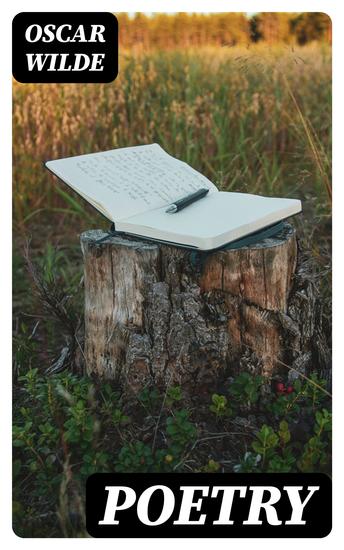
In "Poetry," Oscar Wilde showcases a masterful blend of aestheticism and profound introspection, encapsulating his belief in the beauty of form and the depths of human emotion. The collection traverses themes of love, longing, nature, and the poignant duality of joy and sorrow, all articulated through Wilde's lush, rhythmic verse. His artistic style mirrors the late 19th-century literary movement known for its emphasis on elegance, wit, and the pursuit of beauty, positioning Wilde as a luminary of his time, whose works continue to resonate with readers drawn to lyrical craftsmanship and insightful reflection. Oscar Wilde, a quintessential figure of the fin-de-siècle period, embodied the spirit of artistic rebellion and intellectual exploration. His experiences with societal norms, personal struggles, and aesthetic beliefs profoundly influenced his writing, allowing him to weave intricate narratives that reveal the complexities of human experience. His own life, marked by both brilliance and tragedy, imparts a unique depth to his poetry, inviting readers to reflect on the paradoxes of existence and the quest for aesthetic truth. This anthology is highly recommended for scholars and casual readers alike, offering an exquisite entry into Wilde's poetic genius. Those seeking to explore the marriage of beauty and existential inquiry will find themselves enchanted by the vivid imagery and emotional honesty that characterize Wilde's work. "Poetry" is a timeless exploration of the human condition, a must-read for anyone who appreciates the art of language.
Available since: 10/11/2022.
Print length: 210 pages.

Other books that might interest you

  • A View from the Bridge - cover

    A View from the Bridge

    Arthur Miller

    • 0
    • 0
    • 0
    Italian-American immigrant life in the 1950’s textures this searing drama of love and revenge. Longshoreman Eddie Carbone is devoted to his wife, Beatrice and to his niece, Catherine. When Beatrice’s impoverished Sicilian cousins enter the U.S. illegally, in hope of finding work, Eddie gives them a helping hand. But when Catherine and one of the cousins fall in love, Eddie’s affection for his niece turns into obsession. 
     
    An L.A. Theatre Works full-cast performance featuring Charles Cioffi, Harry Hamlin, Jamie Hanes, Mary McDonnell, Peter Morse, Ed O'Neill, Amy Pietz and Don Tieri.
    Show book
  • African Queen - cover

    African Queen

    Mr Punch Audiobooks

    • 0
    • 0
    • 0
    Full Cast Radio Drama 
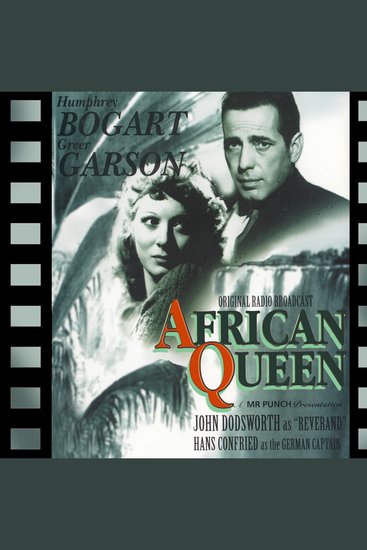
    Set in 1915 on the treacherous rivers of war-torn Africa. Humphrey Bogart plays the gin sodden river trader, Charlie Allnut, who reluctantly agrees to help the prim missionary Rose Sayer, played in this radio version by Greer Garson, to travel down river on a hazardous journey and destroy a German gun boat. Humphrey Bogart won the 1951 Oscar for Best Actor, and again plays the uncouth captain of the tramp steamer in this special radio production.   
    This high-quality audiobook has been re-mastered and re-edited from the original radio broadcast.
    Show book
  • Kabul Goes Pop: Music Television Afghanistan (NHB Modern Plays) - cover

    Kabul Goes Pop: Music Television...

    Waleed Akhtar

    • 0
    • 0
    • 0
    Afghanistan. It's 2004. Farook and Samia broadcast live every day to the whole of Kabul, delivering ninety minutes of musical bliss: Britney, Backstreet Boys and Enrique Iglesias. But when their show starts to make waves, the two young friends must take on repressive forces to build a new Afghanistan.
    Inspired by the true story of Afghanistan's first youth music programme, Waleed Akhtar's play Kabul Goes Pop: Music Television Afghanistan explores a world following the US invasion that is complex, contradictory and shocking – all to a soundtrack of early noughties' pop.
    
    The play premiered at Brixton House, London, in 2022, directed by Anna Himali Howard, before touring the UK. It was presented with HighTide, in association with Mercury Theatre Colchester.
    Show book
  • The Poetry of George Meredith - Victorian master of poetry and prose that was nominated for the Nobel Prize seven times - cover

    The Poetry of George Meredith -...

    George Meredith

    • 0
    • 0
    • 0
    George Meredith, OM, was born in Portsmouth, England on February 12th, 1828. His mother died when he was five. As a fourteen year old teenager he was sent to a Moravian School in Neuwied, Germany, staying there for two years. After reading law he was articled as a solicitor, but quickly abandoned that career path for journalism and poetry. He collaborated with Edward Gryffydh Peacock, son of Thomas Love Peacock in publishing a privately circulated literary magazine, the Monthly Observer. At age twenty-one he married Mary Ellen Nicolls, Edward Peacock's beautiful widowed sister, on August 8th, 1849. Mary Ellen was 28. 
    The marriage produced one child; Arthur (1853–1890). Meredith collected his early writings, all previously published in periodicals, in an 1851 volume, Poems. In 1856 he posed as the model for The Death of Chatterton, a well-known picture by the English Pre-Raphaelite painter Henry Wallis, which romantised the teenage Chatterton’s demise. Although Meredith received some publicity for this his wife received rather more attention from Wallis because of it. Mary Ellen ran off with Wallis in 1858, shortly before giving birth to a child that all assumed to be Wallis. Tragically she died three years later. From that dreadful experience emerged a collection of sonnets entitled Modern Love in 1862 together with much of his first major novel; The Ordeal of Richard Feverel. 
    Meredith married Marie Vulliamy in 1864 and they settled in Surrey. Together they had two children; William (1865) and Mariette (1874). He had a keen understanding of comedy and his Essay on Comedy (1877) remains a reference work in the history of comic theory. In The Egoist, published in 1879, he applies some of his theories of comedy in one of his most thoughtful and enduring novels. During most of his career, he had difficulty crossing over from critical acclamation to popular success. It was only in 1885 that his first genuine commercial success appeared; Diana of the Crossways.  With an unreliable income stream he sought to bolster that with a job as a publisher's reader. 
    The company that gave him this lifeline was Chapman & Hall. His advice to the company was very well received and made him influential in the world of letters. In 1868 Meredith was introduced to Thomas Hardy. Hardy had submitted his first novel, The Poor Man and the Lady. Meredith felt the book was too bitter a satire on the rich and told Hardy to put it aside as it was likely it would be savaged by reviewers and destroy his nascent career. Meredith had received the same reaction with The Ordeal of Richard Feverel. Although it had brought him success it was judged so shocking that Mudie's circulating library cancelled an order of 300 copies. But these years, creatively, were very prolific and successful for Meredith. Novels and poems flowed from his pen including everything from The Adventures of Harry Richmond to many poetry volumes including The Lark Ascending (which later inspired the Vaughan Williams music). In 1886, tragedy struck when Marie Vulliamy, died of cancer. 
    Whilst his personal life was producing horrendous scars he was receiving many accolades. Oscar Wilde was a fan. In The Decay of Lying, he says of Meredith "Ah, Meredith! Who can define him? His style is chaos illumined by flashes of lightning". In 1891 Meredith was even the subject of homage when Sir Arthur Conan Doyle in his Sherlock Holmes short story The Boscombe Valley Mystery. Holmes turns to Watson during case discussions and says "And now let us talk about George Meredith, if you please, and we shall leave all minor matters until tomorrow." George Meredith, aged 81, died at his home in Box Hill, Surrey on May 18th, 1909. He is buried in the cemetery at Dorking, Surrey. 
     
    This volume comes to you from Portable Poetry, a specialized imprint from Deadtree Publishing.  Our range is large and growing and covers single poets, themes, and many compilations.
    Show book

  • Life Raft - cover

    Life Raft

    Fin Kennedy

    • 0
    • 1
    • 0
    – Every man for himself.
    – I'd say we're better off sticking together.
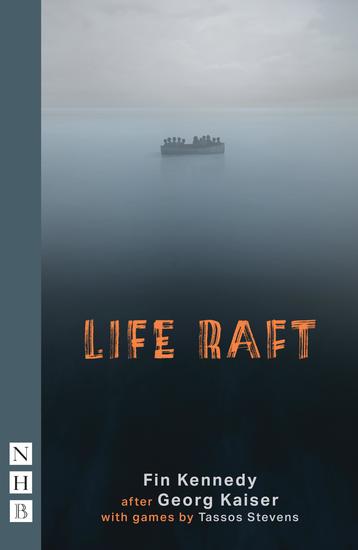
    In a mysterious dystopia, against a backdrop of war, a life raft filled with children is adrift at sea – their passenger liner sunk by an unknown and unseen enemy.
    As darkness falls and their rations dwindle, fear, superstition and madness start to take hold. Hours turn into days, and it becomes clear that not all of them will make it back to dry land alive...
    Life Raft is a thrilling contemporary adaptation of The Raft of the Medusa, Georg Kaiser's 1945 play, written during his exile from Nazi Germany, and inspired by a terrifying true story.
    Written by Fin Kennedy in collaboration with Bristol Old Vic's acclaimed Young Company, and originally performed by them under the direction of Melly Still, this large-cast play for young actors is a dark study in the psychology of survival – and an urgent allegory for our times.
    This definitive edition of the play is accompanied by a series of interactive games specially created by award-winning games designer Tassos Stevens, allowing young people a deeper exploration of the play's themes, and the opportunity to create their own new stories inspired by the scenario.
    Show book
  • Symphonies - The first Southern poet to win the Pulitzer Prize - cover

    Symphonies - The first Southern...

    John Gould Fletcher

    • 0
    • 0
    • 0
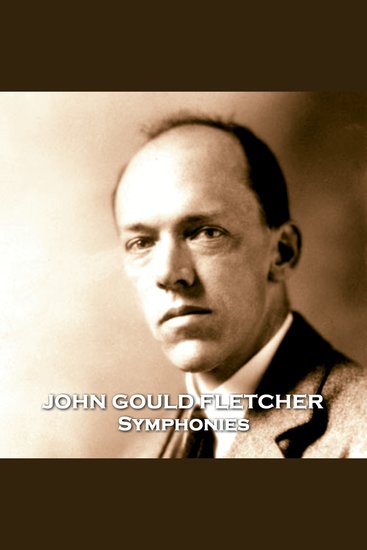
    John Gould Fletcher was born in Little Rock, Arkansas on the 3rd of January 1886 to a socially prominent family.  
     
    He was educated at Phillips Academy, Andover before advancing to Harvard University, which he attended from 1903 to 1907, before dropping out after his father's death. 
     
    As a young man Fletcher spent many years in England where he became part of the influential Imagist group of poets together with Amy Lowell and Ezra Pound.   
     
    His first marriage came from a resumed relationship with the now married Florence Emily ‘Daisy’ Arbuthnot.  Her adultery with Fletcher was the grounds for her divorce.  They married on 5th July 1916 but later divorced.  
     
    Fletcher first published in 1912, with ‘The Dominant City’ to much praise and admiration and followed this with other well-regarded volumes such as ‘Irradiations: Sand and Spray’, and ‘Goblins and Pagodas’. 
     
    In the late 1920s and 1930s Fletcher became increasingly active with a group of Southern writers and poets known as the Southern Agrarians. They published the classic ‘I'll Take My Stand: The South and the Agrarian Tradition’. 
     
    Although he was highly regarded as a poet, he was not very prolific.  However, such was the undoubted quality that in 1939 he received the Pulitzer Prize for his work ‘Selected Poems’.  He was the first poet from the south to receive such an accolade.  Fletcher’s other passion and pursuit was as an authority on modern painting, a subject on which he also published. 
     
    A second marriage followed in 1936 to the children’s author, Charlie May Simon.  They built ‘Johnswood’, a residence on the bluffs of the Arkansas River and travelled frequently to New York for shots of modern culture and intellectual stimulation as well as to the American West and South for the climate after Fletcher developed chronic arthritis. 
     
    In 1937 he wrote his autobiography, ‘Life is My Song’. 
     
    His developing passion for his roots and background resulted in the writing of a history of his State and published in 1947; ‘Arkansas’. 
     
    By now Fletcher was suffering from bouts of depression and on 10th May 1950, he committed suicide by drowning himself in a pond near his home in Little Rock, Arkansas.  He was 64.
    Show book