Join us on a literary world trip!
Add this book to bookshelf
Grey
Write a new comment Default profile 50px
Grey
Subscribe to read the full book or read the first pages for free!
All characters reduced
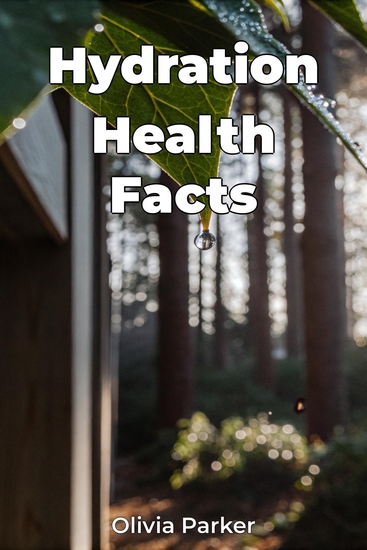
Hydration Health Facts - cover

Hydration Health Facts

Olivia Parker

Translator A Ai

Publisher: Publifye

  • 0
  • 0
  • 0

Summary

Hydration Health Facts explores the science of hydration, emphasizing its impact on overall well-being. The book reveals how even slight dehydration can affect cognitive function and physical performance. It presents maintaining optimal hydration not just as thirst-quenching, but as a proactive health strategy affecting cellular function and disease prevention.

 
The book examines the history of hydration recommendations, comparing traditional guidelines with current scientific findings. It systematically explores the impact of hydration on organ systems and analyzes hydration needs across different life stages, from infancy to aging.

 
The approach integrates research on cellular hydration with practical guidelines, bridging the gap between scientific theory and real-world application. The book progresses from foundational principles to practical strategies, empowering readers to make informed decisions about their hydration habits.
Available since: 02/13/2025.
Print length: 86 pages.

Other books that might interest you

  • The Oak and the Larch - A Forest History of Russia and Its Empires - cover

    The Oak and the Larch - A Forest...

    Sophie Pinkham

    • 0
    • 0
    • 0
    Russia's forests account for nearly one-fifth of the world's wooded lands. The Oak and the Larch is the first-ever English-language exploration of this vast expanse—a dazzling environmental history of Russia that offers an urgent new understanding of the nature of Russian power, and of Russia's ideas of itself. 
    Award-winning scholar Sophie Pinkham's magisterial account spans centuries, revealing how forests have nourished ancient Siberian indigenous societies, defended medieval Slavic settlements from Mongol invasion, and served as both an essential natural resource and a potent cultural symbol for Russia in all its incarnations. By examining the country from the forest's perspective, Pinkham pushes far beyond the contemporary political environment in Russia. She draws on literature, history, and art to connect the expanse of the Russian wilderness and the nature of Russian culture, with indelible portraits of the diverse figures who have inhabited and celebrated these forests. She confronts the forest's role in Russia's long history of imperial conquest, and in resistance to this conquest. 
    The Oak and the Larch offers a vision of Russia rarely seen in the west, as a land defined by its wilderness, shaped by its encounters with the frontier, and—much like our own—ultimately beholden to nature's whim.
    Show book
  • Paleontology and Evolution - Tracing Ancient Life and Environments (3 in 1) - cover

    Paleontology and Evolution -...

    Mike Crawford

    • 0
    • 0
    • 0
    This book combo brings the prehistoric world to life through the study of ancient plants, animals, and climates. This compelling volume reveals how Earth’s long and complex history has shaped life as we know it—and how fossils, sediments, and ice cores serve as the time machines of science. 
    Begin with Paleobotany, the study of fossilized plants, and uncover how forests once grew where deserts now lie. Through preserved leaves, pollen, and wood, scientists reconstruct past ecosystems, trace plant evolution, and discover how vegetation adapted to shifting environments over millions of years. 
    Next, delve into Paleozoology, which focuses on the remains of ancient animals—from dinosaurs and mammoths to tiny marine creatures. Learn how skeletal remains, footprints, and fossilized behavior reveal evolutionary changes, predator-prey relationships, extinction events, and the rise of new species over geological time. 
    Finally, explore Paleoclimatology, the science of past climates. By analyzing tree rings, ice cores, and ocean sediments, researchers piece together Earth’s shifting temperatures, atmospheric conditions, and major climate events. This field is essential for understanding long-term climate cycles and their influence on both extinction and evolution. 
    Together, these disciplines create a vivid picture of Earth’s ancient biosphere, showing how life, land, and climate have evolved in tandem over hundreds of millions of years. Ideal for students, educators, and history-of-science enthusiasts, this volume opens a window into the deep past and its relevance to today’s environmental challenges.
    Show book
  • The Curanderx Toolkit - Reclaiming Ancestral Latinx Plant Medicine and Rituals for Healing - cover

    The Curanderx Toolkit -...

    Atava Garcia Swiecicki

    • 0
    • 0
    • 0
    Arranging ofrendas. Brewing pericón into a healing tea. Releasing traumas through baños and limpias. Herbalist and curandera Atava Garcia Swiecicki spent decades gathering this traditional knowledge of curanderismo, Mexican folk healing, which had been marginalized as Chicanx and Latinx Americans assimilated to US culture. She teaches how to follow the path of the curandera, as she herself learned from apprenticing with Mexican curanderas, studying herbal texts, and listening to her ancestors. In this book listeners will learn the Indigenous, African, and European roots of curanderismo. Atava also shares her personal journey as a healer and those of thirteen other inspirational curanderas serving their communities. She offers listeners the tools to begin their own healing—for themselves, for their relationship with the earth, and for the people. 


    The Curanderx Toolkit includes more than twenty-five profiles of native and adopted plants of Baja and Alta California and teaches you to grow, know, and love them. This book will help anyone who has lost connection with their ancestors begin to incorporate the herbal wisdom and holistic wellness of curanderismo into their lives. Take the power of ancient medicine into your own hands by learning simple herbal remedies and practicing rituals for kinship with the more-than-human world.
    Show book
  • Cryptids: How We Know They are Real - cover

    Cryptids: How We Know They are Real

    James Maxey

    • 0
    • 0
    • 0
    When you stare into the shadows... do the shadows stare back? 
    Sasquatch! Mothman! Nessie! The Jackalope! Many cryptids are famous, but which ones are real? Search beyond blurry photos and sketchy eye-witness accounts to examine physical evidence of cryptids that shows... how we know they are real. 
    Sample passages: 
    From Chapter 1 
    "Studying cryptids sharpens the mental tools needed to cut through the thickets of misleading and incomplete evidence. The skills you’ll practice as you judge the existence of Bigfoot can be used to analyze any number of scientific, commercial, political, or philosophical claims. The study of cryptids can lead the open-minded explorer into a better understanding and appreciation of our world. 
    From Chapter 16 
    "The giant squid swims through deep, dark seas surrounded by things we’ll never see, and can’t imagine. 
    In this light, the fact that anyone would state that we’ve already discovered every large creature in the wild is a foolish claim. Just because something is unknown isn’t proof that it’s unreal. If someone tells you a certain cryptid doesn’t exist, there’s no reason to accept that as the final word. There can be no final word. Reality is still being discovered and understood, and there’s an infinite supply of the unknown to transform into the knowable."
    Show book
  • Heart and Lungs - Cardiovascular and Pulmonary Care (3 in 1) - cover

    Heart and Lungs - Cardiovascular...

    Ava Westwood

    • 0
    • 0
    • 0
    This comprehensive collection delivers critical knowledge about cardiovascular and pulmonary health for patients, caregivers, and healthcare professionals. Through evidence-based information and expert perspectives, this guide illuminates the complex interconnections between the heart, lungs, and related systems. 
    CARDIOLOGY 
     The fundamental principles of heart health and the latest advances in cardiac care. Explore the mechanics of cardiovascular function, common cardiac conditions and their warning signs, preventative strategies, and treatment approaches from lifestyle modifications to cutting-edge interventions. Learn to interpret cardiac symptoms, understand diagnostic procedures, and make informed decisions about heart health. 
    PULMONOLOGY 
     The specialized field focused on respiratory health and the treatment of lung conditions. Discover the intricacies of pulmonary function, approaches to managing acute and chronic respiratory diseases, environmental factors affecting lung health, and breathing optimization techniques. Understand the connections between respiratory symptoms and underlying causes, from common ailments to complex disorders. 
    RHEUMATOLOGY 
     The often-overlooked connection between inflammatory conditions and cardiovascular-pulmonary health. Uncover how autoimmune and inflammatory disorders impact heart and lung function, the latest approaches to managing rheumatic diseases, and strategies for comprehensive care that addresses interconnected body systems. Learn how inflammation serves as a critical link between seemingly unrelated health conditions. 
    Understanding creates pathways to better health. 
    This essential guide provides clear, accessible information on the complex systems that sustain our most vital functions.
    Show book
  • So What Does It All Mean? - The Secrets of Life: From Big Bang to Trump - cover

    So What Does It All Mean? - The...

    Ss O'Connor

    • 0
    • 0
    • 0
    Why are humans neither 'good' nor 'bad'? How can so much chaos and confusion in the world actually lead to order? Why are we so often wrong when we're asked if the world's getting better? In this, the last book in The Secrets of Life quartet, SS O'Connor pulls together the threads of genetic and cultural evolution, and then adds to these the conclusions of evolutionary game theory. As he does this, he ends with an intertwined narrative that explains why so many of the phenomena of our existence may not be the mysteries we think they are, but could in fact have the same underlying logic to them. By examining the great currents at work in our collective story, the role that competition and cooperation have always played in the development of the world, and why each behavioural strategy is rational in what it's attempting to achieve, the book shows that the same cycles of collaboration and destruction have been present since time began. But while the success of these strategies may ebb and flow, it is their interaction that results in the balance and order we see around us. This current is also the consistent vector of our human history. Although we may have animal origins, and are also driven by the same need to respond to the profound Laws of Thermodynamics, we have developed our culture to the point where we can now choose to overrule so many of the instructions of our genes. Why do we do this? What are the problems that arise from our free will? How have we come to realise that self-interest is quite different from selfishness? Why have we become obsessed with the need for fairness and trust in our societies? And how have these forces resulted in us making the world a better place? Few of us believe this can be the case. But as the evidence of our progress becomes ever clearer, the series concludes by showing us why we are often wrong in our view of each other, and why we're so frequently mistaken in our pessimism about the future.
    Show book