Join us on a literary world trip!
Add this book to bookshelf
Grey
Write a new comment Default profile 50px
Grey
Subscribe to read the full book or read the first pages for free!
All characters reduced
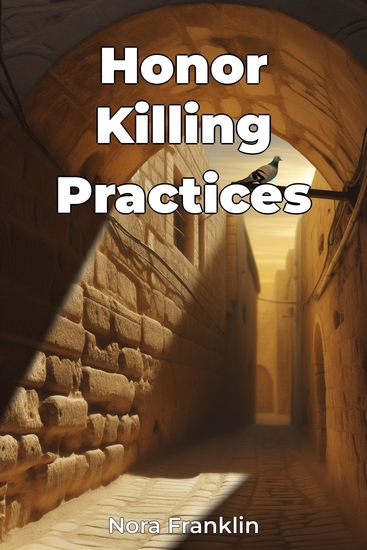
Honor Killing Practices - cover

Honor Killing Practices

Nora Franklin

Publisher: Publifye

  • 0
  • 0
  • 0

Summary

'Honor Killing Practices' presents a comprehensive examination of honor-based violence as a critical human rights issue, exploring how these deadly practices persist in modern society despite global advancement. The book navigates the complex intersection of cultural traditions, legal frameworks, and human rights, offering both scholarly analysis and practical solutions for addressing this challenging social phenomenon.

 
Drawing from extensive field research across multiple continents, the work reveals how honor killings have evolved from tribal customs to contemporary manifestations, supported by both quantitative data and compelling case studies. The book's unique strength lies in its interdisciplinary approach, connecting legal studies, anthropology, and gender studies to provide a holistic understanding of the issue.

 
Through systematic exploration of sociocultural foundations, legal responses, and prevention strategies, readers gain insight into how these practices become embedded in community structures and why they resist change. The book progresses logically from foundational concepts to practical applications, making it valuable for both academics and practitioners. It combines statistical analysis with firsthand accounts from law enforcement and social workers, while addressing current debates about cultural relativism versus universal human rights.

 
Most importantly, it offers evidence-based frameworks for policy development and community intervention, providing essential tools for professionals working to combat gender-based violence and promote sustainable social change.
Available since: 01/08/2025.
Print length: 124 pages.

Other books that might interest you

  • Breaking Point - cover

    Breaking Point

    Ph.D. Dorris S. Woods

    • 0
    • 0
    • 0
    Breaking Point captures the essence of teenage suicide and the “trigger” factors that cause it. Compelling new information with vignettes that remind us of each tragic loss.
    Show book
  • The Roman Empire and Byzantine Empire - The History and Legacy of Europe’s Most Important Empire and Its Successor - cover

    The Roman Empire and Byzantine...

    Charles River Editors

    • 0
    • 0
    • 0
    For the people of the ancient Mediterranean and beyond, the city of Rome had been a symbol of power for centuries, and entering the early 5th century CE, the Eternal City hadn’t been taken by an enemy force since the Gauls had done it about 800 years earlier, an unheard of period of tranquility in a world wracked with almost constant warfare. 
    Thus, when the Visigoths, whom the Romans considered uncultured and inferior, took the city of Rome and sacked it in 410, the world was stunned. It made theologians of the newly Christianized empire question God’s plan on Earth, and it encouraged many leading Romans to look east to Constantinople for their future. Indeed, the Western Roman Empire would completely collapse in the late 5th century, less than 70 years after the Visigoths sacked Rome, and just how it went from being a superpower to a poorly led, weak, and vulnerable shadow of its former self has preoccupied historians for centuries. 
    To this day, it remains difficult to trace just when the decline began, but it’s fair to say that the sack of Rome was the result of a number of factors that had been coalescing for many years. In the end, the fall of the Roman Empire was not a tale of cataclysmic events that shattered the sprawling power, but the culmination of centuries of internal dissent and decay, combined with growing external threats that led to gradual decline and eventually to the empire’s final destruction.  
    In terms of geopolitics, perhaps the most seminal event of the Middle Ages was the successful Ottoman siege of Constantinople in 1453. The city had been an imperial capital as far back as the 4th century, when Constantine the Great shifted the power center of the Roman Empire there, effectively establishing two almost equally powerful halves of antiquity’s greatest empire. Constantinople would continue to serve as the capital of the Byzantine Empire even after the Western half of the Roman Empire collapsed.
    Show book
  • How to Analyze People with Dark Psychology - Gaslighting and Manipulation: Master Emotional Intelligence to Speed Reading Body Language NLP Secrets Facial Expressions Hypnosis and Mind Control - cover

    How to Analyze People with Dark...

    Lucas W. Carnegie

    • 0
    • 0
    • 0
    Are you tired of being manipulated by people with dark intentions? Have you ever wondered how to spot the signs of gaslighting and manipulation before it's too late? Do you want to master emotional intelligence and become an expert at reading body language, NLP secrets, facial expressions, and hypnosis? 
    If you answered yes to any of these questions, then "How to Analyze People With Dark Psychology: Gaslighting and Manipulation" is the book for you. Inside, you'll discover powerful techniques and strategies to help you protect yourself from those who seek to control and manipulate you. You'll learn how to identify and analyze dark psychology techniques, including gaslighting, manipulation, and emotional abuse. With this knowledge, you'll be able to defend yourself against toxic people and create healthier relationships. 
    In "How to Analyze People with Dark Psychology," you'll find everything you need to know to become an expert at emotional intelligence and spotting manipulation. So why wait? Get your copy today and start taking control of your life! 
    Remember, knowledge is power, and with this book, you'll have the power to protect yourself from the dangers of dark psychology.
    Show book
  • Making of Modern China The: The History of the World’s Most Populous Country from the Qing Dynasty to Today - cover

    Making of Modern China The: The...

    Charles River Editors

    • 0
    • 0
    • 0
    During the 15th century, China had become economically and technologically advanced compared to civilizations in Europe at the time, and its fleet, which had reached a total of 3,500 ships, was unmatched by any other world power. Nevertheless, after conducting several trade expeditions with the massive fleet, the Chinese ships were either burned in the docks or left to rot. With that, China began to revert to the xenophobic policies of its past and reduce its presence in other lands. By 1525, the largest naval fleet in the world had essentially been destroyed or dismantled by China itself.  
    	Meanwhile, the 19th century saw the rise of one of the largest, most powerful empires of the modern era. The sun never set on the British Empire, whose holdings spanned the globe, in one form or another. Its naval supremacy linked the Commonwealth of Canada with the colonies in South Africa and India, and through them trade flowed east and west. An integral but underutilized part of this vast trade network included China, a reclusive Asian kingdom closed off from the Western world that desired none of its goods. 
    	Unfortunately for China, the British had the might of an empire and economic force, not to mention modern arms, on their side. Breaking into China’s lucrative trade markets nearly destroyed the nation, severely discredited the Chinese dynasty, wreaked havoc on its people, and further propelled Britain’s empire into a dominant economic and military position. 
    	The collision of these two empires took many years and caused much bloodshed. In fact, the troubles started well before the eventual hostilities, festering as frustration mounted until finally boiling over. Such was the state of relations between the British Empire and Qing Dynasty for the better part of the century, its footing upended from the very start of relations.
    Show book
  • The Everlasting Man - cover

    The Everlasting Man

    G. K. Chesterton

    • 0
    • 0
    • 0
    Embark on an extraordinary journey through history and faith with G.K. Chesterton’s The Everlasting Man. In this profound exploration, Chesterton offers a compelling defense of Christianity, tracing humanity’s spiritual evolution from prehistoric times to the rise of Christ. By contrasting pagan mythology with Christian theology, he presents a powerful argument for the uniqueness and enduring relevance of the Christian faith. 
    Chesterton’s eloquence, wit, and insight shine as he delves into the mysteries of human nature, the divine, and the intersection of the two. The Everlasting Man is a profound and thought-provoking work that has inspired readers for generations, including C.S. Lewis, who credited it as a key influence in his spiritual journey. 
    Narrated with clarity and reverence, this audiobook makes Chesterton’s timeless masterpiece accessible to modern listeners. 
    Start listening to The Everlasting Man today and rediscover the story of humanity through the lens of faith and wonder.
    Show book
  • Flower of Battle by Fiore dei Liberi The: Translated and narrated by Guy Windsor - Il Fior di Battaglia by Fiore dei Liberi - cover

    Flower of Battle by Fiore dei...

    Guy Windsor, Fiore dei Liberi

    • 0
    • 0
    • 0
    Il Fior di Battaglia, the Flower of Battle, was written by the great Italian master at arms Fiore dei Liberi around the year 1400. It covers knightly combat on foot and on horseback, in armour and without, in great depth and detail. The sections of the manuscript include an introduction, then plays of wrestling, the dagger, the sword in one hand, the sword in two hands, the sword in armour, the pollax, the spear, the lance on horseback, the sword on horseback, and wrestling on horseback.  
    This audiobook is the translation into English by Dr. Guy Windsor.
    Show book