Junte-se a nós em uma viagem ao mundo dos livros!
Adicionar este livro à prateleira
Grey
Deixe um novo comentário Default profile 50px
Grey
Assine para ler o livro completo ou leia as primeiras páginas de graça!
All characters reduced
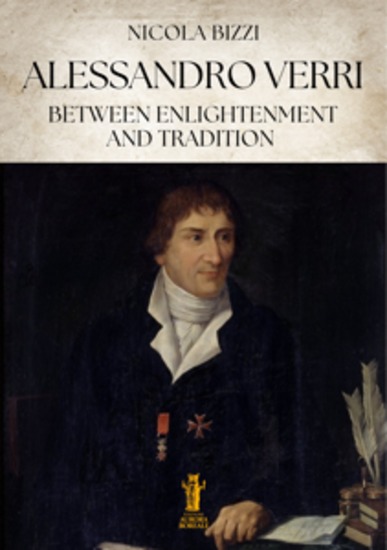
Alessandro Verri between Enlightenment and Tradition - cover
LER

Alessandro Verri between Enlightenment and Tradition

Nicola Bizzi

Editora: Edizioni Aurora Boreale

  • 0
  • 0
  • 0

Sinopse

Alessandro Verri (1741-1816) was a remarkable intellectual, philosopher, historian, and man of letters from Milan, lived through the transition from the Enlightenment to Romanticism. He is remembered for his friendship with Cesare Beccaria and his contributions to the magazine Il Caffè, which he founded with his brother Pietro.He began writing his most famous novel, Via di Erostrato (Life of Herostratus), in 1793, a year after being admitted to the Academy of Arcadia in Rome under the initiatory name of Aristander Pentelicus. The work, which was published only in 1815, a year before his death, is a unique and compelling historical novel in which the author, pretending to translate a genuine Greek text—a literary device Verri had already used years earlier in Notti romane al sepolcro degli Scipioni—imaginatively (but not entirely) narrates the adventurous and dramatic life of Herostratus, a Greek from Corinth. After a life filled with failures and disappointments, and for the sole purpose of being remembered by posterity, Erostratus deliberately set fire to the majestic Temple of Artemis at Ephesus, one of the seven wonders of the ancient world.
Disponível desde: 24/08/2025.

Outros livros que poderiam interessá-lo

  • Apartheid - Britain’s Bastard Child - cover

    Apartheid - Britain’s Bastard Child

    Helene Opperman Lewis

    • 0
    • 0
    • 0
    "What cannot be contained, mourned, and worked through in one generation is transmitted, for the most part unconsciously, as affect, mission, and task to the next generation...the fate of repression and dissociation is enactment." 
    Howard Stein, Ph.D. 
    Psychohistorian, Psychoanalyst. Professor Emeritus, University of Oklahoma Health Science Centre.
    Ver livro
  • Fortune and Folly - The Weird and Wonderful Life of the South's Most Eccentric Millionaire - cover

    Fortune and Folly - The Weird...

    Sara A. H. Butler

    • 0
    • 0
    • 0
    Briarcliff Mansion and the land it occupies are owned by Emory University, which refers to it as its "Briarcliff Campus." Fortune and Folly, in part, illuminates the largely lost story of how the mansion, and the entire surrounding neighborhood, got its name. But in order to understand the mansion, we have to understand the man who built it. 


    Briarcliff Mansion once belonged to a man named Asa Candler, Jr.—also known as Buddie. The second son and namesake of Coca-Cola founder Asa Griggs Candler, Buddie was a wealthy real estate developer of great successes and greater failures. A man of big vision and bigger adventures, and a socialite whose boisterous, unapologetic personality made him both beloved and reviled in the Atlanta community. But after he passed away in 1953, his stories faded from memory, either tangled up with or overshadowed by his father. 


    It's no mystery why Briarcliff garners attention. It's self-consciously grandiose, built to display maximum grandeur to the neighborhood. It towers over the landscape, set far back from the road behind a filled-in, overgrown pool. Its face is stitched together where a music hall was added two years after the main house was completed, and the bricks don't quite match up. This book offers a deep-dive into the life of Asa Candler, Jr. to excavate a piece—and place—of Atlanta history.
    Ver livro
  • Belonging Matters - Conversations on Adoption Family and Kinship - cover

    Belonging Matters -...

    Julie Ryan McGue

    • 0
    • 0
    • 0
    Belonging Matters is meant to support the adoption community while creating a conversation with those not directly touched by adoption. The collection addresses the questions:
    —If you are part of the adoption universe, how do you find identity, family, and community
    
    —If someone you know is adopted, how do you understand and support them in their search for identity, family, and belonging
    
    —How do we improve the adoption experience to invoke social change that benefits the individual, the family unit, and the communities in which they live?
    
    This collection is about examining all that makes us unique, and it is about finding meaning and healing from the difficulties we encounter in life.
    Ver livro
  • Manipulation - Influencing Others Covertly for Personal Gain - cover

    Manipulation - Influencing...

    Cito Harder

    • 0
    • 0
    • 0
    Manipulation is a form of covert influence where an individual or group uses deceptive tactics to control or alter the behaviors, beliefs, or decisions of others, often without their awareness. This subtle, often underhanded form of influence aims to achieve personal gain or power, typically at the expense of the manipulated party. Understanding the nature of manipulation requires delving into the methods and psychological mechanisms that make it so effective and insidious. 
    At its core, manipulation is about exerting influence in a way that is not immediately obvious to the target. Unlike more overt forms of control, manipulation operates in the shadows, using psychological tactics to induce desired behaviors or responses. It thrives on exploiting vulnerabilities, uncertainties, and emotional triggers in individuals, often capitalizing on their desires, fears, or insecurities. Manipulators may use a variety of techniques, such as flattery, guilt-tripping, emotional blackmail, and gaslighting, to sway decisions or actions in their favor. 
    One of the defining characteristics of manipulation is its covert nature. The manipulator often works behind the scenes, creating situations or presenting information in a way that influences the target’s perception of reality. This can lead the victim to make decisions they would not otherwise have made, under the false belief that they are acting independently or in their own best interest. For instance, a manipulative partner may use guilt to convince their significant other to compromise on something they would normally resist. Over time, these manipulative tactics can erode the target's sense of agency and self-worth, making them more susceptible to future manipulation.
    Ver livro
  • WHITE TURK vs BLACK TURK - Roots of Political Schism in Turkey - cover

    WHITE TURK vs BLACK TURK - Roots...

    Aydin Nurhan

    • 0
    • 0
    • 0
    White Turk vs Black Turk is a thought-provoking exploration of the complex interplay between clashing lifestyles in Turkey and their impact on the country's political arena. Former Ambassador Nurhan provides a comprehensive understanding of the intricate tapestry that is Turkey's political landscape by skill- fully incorporating human aspirations, and inferiority complexes while navigating through history, religion, cultural shifts, and economic disparities to paint a holistic picture of the dynamics at play.
    Ver livro
  • A Rare Recording of The Civil War's Confederate Rebel Yell - cover

    A Rare Recording of The Civil...

    Various Various

    • 0
    • 0
    • 0
    The Rebel Yell was a battle cry used by Confederate soldiers during the Civil War. The yell was hollered when soldiers were charging into battle, as a way to intimidate the enemy and to boost their own morale. There is some debate about how the Rebel Yell began. Confederate soldiers may have learned the yell from Native Americans, or simply imitated them. It is known that some Texas Confederate units combined Comanche war whoops into their version of the yell. Another claim is that it came from the screams traditionally made by Irish and Scottish Highlanders when they made a Highland charge during battle. According to Encyclopedia Virginia: "Distinctive noises made by soldiers were identified from the very beginning of the war, but the yell’s first appearance in combat may have come at the Battle of Manassas, on July 21, 1861, and it is strongly associated with the Confederate general Stonewall Jackson." Colonel Keller Anderson of Kentucky's Orphan Brigade said: "Then arose that do-or-die expression, that maniacal maelstrom of sound; that penetrating, rasping, shrieking, blood-curdling noise that could be heard for miles and whose volume reached the heavens--such an expression as never yet came from the throats of sane men, but from men whom the seething blast of an imaginary hell would not check while the sound lasted."
    Ver livro