Join us on a literary world trip!
Add this book to bookshelf
Grey
Write a new comment Default profile 50px
Grey
Subscribe to read the full book or read the first pages for free!
All characters reduced
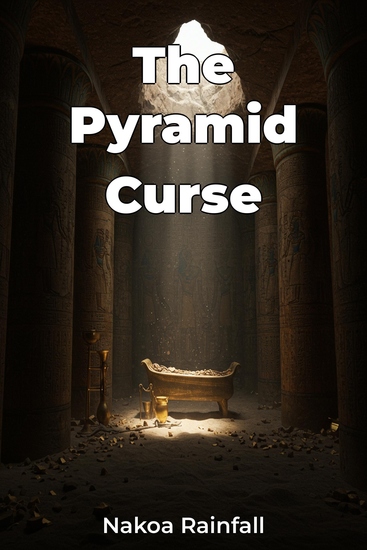
The Pyramid Curse - cover

The Pyramid Curse

Nakoa Rainfall

Translator A AI

Publisher: Publifye

  • 0
  • 0
  • 0

Summary

"The Pyramid Curse" explores the intriguing misfortunes surrounding the exploration of ancient Egyptian pyramids. It examines documented cases of illness and death that befell explorers and archaeologists after entering these tombs, questioning whether these events were mere coincidences, environmental hazards, or psychological effects. The book investigates the timeline of major pyramid excavations, focusing on figures like Howard Carter and the discovery of Tutankhamun’s tomb, while also explaining basic archaeological practices and Egyptian funerary beliefs. The book argues that supernatural curses are unlikely, instead proposing that a combination of toxic environments within the tombs, risky early archaeological methods, and the psychological impact of these expeditions plausibly explain the misfortunes. For instance, tombs contained mold, bacteria, and other hazards.

 
Beginning with the historical origins of the "pyramid curse," the book categorizes documented incidents by specific tombs and reported misfortunes. It then addresses potential environmental hazards and psychological aspects before discussing how modern practices mitigate these risks. Drawing from historical records, medical reports, and personal accounts, the book presents a balanced perspective on a sensationalized topic. By engaging with archaeology, Egyptology, environmental science, and psychology, "The Pyramid Curse" offers a holistic understanding of the events, providing readers with a framework for critically evaluating claims and appreciating the complexities of historical interpretation.
Available since: 02/20/2025.
Print length: 57 pages.
Other books that might interest you

  • US Citizenship Test Study Guide - Naturalization Exam Prep Book for all 100 USCIS Civics Questions and Answers - cover

    US Citizenship Test Study Guide...

    Max Collins

    • 0
    • 0
    • 0
    The USCIS Naturalization Test Book  is a comprehensive study guide designed to aid individuals in successfully passing the United States Naturalization English and Civics Tests. With the exam being particularly challenging, thorough test preparation is essential for success. Our guide offers practice test questions accompanied by detailed answer explanations, tips and strategies to boost test performance, and a complete review of all citizenship test sections, including English Reading and Writing, Civics, American Government, American History, and more. 
    The guide is filled with critical information that individuals will need to master in order to excel on their citizenship exam, including concepts, procedures, principles, and vocabulary that the USCIS expects. Our team is not affiliated with any official testing organization and all organizational and test names are trademarks of their respective owners. 
    Our study guide is well-organized and easy to follow, providing specific and detailed information that is key to passing the exam. Rather than simply naming or describing concepts and principles, they are explained in detail. Our practice test questions and answer explanations are crafted to simulate the actual exam, providing individuals with the opportunity to familiarize themselves with the test's format and content. 
    We have a proven track record of helping individuals achieve their education and career goals by providing high-quality test preparation guides. Our US Citizenship Test Study Guide  - USCIS Naturalization Test Book is no exception, and is a valuable investment in one's future. With our guide, individuals will be well-equipped to succeed on their citizenship exam and become United States citizens.
    Show book
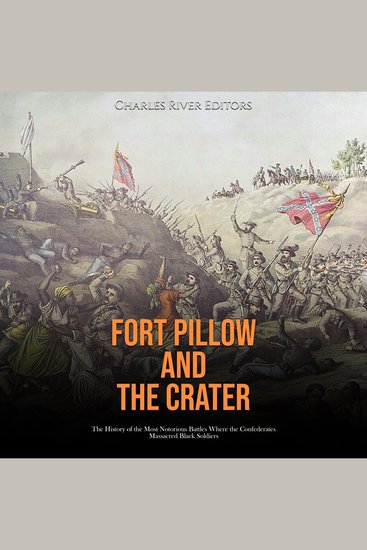
  • Fort Pillow and the Crater: The History of the Most Notorious Battles Where the Confederates Massacred Black Soldiers - cover

    Fort Pillow and the Crater: The...

    Editors Charles River

    • 0
    • 0
    • 0
    As far as skirmishes go, Fort Pillow was a completely unremarkable fight. Before attacking, Forrest demanded the unconditional surrender of the Union garrison, a normal custom of his, and he warned the Union commanding officer that he would not be responsible for his soldiers’ actions if the warning went unheeded. What made Fort Pillow markedly different was that a sizable amount of the Union garrison defending the Fort was comprised of black soldiers, which particularly enraged Confederate soldiers whenever they encountered those they viewed as former slaves in the field. It is still unclear exactly how the fighting unfolded, but what is clear is that an unusually high percentage of Union soldiers were killed, and the Confederates were accused of massacring black soldiers after they had surrendered. Primary sources tell conflicting accounts of what happened at Battle of Fort Pillow, leaving scholars to piece together the battle and determine whether Confederate soldiers purposely shot Union soldiers after they had surrendered. 
    The mine that precipitated the Battle of the Crater during the Siege of Petersburg produced one of the most amazing scenes of the entire Civil War. The force of the explosion created a crater that was nearly 200 feet long, 100 feet wide, and 30 feet deep. Remnants of the crater can still be seen today. But through a mix of bad luck, fog of war, and incompetent leadership, the Union assault that followed the explosion was badly bungled. Instead of capturing Petersburg, the Battle of the Crater was a Union debacle that left more than 4,000 Union soldiers killed, wounded, or captured. The Confederates lost about 1,500, with nearly 300 of them being casualties of the initial explosion. The Battle of the Crater didn’t help the Confederates much in front of Petersburg, but it remains the most memorable and controversial battle of the entire siege.
    Show book
  • Stolen Smuggled Sold - On the Hunt for Cultural Treasures - cover

    Stolen Smuggled Sold - On the...

    Nancy Moses

    • 0
    • 0
    • 0
     “A riveting look at the backstory of what’s in the display cases at your local museum. The author profiles seven historic objects with checkered pasts.” —Library Journal   There are many books about museum heists, Holocaust artwork, insider theft, trafficking in antiquities, and stolen Native American objects. Now, there’s finally a book for the general public that covers the entire terrain.   Stolen, Smuggled, Sold features seven vivid and true stories in which the reader joins the author as she uncovers a cultural treasure and follows its often-convoluted trail. Along the way author and reader encounter a cast of fascinating characters from the underbelly of the cultural world: unscrupulous grave robbers, sinister middlemen, ruthless art dealers, venal Nazis, canny lawyers, valiant academics, unstoppable investigative reporters, unwitting curators, and dedicated government officials. Stories include Gustav Klimt’s Portrait of Adele Bloch Bauer 1, the typset manuscript for Pearl Buck’s The Good Earth, a ceremonial Ghost Dance shirt from the massacre at Wounded Knee, the theft of 4,800 historical audio discs by a top official at the National Archives, a missing original copy of The Bill of Rights, the mummy of Ramses I, and an ancient treasure from Iraq.   While each story is fascinating in and of itself, together they address one of the hottest issues in the museum world: how to deal with the millions of items that have breaks in the chain of ownership, suspicious ownership records, or no provenance at all. The issue of ownership touches on professional practices, international protocols, and national laws. It’s a financial issue since the illicit trade in antiquities and cultural items generates as much as $4 billion to $8 billion a year.  
    Show book
  • Mastering the Art of Cult Leadership: How to Recruit Dominate and Profit - cover

    Mastering the Art of Cult...

    A.A. Castor

    • 0
    • 0
    • 0
    Mastering the Art of Cult Leadership: How to Recruit, Dominate, and Profit by A.A. Castor 
    Have you ever been intrigued by the magnetic power of cult leaders and wondered how they attract such unwavering devotion? Or perhaps you're curious about the psychological techniques that enable them to maintain control and generate substantial wealth? A.A. Castor's latest book, "Mastering the Art of Cult Leadership: How to Recruit, Dominate, and Profit," demystifies these secrets and provides a comprehensive guide to mastering the art of cult leadership. 
    In this eye-opening book, you'll explore: 
    Recruitment Strategies: Learn effective methods to attract and retain followers, including targeted outreach, personalized approaches, and creating a compelling narrative. 
    Psychological Control: Discover powerful techniques to exert influence and maintain loyalty, such as love bombing, intermittent reinforcement, and thought-stopping practices. 
    Monetization Tactics: Understand how to develop sustainable income streams through member contributions, merchandise sales, and exclusive events. 
    Real-Life Case Studies: Analyze the successes and failures of infamous cult leaders, drawing valuable lessons from their experiences. 
    Ethical Considerations: Reflect on the moral implications of cult leadership and explore alternative, ethical models of influence and community building.
    Show book
  • Servitude: Part V - Train (Yaoi Incubus Erotica) - cover

    Servitude: Part V - Train (Yaoi...

    Kai Aubrey

    • 0
    • 0
    • 0
    How did it come to this? 
    Sitting beside the handsome scholar, Alric leans in close, listening intently. 
    He learns how to be respectful. 
    He learns how to be obedient. 
    --- 
    CONTAINS EXPLICIT GAY SEXUAL CONTENT. 
    For more stories, visit www.KaiAubrey.com.
    Show book
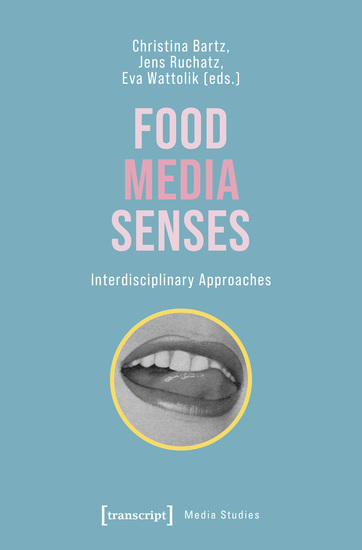
  • Food - Media - Senses - Interdisciplinary Approaches - cover

    Food - Media - Senses -...

    Jens Ruchatz, Christina Bartz,...

    • 0
    • 0
    • 0
    Food is more than just nutrition. Its preparation, presentation and consumption is a multifold communicative practice which includes the meal's design and its whole field of experience. How is food represented in cookbooks, product packaging or in paintings? How is dining semantically charged? How is the sensuality of eating treated in different cultural contexts? In order to acknowledge the material and media-related aspects of eating as a cultural praxis, experts from media studies, art history, literary studies, philosophy, experimental psychology, anthropology, food studies, cultural studies and design studies share their specific approaches.
    Show book