Begleiten Sie uns auf eine literarische Weltreise!
Buch zum Bücherregal hinzufügen
Grey
Einen neuen Kommentar schreiben Default profile 50px
Grey
Jetzt das ganze Buch im Abo oder die ersten Seiten gratis lesen!
All characters reduced
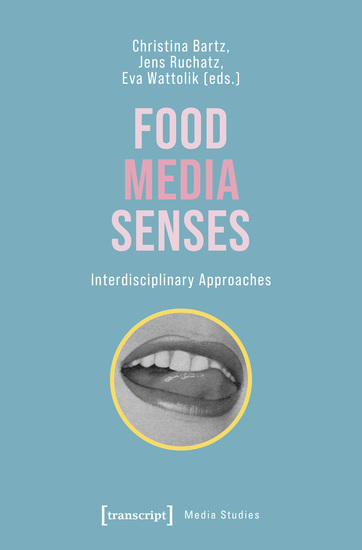
Food - Media - Senses - Interdisciplinary Approaches - cover

Food - Media - Senses - Interdisciplinary Approaches

Jens Ruchatz, Christina Bartz, Eva Wattolik

Verlag: transcript Verlag

  • 0
  • 0
  • 0

Beschreibung

Food is more than just nutrition. Its preparation, presentation and consumption is a multifold communicative practice which includes the meal's design and its whole field of experience. How is food represented in cookbooks, product packaging or in paintings? How is dining semantically charged? How is the sensuality of eating treated in different cultural contexts? In order to acknowledge the material and media-related aspects of eating as a cultural praxis, experts from media studies, art history, literary studies, philosophy, experimental psychology, anthropology, food studies, cultural studies and design studies share their specific approaches.
Verfügbar seit: 30.11.2023.

Weitere Bücher, die Sie mögen werden

  • How to Analyze People: Decoding Human Behavior and Body Language So You Can Read People like a Book Effortlessly - cover

    How to Analyze People: Decoding...

    Andy Gardner

    • 0
    • 0
    • 0
    Learn how to analyze people and easily decode human behavior and body language. 
    Have you ever wondered what a person’s behavior could tell you? 
    Do you often think about why a person’s tone of voice is slightly off? 
    Do you want to start picking up on non-verbal cues? 
    Are you interested in learning about different personality types? 
    This audiobook is for you if your answer is “yes” to any of these questions. We are social animals. Our entire survival depends on our ability to communicate with each other. The better communicators and more socially cognitive we are, the better our chances of thriving in life are. This is why analyzing people and deciphering their behavior are vital skills. 
    Having a guide that can teach you everything you need to know about understanding others on a deeper level can be very helpful. Upon listening to this audiobook, you can expect to learn to:Find out what a person’s behavior can tell youDecode a person’s tone and voice speed, attitude, and choice of wordsMaster the art of picking up non-verbal cuesUnderstand different personality typesDiscover why people lieIdentify when people are lying or being deceptive 
    This audiobook will teach you how to read people like a book. It’s a wonderful blend between interesting information and practical knowledge that you can put to use. Use this as your go-to guide for social, professional, and romantic connections. 
    So click the “add to cart” button now and learn the indispensable knowledge that will take your relationships to the next level!
    Zum Buch
  • Mexican Drug Cartels - Their Origins Their Background and Their Conflicts - cover

    Mexican Drug Cartels - Their...

    Kelly Mass

    • 0
    • 0
    • 0
    The Mexican drug war, also known as the Guerra contra el narcotráfico en México, is the Mexican theater of the global war on drugs, a campaign led by the United States federal government. This war has resulted in a protracted, asymmetric low-intensity conflict between the Mexican government and various drug trafficking organizations. The Mexican government’s main objective when it intervened militarily in 2006 was to curb drug-related violence, which had escalated in the preceding years. The government’s stated aim, in collaboration with U.S. officials, was to eliminate the cartels and reduce the demand for drugs trafficking. 
    Violence erupted after the 1989 arrest of Miguel Ángel Félix Gallardo, who was the leader and founder of Mexico’s first major drug cartel, the Guadalajara Cartel. His arrest led to the dissolution of the cartel as high-ranking members splintered off to create their own groups. This fragmentation gave rise to the Sinaloa, Juarez, Tijuana, and Sonora cartels, among others, which began to battle for control over lucrative trafficking routes and territories. This marked a new chapter in the drug war, with the cartels becoming increasingly violent in their efforts to secure dominance. 
    Mexican drug trafficking organizations have been a powerful force for decades, but their power surged significantly in the 1990s after the collapse of the Colombian Cali and Medellín cartels. By 2007, Mexican criminal groups controlled an overwhelming 90% of the cocaine entering the United States. Efforts to arrest cartel leaders, including those in the Tijuana and Gulf cartels, often resulted in even more violence, as smaller gangs competed for control over key drug trade routes into the U.S.
    Zum Buch
  • Killers of the Dream - cover

    Killers of the Dream

    Lillian Smith, Margaret Rose...

    • 0
    • 0
    • 0
    A Southern white writer, educator, and activist, Lillian Smith (1897–1966) spoke out all her life against injustice. In Killers of the Dream, her most influential book, she draws on memories of her childhood to describe the psychological and moral cost of the powerful, contradictory rules about sin, sex, and segregation—the intricate system of taboos—that undergirded Southern society. 


    Published to wide controversy, it became the source (acknowledged or unacknowledged) of much of our thinking about race relations and was for many a catalyst for the civil rights movement. It remains the most courageous, insightful, and eloquent critique of the pre-1960s South. 


    "I began to see racism and its rituals of segregation as a symptom of a grave illness," Smith wrote. "When people think more of their skin color than of their souls, something has happened to them." Today, listeners are rediscovering in Smith's writings a forceful analysis of the dynamics of racism, as well as her prophetic understanding of the connections between racial and sexual oppression.
    Zum Buch
  • Balance - How It Works and What It Means - cover

    Balance - How It Works and What...

    Paul Thagard

    • 0
    • 0
    • 0
    Living is a balancing act. Ordinary activities like walking, running, or riding a bike require the brain to keep the body in balance. A dancer’s poised elegance and a tightrope walker’s breathtaking performance are feats of balance. Language abounds with expressions and figures of speech that invoke balance. People fret over work-life balance or try to eat a balanced diet. The concept crops up from politics—checks and balances, the balance of power, balanced budgets—to science, in which ideas of equilibrium are crucial. Why is balance so fundamental, and how do physical and metaphorical balance shed light on each other? 
     
    Paul Thagard explores the physiological workings and metaphorical resonance of balance in the brain, the body, and society. He describes the neural mechanisms that keep bodies balanced and explains why their failures can result in nausea, falls, or vertigo. Thagard connects bodily balance with leading ideas in neuroscience, including the nature of consciousness. He analyzes balance metaphors across science, medicine, economics, the arts, and philosophy, showing why some aid understanding but others are misleading or harmful. Thagard contends that balance is ultimately a matter of making sense of the world. In both literal and metaphorical senses, balance is what enables people to solve the puzzles of life by turning sensory signals or an incongruous comparison into a coherent whole. 
     
    Bridging philosophy, psychology, and neuroscience, Balance shows how an unheralded concept’s many meanings illuminate the human condition.
    Zum Buch
  • Letters from Wales - Memories and Encounters in Literature and Life - cover

    Letters from Wales - Memories...

    Sam Adams

    • 0
    • 0
    • 0
    'Letters from Wales stands alone as an invaluable guide to Welsh writing.' – Sam Young, Wales Arts Review
    'In these columns, as impressive for their depth as they are for their intellectual breadth, Adams analyses the work of acclaimed Welsh writers ... with scholarly panache' – Joshua Rees, Buzz Magazine
    'illuminating and entertaining' – Jon Gower, Nation.Cymru
    Since 1996, Sam Adams's 'Letter from Wales' column has been appearing in PN Review, one of the most highly-regarded UK poetry magazines, offering insight and appreciation of Welsh writing, culture and history. This landmark volume collects these letters – a quarter century of work – and offers one of the most unique, independent and passionate critical voices on the writing and cultural output of Wales during this period.
    Here you will find erudite appreciations of the work of a wide range of recent and contemporary Welsh writers from Gillian Clarke to Roland Mathias, RS Thomas to Rhian Edwards. Alongside this, Adams offers us lyric essays to Welsh history, and clear-eyed examinations of the institutions of Welsh culture. Collected for the first time in this volume, the 'letters' are among the most significant and sustained attempts during this period to present Welsh writing to an audience throughout the UK and beyond.
    Zum Buch
  • ANGER MANAGEMENT FOR KIDS 5-8 - The Ultimate Beginners Guide to Help Kids Overcome Anger Management Problems - cover

    ANGER MANAGEMENT FOR KIDS 5-8 -...

    Rachel Jones

    • 0
    • 0
    • 0
    Having children is joyful, and parents are naturally programmed to raise them to be well-rounded individuals that are fully equipped to face the world, right? This may be the case on another planet, but here on Earth, we all know differently! Parents are suddenly expected to know how to teach their beloved children how to cope with a maelstrom of emotions that are completely alien to them and have reactions that suit the rest of the planet. 
    The pressure on parents is intense, and they often struggle to ask for help. And that is why we have books and online resources to help. Parenting is the most difficult job in the world so having help is essential. Don’t suffer alone. Use this book to help you navigate the treacherous waters of children’s emotions and emerge from the journey successfully.  
    Understanding how society affects your child is a major stepping stone to dealing with their anger. America and the modern world accept anger as a cultural state of emotion. Angry images are prevalent on television, in films and music, and even in children’s toys and video games. How is it possible to shield your child from these elements? It is impossible, but you can be vigilant about what they are exposed to and be ready to explain why they sometimes see confusing images. 
    Another important aspect of anger is the endorphins it releases into our system. They help us shield ourselves from those who would harm us emotionally and physically, and it feels like we become stronger and more confident in anger. Of course, we know this is just a fleeting sentiment and that these feelings wear off, but children can find the sensation appealing. 
    Zum Buch