Join us on a literary world trip!
Add this book to bookshelf
Grey
Write a new comment Default profile 50px
Grey
Subscribe to read the full book or read the first pages for free!
All characters reduced
Banned Horror Films - cover

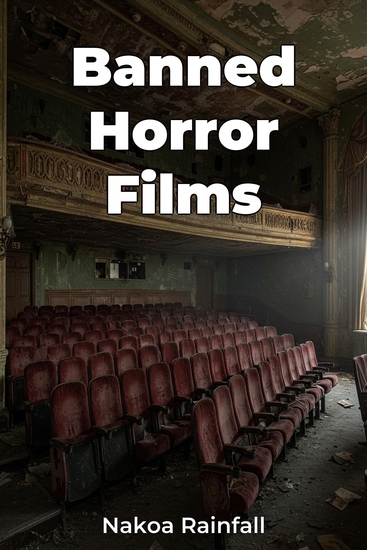
Banned Horror Films

Nakoa Rainfall

Translator A AI

Publisher: Publifye

  • 0
  • 0
  • 0

Summary

"Banned Horror Films" delves into the censorship of horror movies, exploring why certain films are deemed too extreme for public consumption. It examines the history and cultural impact of these outlawed movies, revealing how censorship often mirrors deeper societal anxieties rather than simply protecting public morality. For example, justifications for banning range from explicit content to perceived threats against social order, showcasing the evolving standards of what is deemed acceptable.

 
The book analyzes specific banned horror films, dissecting their content and the arguments for their prohibition. It traces the evolution of censorship practices throughout the 20th and 21st centuries, providing context for understanding each ban. Censorship is not static but a product of its time, reflecting political agendas and cultural clashes.

 
Structured to provide a comprehensive overview, the book begins with the history of film censorship and progresses into detailed analyses of specific films, culminating in a broader discussion of the ethics of censorship and the role of horror in society. By understanding the motivations behind these bans, readers gain a critical perspective on media consumption and the values shaping society.
Available since: 02/24/2025.
Print length: 67 pages.
Other books that might interest you

  • We Were Perfect Parents Until We Had Children - 60 000 Village Families Share Their Wisdom - cover

    We Were Perfect Parents Until We...

    Karin Schimke, Vanessa Raphaely

    • 0
    • 0
    • 0
    'I straighten her little tiara every morning – I lift her chin and remind her that she is meant for greater things than playground bullies.'
    
    'Everything shines in its own time. There is no timetable for life. Timetables are for classrooms, not for people.'
    These are just some of the wisdoms shared on The Village, South Africa's beloved Facebook group for parents raising tweens, teens and young adults.
    Having kids is a baffling endeavour beset with sulk, meltdowns, anxiety and disappointment – and that's just the parents! When you get that call to the principal's office? When the school acceptances don't come? When the bedroom door slams and you hear your child sobbing behind it? All awful but it's also a precious time.
    The trick? To find a way to enjoy our families, love our children and believe in them and ourselves despite the daily challenges. And laugh . . .
    In this book, Vanessa Raphaely and Karin Schimke have gathered together life lessons and insights from The Village members. It contains the gems and remedies from the real parenting experts – the parents – to help you raise your family in your own perfectly imperfect way.
    Show book
  • God Loves the Autistic Mind - Prayer Guide for Those on the Spectrum and Those Who Love Us - cover

    God Loves the Autistic Mind -...

    LC Father Matthew P. Schneider

    • 0
    • 0
    • 0
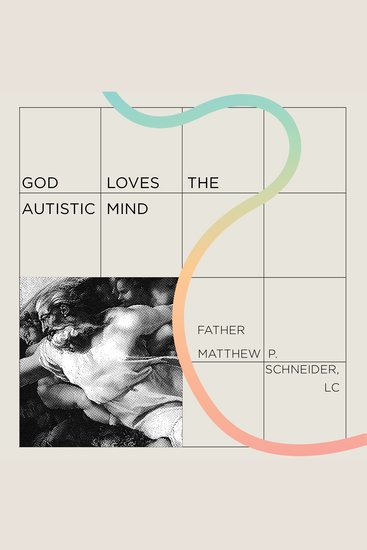
    Fr. Matthew Schneider, LC a priest on the autism spectrum, knows the challenges that autistics face in prayer, as well as the autistic traits that can be leveraged to deepen one’s prayer. With clarity and honesty, he shares from his own experience and that of others on the spectrum to give hope and confidence to readers. This ground-breaking book includes 52 meditations, which provide a coherent progression of material for prayer that can be used on a daily or weekly basis. Enjoy 3 recorded Bonus Chapters from the author and a Bonus Material .PDF which includes footnotes and prayer guides.
    Show book
  • How to Write a Novel: Step-by-Step | Essential Romance Novel Mystery Novel and Fantasy Novel Writing Tricks Any Writer Can Learn - cover

    How to Write a Novel:...

    Sandy Marsh

    • 0
    • 0
    • 0
    Struggling as an Author? 
    Do you have an amazing story in mind, but you can’t get it down on paper? You’ve got the idea and the characters but soon run out of steam? Perhaps you are a beginner and need help putting it all together. Whatever your reason, this book helps to unlock the secrets of novel writing in simple-to-follow ways that will bring significant results fast. 
    Tips to Write Engrossing Page-Turners 
    ”How to Write a Novel: Step-by-Step” provides a breakdown of essential aspects of writing Romance, Fantasy and Mystery novels and unveils crucial tips and tricks that will help flesh-out the characters in your book.  
    Contents Summary 
    Each section is summarized with a series of short questions to help inspire deeper reflection. These are: 
    THE OUTLINE – how to refine major schemes & subplots that make sense to the reader & also your protagonist. 
    THE SETTING – the art of crafting a sense of place & how to work with multiple locations & time-periods. 
    POINT OF VIEW – helping you to form the best character perspectives for your story. 
    CHARACTERS – the best way to choose your central character to drive the story forward & one in whom your audience will discover a gripping read. 
    CONFLICT – how & when to use struggle to keep the reader engaged. 
    ADDITIONAL TIPS – A final section that motivates the author to think differently to engage emotion & lose the reader in the heart of the story. Marsh helps an author to think outside of the box when faced with over-used clichés, and to deal with the pressures of deadlines and expectations. 
    Order Now!
    Show book
  • Scars on the Land - An Environmental History of Slavery in the American South - cover

    Scars on the Land - An...

    David Silkenat

    • 0
    • 0
    • 0
    Scars on the Land is the first comprehensive history of American slavery to examine how the environment fundamentally formed enslaved people's lives and how slavery remade the Southern landscape. Over two centuries, from the establishment of slavery in the Chesapeake to the Civil War, one simple calculation had profound consequences: rather than measuring productivity based on outputs per acre, Southern planters sought to maximize how much labor they could extract from their enslaved workforce. They saw the landscape as disposable, relocating to more fertile prospects once they had leached the soils and cut down the forests. On the leading edge of the frontier, slavery laid waste to fragile ecosystems, draining swamps, clearing forests to plant crops and fuel steamships, and introducing devastating invasive species. On its trailing edge, slavery left eroded hillsides, rivers clogged with sterile soil, and the extinction of native species. While environmental destruction fueled slavery's expansion, no environment could long survive intensive slave labor. The scars manifested themselves in different ways, but the land too fell victim to the slave owner's lash.
    Show book
  • The Majesty & Mystery Of Krsna's Divine Dance - cover

    The Majesty & Mystery Of Krsna's...

    Radha Krsna Das

    • 0
    • 0
    • 0
    Chaitanya Mahaprabhu appeared as a devotee of Krishna in Mayapur, West Bengal, India in the late fifteenth century. He introduced sankirtan, widespread congregational chanting of the Supreme Person’s names, as the most effective means by which anyone can achieve spiritual perfection. By His influence, many of India’s leading religious scholars and their followers became devotees of Krishna themselves. 
     
    In His youth, Mahaprabhu started a Sanskrit academy in Navadvipa—one of India’s top centers of learning at the time—and earned a reputation as an excellent scholar. But at age twenty-four he renounced everything to travel the subcontinent encouraging everyone he met to chant the Hare Krishna mantra. 
     
    He is considered by disciples, scholars and followers to be the latest avatar of Krishna Himself, based on extensive evidence found in Vedic literature. The International Society for Krishna Consciousness, ISKCON, is a continuation of Chaitanya Mahaprabhu’s sankirtan movement. 
      
    Chaitanya's humble, saintly demeanor and knowledge of Vedic conclusions persuaded prominent impersonalists that Krishna consciousness, worship of the Supreme Person, is life’s highest purpose. On Mahaprabhu’s instruction, the Six Goswamis of Vrindavan made a thorough analysis of the Vedas to show that Krishna bhakti, devotional service to Lord Krishna, is the essence of all Vedic teachings. Mahaprabhu’s extensive conversations with His devotees such as Ramananda Raya and Sanatana Goswami form the philosophical and scriptural basis of Gaudiya Vaishnavism, or Krishna consciousness. 
     
    Chaitanya himself left only eight written verses, the Siksastaka, in which he teaches that chanting God’s names is the most simple and sublime spiritual practice for everyone, everywhere. He also showed such extraordinary symptoms of love of God that great scholars among His devotees, including the Six Goswamis
    Show book
  • JFK Assassination - What They Told Me - cover

    JFK Assassination - What They...

    William Holiday

    • 0
    • 0
    • 0
    "JFK Assassination—What They Told Me" unveils a treasury of knowledge crafted by William Holiday, a dedicated educator with a passion for unraveling the truths behind the JFK assassination. In this book lies an extensive compendium of photographs, film segments, interviews, recordings, and documents, offering listeners a journey through the event's multifaceted dimensions. 
    A career educator, not a traditional researcher, William Holiday spent over five decades sharing his profound insights with students. From his years at Dummerston Elementary School to Brattleboro Union High School, and through his tenure at Keene State College and Castleton University, he fostered intellectual growth. His teachings on the JFK assassination, which spanned more than 50 years, extended most recently to the CALL Program at Keene State, where his classes often involved field studies in Dallas, Texas. 
    Notably, Holiday refrains from adopting the labels of "conspiracy theorist" or a staunch advocate of the "lone nut assassin" theory endorsed by the Warren Commission. Instead, he serves as a conduit for the firsthand accounts he has accumulated over time. The witnesses he introduces, ranging from researchers to doctors, provide unique perspectives that challenge conventional narratives. The book echoes the voices of those who were on the scene, including a young lady, an ambulance driver, an automobile salesman, and a deaf observer—all of whom recount their experiences in Dealey Plaza on November 22. 
    PLEASE NOTE: When you purchase this title, the accompanying PDF will be available in your Audible Library along with the audio.
    Show book