Join us on a literary world trip!
Add this book to bookshelf
Grey
Write a new comment Default profile 50px
Grey
Subscribe to read the full book or read the first pages for free!
All characters reduced
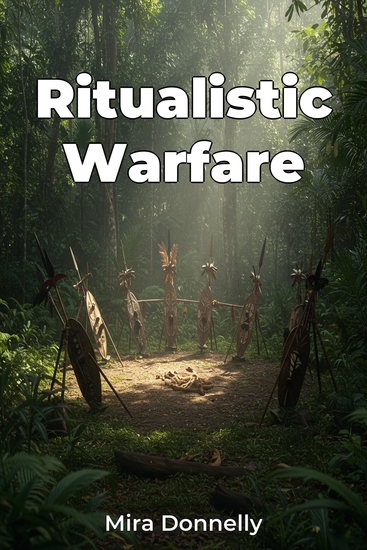
Ritualistic Warfare - cover

Ritualistic Warfare

Mira Donnelly

Translator A AI

Publisher: Publifye

  • 0
  • 0
  • 0

Summary

"Ritualistic Warfare" explores the multifaceted nature of indigenous warfare, revealing it as far more than simple aggression. It delves into the symbolic meanings and socio-political functions embedded within these conflicts, highlighting their role in shaping tribal alliances, social order, and identity.

 
The book emphasizes that warfare in indigenous societies was a structured activity governed by complex cultural codes, not merely chaotic violence. The book examines formalized combat practices, ceremonial preparations, and post-conflict rituals, each infused with cultural significance. For example, warfare communicated values, status, and cosmological beliefs. It fostered social cohesion, defined tribal boundaries, and maintained power dynamics.

 
The book progresses from introducing key concepts and anthropological perspectives to analyzing case studies from the Americas, Oceania, and Africa. Warriors, weapons, battlegrounds, gender roles, and social hierarchies are all examined to demonstrate how ritualized conflicts shaped intertribal relationships.

 
What sets this book apart is its emphasis on understanding conflict from the emic perspective, prioritizing indigenous interpretations and avoiding Western frameworks. By drawing from ethnographic accounts, archaeological findings, oral histories, and early colonial records, it offers a nuanced understanding of indigenous warfare, connecting to broader fields like political science, sociology, and religious studies.
Available since: 03/29/2025.
Print length: 64 pages.
Other books that might interest you

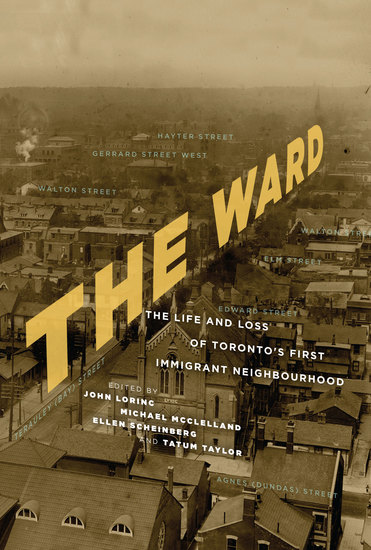
  • The Ward - The Life and Loss of Toronto’s First Immigrant Neighbourhood - cover

    The Ward - The Life and Loss of...

    John Lorinc, Michael McClelland,...

    • 0
    • 0
    • 0
    The story of the growth and destruction of Toronto's first 'priority neighbourhood.'
       
    From the 1840s until the Second World War, waves of newcomers who migrated to Toronto – Irish, Jewish, Italian, African American and Chinese, among others – landed in 'The Ward.' Crammed with rundown housing and immigrant-owned businesses, this area, bordered by College and Queen, University and Yonge streets, was home to bootleggers, Chinese bachelors, workers from the nearby Eaton';s garment factories and hard-working peddlers. But the City considered it a slum, and bulldozed the area in the late 1950s to make way for a new civic square.
       
    The Ward finally tells the diverse stories of this extraordinary and resilient neighbourhood through archival photos and contributions from a wide array of voices, including historians, politicians, architects, story-tellers, journalists and descendants of Ward residents. Their perspectives on playgrounds, tuberculosis, sex workers, newsies and even bathing bring The Ward to life and, in the process, raise important questions about how contemporary cities handle immigration, poverty and the geography of difference.
       
    ‘The Ward shines a light on one of Toronto's most historically significant and most forgotten neighbourhoods. Instead of a straight history, the book's editors opted to present the Ward through multiple short essays, each with its own unique point of view. The result is a fascinating and varied look at an area that once concurrently defined the city and acted as its biggest shame. As a result of the Ward's eventual razing, there are few artifacts left to teach newer generations about this important part of Toronto's history. This book helps correct that.’
       
    – 2016 Toronto Book Awards Jury Citation
       
    '[The Ward] should be of interest to Canadians anywhere, reminding us that we all came from some place else.'
       
    – Michael Enright, CBC Sunday Edition
       
    Contents & Contributors
       
    Introduction – John Lorinc
       
    Searching for the Old Ward – Shawn Micallef
       
    No Place Like Home – Howard Akler
       
    Beforethe Ward: Macauleytown – Stephen A. Otto
       
    My Grandmother the Bootlegger – Howard Moscoe
       
    Against All Odds: The Chinese Laundry – Arlene Chan
       
    VJ Day – Arlene Chan
       
    Merle Foster's Studio: 'A Spot Of Enchantment' – Terry Murray
       
    Missionary Work: The Fight for Jewish Souls – Ellen Scheinberg
       
    King of the Ward – Myer Siemiatycki
       
    Where the Rich Went for Vice – Michael Redhill
       
    A Fresh Start: Black Toronto in the 19th Century – Karolyn Smardz Frost
       
    Policing the Lord’s Day – Mariana Valverde
       
    'The Maniac Chinaman' – Edward Keenan
       
    Elsie's Story – Patte Roseban
       
    Lawren Harris's Ward Period – Jim Burant
       
    'Fool's Paradise': Hastings' Anti-Slum Crusade – John Lorinc
       
    Strange Brew: The Underground Economy of Blind Pigs – Ellen Scheinberg
       
    The Consulate, the Padroni and the Labourers – Andrea Addario
       
    Excerpt: The Italians in Toronto – Emily P. Weaver
       
    Arthur Goss: Documenting Hardship– Stephen Bulger
       
    Fresh Air: The Fight Against TB – Cathy Crowe
       
    The Stone Yard – Gaetan Heroux
       
    William James: Toronto's First Photojournalist – Vincenzo Pietropaolo
       
    The Avenue Not Taken – Michael McClelland
       
    Timothy Eaton’s Stern Fortifications – Michael Valpy
       
    Settling In: Central Neighbourhood House – Ratna Omidvar & Ranjit Bhaskar
       
    Toronto’s Girl with the Curls – Ellen Scheinberg
       
    Chinese Cafés: Survival and Danger – Ellen Scheinberg & Paul Yee
       
    Defiance and Divisions: The Great Eaton's Strike – Ruth A. Frager
       
    Elizabeth Street: What the City Directories Reveal – Denise Balkissoon
       
    Growing Up on Walton Street – Cynthia MacDougall
       
    Revitalizing George Street: The Ward's Lessons – Alina Chatterjee & Derek Ballantyne
       
    Taking Care of Business in the Ward &ndash Ellen Scheinberg
       
    'A Magnificent Dome': The Great University Avenue Synagogue – Jack Lipinsky
       
    Reading the Ward: The Inevitability of Loss – Kim Storey & James Brown
       
    Toronto’s First Little Italy – John Lorinc
       
    The Elizabeth Street Playground, Revisited – Bruce Kidd
       
    Divided Loyalties – Sandra Shaul
       
    Crowded by Any Measure – John Lorinc
       
    A Peddler and His Cart: TheWard’s Rag Trade – Deena Nathanson
       
    Toronto's Original Tenement: Wineberg Apartments – Richard Dennis
       
    Excerpt: Tom Thomson's Diary – Tom Thomson
       
    An Untimely Death – Brian Banks
       
    Paper Pushers – Ellen Scheinberg 
       
    The BMR's Wake-Up Call – Laurie Monsebraaten
       
    Excerpt: Report of the Medical Health Officer … – Charles J. Hastings
       
    Dr. Clarke's Clinic – Thelma Wheatley
       
    Slum-Free: The Suburban Ideal – Richard Harris
       
    The Glionna Clan and Toronto's First Little Italy – John E. Zucchi
       
    'The Hipp' – Michael Posner
       
    Before Yorkville– John Lorinc
       
    Sex Work and the Ward’s Bachelor Society – Elise Chenier
       
    Public Baths: Schvitzing on Centre Avenue – Ellen Scheinberg
       
    The Health Advocates: McKeown on Hastings – John Lorinc
       
    Remembering Toronto's First Chinatown – Kristyn Wong-Tam
       
    Tabula Rasa – Mark Kingwell
       
    Unrealized Renewal  – J. David Hulchanski
       
    A Short History of the 'Civic Square' Expropriation – John Lorinc
       
    Storytelling is Part of the Story – Tatum Taylor
       
    How We Think About What (Little) Survives – Patrick Cummins
       
    Institutional Memory – Scott James & Victor Russell
       
    Alternative Histories – MichaelMcClelland
    Show book
  • Atlas Linguae: The Layers Of Language Behind Everyday Life - cover

    Atlas Linguae: The Layers Of...

    Studio Ochenta

    • 0
    • 0
    • 0
    Why does a McDonald's slogan, no matter the language, make you want to buy their product? Is that subtitled movie you just watched truly better than the dubbed one? How do we communicate gender-neutral pronouns? And, most importantly... Are you sure you sent the right emoji just now? From the hit language podcast produced by Studio Ochenta comes Atlas Linguae: The Layers Of Language Behind Everyday Life, the audiobook version. Come and listen to dozens of experts who shed light into the wonderful complexity of everyday communication, as well as additional exclusive commentaries on each episode with brand new insights and examples on the subject that we can't stop thinking about - how humans translate everything that comes their way.
    Show book
  • They Called Us River Rats - The Last Batture Settlement of New Orleans - cover

    They Called Us River Rats - The...

    Macon Fry

    • 0
    • 0
    • 0
    They Called Us River Rats: The Last Batture Settlement of New Orleans is the previously untold story of perhaps the oldest outsider settlement in America, an invisible community on the annually flooded shores of the Mississippi River. This community exists in the place between the normal high and low water line of the Mississippi River, a zone known in Louisiana as the batture. 


    Until now the stories of this way of life have existed only in the memories of those who have lived here. They Called Us River Rats also explores the troubled relationship between people inside the levees, the often-reviled batture folks, and the river itself. It traces the struggle between batture folks and city authorities, the commercial interests that claimed the river, and Louisiana's most powerful politicians. 


    Today Fry is among the senior generation of "River Rats" living in a vestigial colony of twelve "camps" on New Orleans's river batture, a fragment of a settlement that once stretched nearly six miles and numbered hundreds of homes. It is the last riparian settlement on the Lower Mississippi and a contrarian, independent life outside urban zoning, planning, and flood protection. This book is for everyone who ever felt the pull of the Mississippi River or saw its towering levees and wondered who could live on the other side.
    Show book
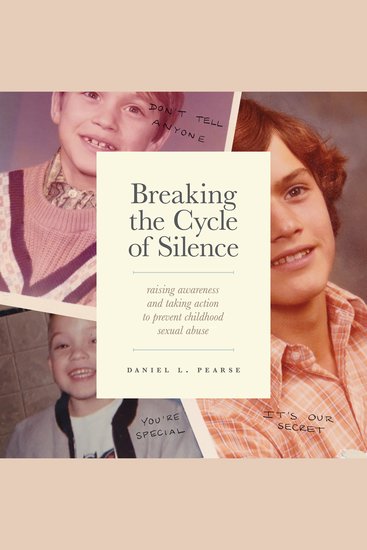
  • Breaking the Cycle of Silence - Raising awareness and taking action to prevent childhood sexual abuse - cover

    Breaking the Cycle of Silence -...

    Daniel L. Pearse

    • 0
    • 0
    • 0
    Breaking the Cycle of Silence is an introduction into child sexual abuse and child sexual abuse prevention. The latest statistics tell us that one out of three girls and one out of six boys will be sexually abused before the age of eighteen, destroying their lives in ways we can't even imagine. We also know that 90 percent of the time victims know their abuser.  
         Daniel Pearse is living proof of both these statistics. He and his brother were sent to live with a pedophile after their mother died. For nine years, Daniel suffered sexual, physical, emotional, mental and verbal abuse at the hands of his tormentor.  
    Like many abused children, Daniel then suffered in silence for decades as an adult. Now he's committed to stopping the cycle of abuse that causes so much pain. 
         Breaking the Cycle of Silence recounts Daniels harrowing story, gives his opinions on how to eliminate child sexual abuse, offers introductory educational  resources for the prevention of child sexual abuse. How to recognize child sexual abuse, disclosure and support for victims of child sexual abuse.  
         Breaking the Cycle of Silence proposes age-appropriate child sexual abuse prevention training and education in schools. It teaches children what is appropriate, shows adults the signs of abuse to look for, and offers sources for support for victims. With such training and education, we can identify and stop abusers, preventing them from claiming victim after victim for years.
    Show book
  • The Woman's Book of Joy - Listen to Your Heart Live with Gratitude and Find Your Bliss - cover

    The Woman's Book of Joy - Listen...

    Eileen Campbell

    • 1
    • 0
    • 0
    Experience Serenity and Hope Daily“The Woman’s Book of Joy is like a comforting friend supporting us in our struggles.” —Mandy Keast-Southall, therapist and yoga teacherWhen you learn to tap into the deep wellspring of joy that is within you, nothing is impossible.A book of joy. Women have a great many challenges to deal with in their lives. Among the most ubiquitous of those challenges is self-care. Too often, we are focused on caring for others and not ourselves. Low self-esteem, anxiety, and depression are all too common when our lives are less fulfilling than they could be. Yet deep within, women have a tremendous spiritual resource―a capacity for real joy that is not dependent on anything external. It is always available, regardless of circumstances.Find your inner spirituality. Many self-help books can lead people into further self-judgement. Instead, The Woman’s Book of Joy encourages and inspires women to care more deeply for themselves and to face life’s challenges with courage and joy. It’s a practical motivational book for accessing inner wisdom, enhancing self-esteem, overcoming sorrow, and deepening relationships.Thinking deeply. The meditations and affirmations in this book will provide you with the opportunity to contemplate a wide range of topics, including:Developing awarenessLetting goBelieving in your dreamsLiving in the nowFinding your true purposePracticing kindnessBeing optimisticTrusting the universeAppreciating life’s blessingsIf you found joy in meditation books and inspirational books for women like I've Been Thinking…, Journey to the Heart, and Each Day a New Beginning, you’ll be encouraged and uplifted by The Woman's Book of Joy.
    Show book
  • Federalists The: The Leaders Who Established the Federalist Party in America - cover

    Federalists The: The Leaders Who...

    Editors Charles River

    • 0
    • 0
    • 0
    Every American is taught a pristine narrative of the life and legacy of George Washington and can easily recite the highlights of the “Father of Our Country”. The remarkable Virginian led an under-resourced rag-tag army to ultimate victory in the American Revolution before becoming the nation’s first president, setting it on its path toward superpower status. He may not have actually chopped down a cherry tree or tossed a silver dollar across the Potomac, but his contemporaries considered his character above reproach. When Washington voluntary resigned as commander of the armies, he stunned the world. Everyone in the colonies and the world realized that Washington, at the head of the last army standing in the colonies, could have made himself king of the new United States on the spot, and it would have been a move supported by his rank and file soldiers.  
    Politically, John Adams shared Washington’s preference for Britain as well as his preference of non-interference. However, while he was certainly the more significant man in his work and his governing, he could never seem to move out of Washington’s shadow. Even worse, his presidency was seen as threatening to the very essence of American liberty with the Alien and Sedition Acts, and his loss to Jefferson in 1800 was a repudiation of the Federalists that left Jeffersonians in power until John Quincy Adams was elected in 1824. His presidency is still viewed relatively unfavorably. 
    	The Founding Fathers have been revered by Americans for over 200 years, celebrated for creating a new nation founded upon the loftiest ideals of democracy and meritocracy. But if the American Dream has come to represent the ability to climb the social ladder with skill and hard work, no Founding Father represented the new America more than Alexander Hamilton. Hamilton is also well remembered for his authorship, along with John Jay and James Madison, of the Federalist Papers. 
    Show book