Join us on a literary world trip!
Add this book to bookshelf
Grey
Write a new comment Default profile 50px
Grey
Subscribe to read the full book or read the first pages for free!
All characters reduced
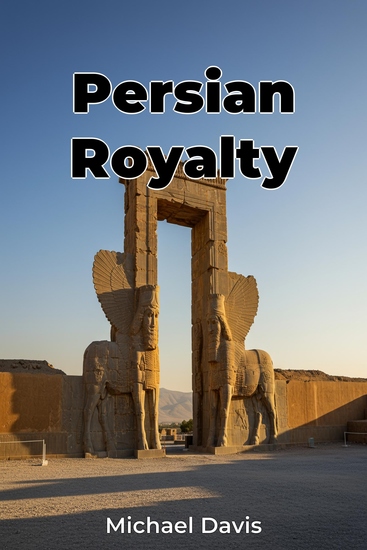
Persian Royalty - cover

Persian Royalty

Michael Davies

Translator A AI

Publisher: Publifye

  • 0
  • 0
  • 0

Summary

Persian Royalty explores the significant role Persia's monarchs played in shaping the Middle East's political landscape and cultural identity. The book examines how rulers like Cyrus the Great, Darius, and Xerxes influenced the region through innovative administrative systems, religious policies, and the promotion of arts and sciences, challenging Eurocentric views of history. The Achaemenid Empire, for instance, implemented a postal system akin to a modern delivery service, while Zoroastrianism's influence on Persian society highlights the era's religious complexity.

 
The book progresses chronologically through major dynasties, including the Achaemenids, Parthians, and Sasanians, detailing their military campaigns, legal reforms, and architectural achievements. It draws upon royal inscriptions, archaeological findings, and ancient texts to offer a comprehensive overview.

 
By connecting Persian history to comparative religion, art history, and political science, Persian Royalty provides a nuanced understanding of the factors that shaped this influential empire, making it valuable for history enthusiasts and students alike.
Available since: 03/20/2025.
Print length: 53 pages.
Other books that might interest you

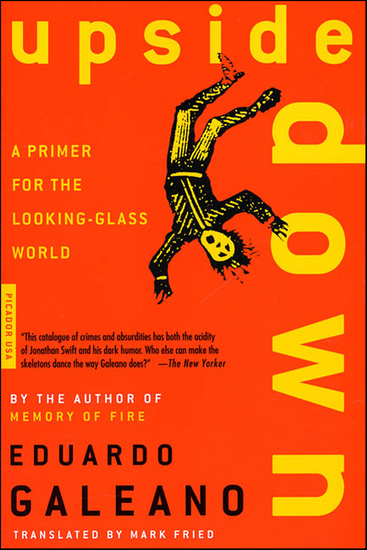
  • Upside Down - A Primer for the Looking-Glass World - cover

    Upside Down - A Primer for the...

    Eduardo Galeano

    • 0
    • 0
    • 0
    From the winner of the first Lannan Prize for Cultural Freedom, a bitingly funny, kaleidoscopic vision of the First World through the eyes of the Third.Eduardo Galeano, author of the incomparable Memory of Fire Trilogy, combines a novelist's intensity, a poet's lyricism, a journalist's fearlessness, and the strong judgments of an engaged historian. Now his talents are richly displayed in Upside Down, an eloquent, passionate, sometimes hilarious exposé of our first-world privileges and assumptions.In a series of lesson plans and a “program of study” about our beleaguered planet, Galeano takes the reader on a wild trip through the global looking glass. From a master class in “The Impunity of Power” to a seminar on “The Sacred Car” —with tips along the way on “How to Resist Useless Vices” and a declaration of “The Right to Rave” —he surveys a world unevenly divided between abundance and deprivation, carnival and torture, power and helplessness. We have accepted a reality we should reject, Galeano teaches us, one where machines are more precious than humans, people are hungry, poverty kills, and children toil from dark to dark.A work of fire and charm, Upside Down makes us see the world anew and even glimpse how it might be set right.“Galeano's outrage is tempered by intelligence, an ineradicable sense of humor, and hope.” —Los Angeles Times
    Show book
  • Hamlet - Made Super Super Easy - cover

    Hamlet - Made Super Super Easy

    Evelyn Samuel

    • 0
    • 0
    • 0
    New unique literature Study Guide made super super easy on Shakespeare's renowned play Hamlet.  Its unique structure with detailed explanations next to the text, its in depth identification of language devices, exploration of themes, character analysis, typical exam questions, gives students the information to achieve outstanding results.
    Show book
  • Agatha Christie - A Very Short Introduction - cover

    Agatha Christie - A Very Short...

    Gill Plain

    • 0
    • 0
    • 0
    Agatha Christie is a global bestseller. Her work has been translated into over 100 languages and adapted for stage and screen. Christie's writing life ran from 1920 to the 1970s, and she didn't just write puzzles, she wrote plays, supernatural stories, thrillers, satires, and domestic noir. She also commented obliquely but perceptively on the social and cultural changes of a troubled century. Christie's work tells the story of a changing Britain, but perhaps her greatest achievement is not to be limited by that national context. Her stories achieve the rare feat of appearing both universal and specific and can seemingly be adapted for almost any context. 
     
    This Very Short Introduction investigates why the novels of a middle-class, middlebrow Englishwoman were so successful, and why they continue to appeal to such a broad range of readers. Chapters explore the context of Christie's writing, and the clue-puzzle detective fiction structure at which she excelled, but they also question the familiar assumptions that surround her and what we think we know about her work. Gill Plain examines Christie's capacity to register the zeitgeist, and consider how her novels reveal anxieties surrounding gender roles, the family, war, justice, ethics, and nation. Her fascination with hypocrisy, power, abuse, deceit, and despair continues to resonate with readers—and screenwriters—who respond to her light touch and dark imagination to repurpose her stories with the fears and desires most appropriate to their time.
    Show book
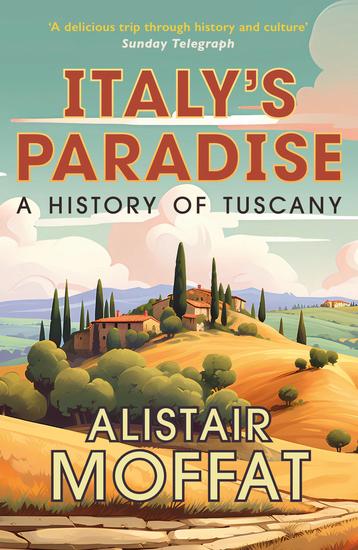
  • Italy's Paradise - A History of Tuscany - cover

    Italy's Paradise - A History of...

    Alistair Moffat

    • 0
    • 0
    • 0
    'A delicious trip through the geography, history and culture of the region' – Sunday Telegraph
    Ever since the days of the Grand Tour, Tuscany has cast its magic spell on foreign vistiors. Attracted by the perfect combination of history, art, architecture, superb natural beauty and weather – not to mention magnificent traditions of food and drink – British visitors and residents have been at times so numerous that the local word for foreigners was simply 'gli inglesi' – 'the English'.
    What is it that makes this exquisite part of Italy so seductive? Alistair Moffat embarks on a journey into Tuscany's past. From the flowering of the Etruscan civilization in the seventh century bc through the rise of the powerful medieval communes of Arezzo, Luca, Pisa and Florence, and the role the area played as the birthplace of the Renaissance, he underlines both the area's regional uniqueness as well as the vital role it has played in the history of the whole of Italy. Insightful, readable and imbued with the author's own enthusiasm for Tuscany, this book includes a wealth of information not found in tourist guides.
    'A sun-drenched meditation on the character of the place and its people' – The Scotsman
    Show book
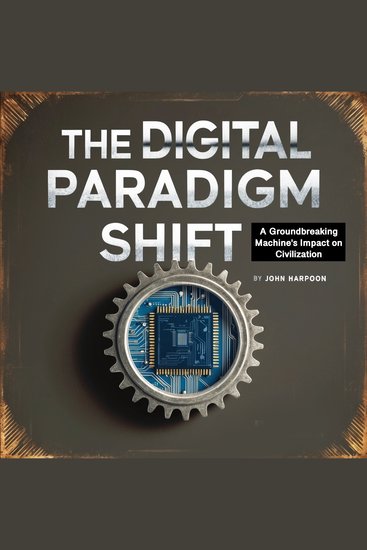
  • The Digital Paradigm Shift - A Groundbreaking Machine's Impact on Civilization - cover

    The Digital Paradigm Shift - A...

    John Harpoon

    • 0
    • 0
    • 0
    The journey into the digital age began with the spark of human ingenuity and the desire to simplify complex tasks. Early civilizations laid the groundwork for computation by devising systems to manage trade, record history, and calculate astronomical events. These early tools, such as the abacus and mechanical calculators, may seem rudimentary by modern standards, yet they were the building blocks of a monumental transformation. 
    In the late 19th and early 20th centuries, the seeds of the digital age began to take root. Pioneers like Charles Babbage and Ada Lovelace envisioned the potential of programmable machines long before the technology to build them existed. Lovelace's notes on Babbage's Analytical Engine contained the first algorithm intended for implementation on a machine, earning her recognition as the world’s first computer programmer. Their ideas laid a conceptual foundation that would inspire future innovators. 
    The advent of World War II catalyzed the development of modern computing. The need for advanced cryptography, ballistics calculations, and logistical coordination drove governments and researchers to invest in computational technologies. Alan Turing, often referred to as the father of computer science, developed the Turing Machine, a theoretical construct that became a cornerstone of computer science. His work at Bletchley Park, cracking the German Enigma code, not only shortened the war but also showcased the immense potential of automated computation.
    Show book
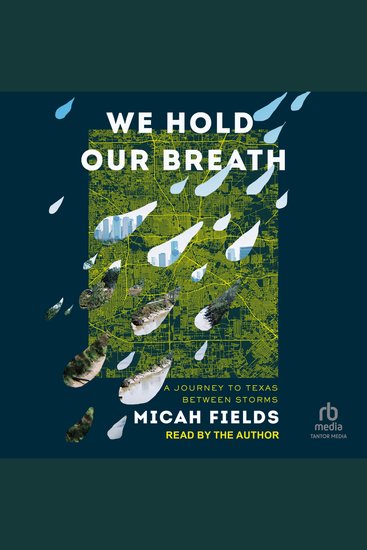
  • We Hold Our Breath - A Journey to Texas Between Storms - cover

    We Hold Our Breath - A Journey...

    Micah Fields

    • 0
    • 0
    • 0
    Developed as the commercial hub of the Texas cotton and sugarcane industries, Houston was designed for profit, not stability. Its first residents razed swamplands into submission to construct a maze of highways and suburbs, giving the city a sprawling, centerless energy as storms and floods rattled coastal Texas. 


    When Hurricane Harvey made landfall in 2017, Fields set off from his home in Iowa back to the battered city of his childhood to rescue his mother. Fields tracks the devastation of Hurricane Harvey, one storm in a long lineage that threatens the fourth largest city in America. 


    Fields depicts the history of Houston with reverence and lyrical certainty, investigating the conflicting facets of Texan identity that are steeped in racial subjugation, environmental collapse, and capitalist greed. He writes of the development of the modern city in the wake of the destruction of Galveston in 1900; of the oil booms and busts that shaped the city; of the unchecked lust for growth that makes Houston so expressive of the American dream. 


    We Hold Our Breath is a portrait of a city that exists despite it all, a city whose story has always been one of war waged relentlessly against water.
    Show book