Begleiten Sie uns auf eine literarische Weltreise!
Buch zum Bücherregal hinzufügen
Grey
Einen neuen Kommentar schreiben Default profile 50px
Grey
Jetzt das ganze Buch im Abo oder die ersten Seiten gratis lesen!
All characters reduced
Over the Devil's Back - cover

Over the Devil's Back

Melva Haggar Dye

Verlag: Proisle Publishing Services

  • 0
  • 0
  • 0

Beschreibung

Melva Haggar Dye is a free-lance writer of both fiction and nonfiction. Her articles have appeared in numerous publications including Chicken Soup for the Unsinkable Soul. This is her second novel, the first being All That Remains. After living for many years in Houston, Texas, and Baton Rouge, Louisiana, she returned to her native Western North Carolina. She and her husband make their home in Lake Lure, NC.
Verfügbar seit: 24.01.2023.
Drucklänge: 439 Seiten.
Weitere Bücher, die Sie mögen werden

  • Ground Provisions - cover

    Ground Provisions

    Shauna M. Morgan

    • 0
    • 0
    • 0
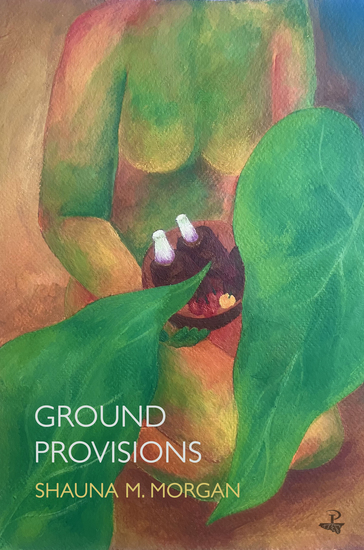
    In her debut collection, Ground Provisions, Shauna M. Morgan takes us on a sensory journey across landscapes of the body and the earth. Immersing readers in lush language and imagery, the collection traverses the natural world from the Caribbean to North America and provokes questions about identity in the making of diasporas and the formation of multi-ethnic realities. What remains and what is created anew? Who emerges at the fissures of culture? What is learned from human relationships with the land? How do we make provisions between generations?
    These poems guide us through a backabush Jamaican community to an often-hostile US environment as they interrogate power, follow the desire for freedom, explore the necessity of ancestral memory, and answer the crucial need to touch the earth and each other.
    Sonnet and sestina walk alongside contemporary poetic forms such as haibun and duplex to explore family origins and Afro-Indo cultural syncretism while offering intimate views of the speakers and their interior lives. We witness grief overwhelming the mind and body, children holding painful secrets, women leaning into sensuality, and families coming to terms with fracture and reconciliation.
    Through intertwined familial and historical inheritances, these poems ask us to imagine the liberatory possibilities of establishing new roots with legacy seeds.
    Zum Buch
  • The Divine Enchantment - cover

    The Divine Enchantment

    John Neihardt

    • 0
    • 0
    • 0
    When the princess Devanaguy falls into a deep trance-like sleep, she is visited by the god Vishnu: who causes her to fall pregnant with his holy child, Christna.Devanaguy’s sleep is prolonged supernaturally by Vishnu: allowing the god to relate to her his divine secrets through a series of ecstatic visions. Among the mysteries revealed to Devanaguy, she is shown how the gods will shortly powerfully intervene directly in human affairs. When the princess finally re-awakens: she is awestruck by her experiences, and bursts into a spontaneous rhapsody of praise.Throughout her rapturous intercourse with Vishnu, Devanaguy boldly continues to desire answers to mankind's profoundest questionings:- is it possible for mere mortals to comprehend the divine wisdom of the gods?- can be it really be true that divine beings care enough for mankind to want to intervene in human affairs: to do them good?(Introduction by Godsend)
    Zum Buch
  • Here in America - cover

    Here in America

    David Edgar

    • 0
    • 0
    • 0
    'I'm saying there's someone who could stop this madness. If you stood up, and said "no".'
    On a rainswept afternoon in 1952, Hollywood and Broadway's leading director Elia Kazan met his closest collaborator, the playwright Arthur Miller. As the anti-Communist crusade of McCarthyism blacklisted hundreds of their colleagues, Kazan and Miller faced a stark choice. Should they betray their friends, or risk never working again?
    David Edgar's play Here in America is a compelling drama that imagines a confrontation between two giants of stage and screen, both passionately involved with an actress about to become the most famous movie star in the world. It was first performed at the Orange Tree Theatre, London, in 2024, directed by James Dacre.
    Zum Buch
  • The Maid's Tragedy - cover

    The Maid's Tragedy

    Francis Beaumont

    • 0
    • 0
    • 0
    Beaumont and Fletcher's The Maid's Tragedy (first published 1619) is a sensational Jacobean sex tragedy. When gentleman soldier Melantius returns to Rhodes, he finds his dear friend Amintor is recently married - but not to his troth-plight love Aspatia (the maid of the title). Instead, the King has arranged a match between Amintor and Melantius' sister, the beautiful Evadne. On his wedding night, Amintor finds that his new wife has married him under false pretenses - and this unleashes a torrent of dire consequences, sexual, emotional, and ultimately political. (Summary by Elizabeth Klett) 
     
    Cast:Cleon: David NicolStrato: Algy PugLysippus: mbDiphilus/Messenger/First Gentleman: Marty KrisMelantius: David GoldfarbAspatia: Arielle LipshawAmintor: Peter BishopCalianax: Andy MinterKing: Bruce PirieEvadne/Diagoras/Narrator: Elizabeth KlettNight/Antiphila: AvailleCynthia/Olympias: SkylarkNeptune: Bob GonzalezEolus/Servant: Barry EadsDula: Beth ThomasLady: Bev J. StevensAudio edited by Elizabeth Klett
    Zum Buch
  • Poetics - cover

    Poetics

    Aristotle

    • 0
    • 0
    • 0
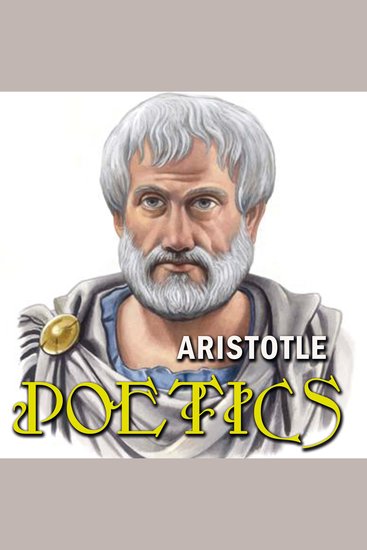
    Aristotle's Poetics (Greek: Περὶ ποιητικῆς; Latin: De Poetica) is the earliest surviving work of dramatic theory and first extant philosophical treatise to focus on literary theory. In it, Aristotle offers an account of what he calls "poetry" (a term that derives from a classical Greek term, ποιητής, that means "poet; author; maker" and in this context includes verse drama – comedy, tragedy, and the satyr play – as well as lyric poetry and epic poetry). They are similar in the fact that they are all imitations but different in the three ways that Aristotle describes: Differences in music rhythm, harmony, meter and melody. Difference of goodness in the characters.Difference in how the narrative is presented: telling a story or acting it out. In examining its "first principles", Aristotle finds two: 1) imitation and 2) genres and other concepts by which that of truth is applied/revealed in the poesis. His analysis of tragedy constitutes the core of the discussion. Although Aristotle's Poetics is universally acknowledged in the Western critical tradition, "almost every detail about his seminal work has aroused divergent opinions". The work was lost to the Western world for a long time. It was available in the Middle Ages and early Renaissance only through a Latin translation of an Arabic version written by Averroes.Aristotle's work on aesthetics consists of the Poetics, Politics and Rhetoric. The Poetics is specifically concerned with drama. At some point, Aristotle's original work was divided in two, each "book" written on a separate roll of papyrus.
    Zum Buch
  • Mishkât Al-Anwar (The Niche For Lights) - The classic work of Sufi mystical thinking - cover

    Mishkât Al-Anwar (The Niche For...

    Al- Ghazzali, WHT Gairdner

    • 0
    • 0
    • 0
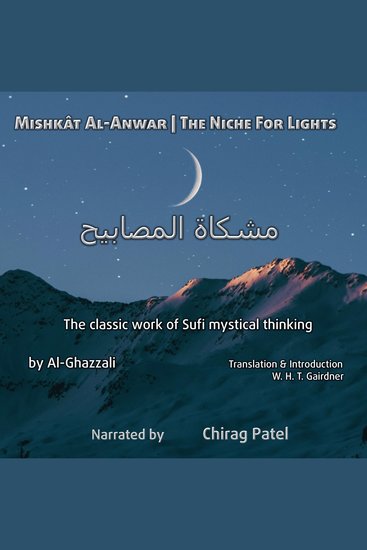
    The classic work of Sufi mystical thinking from 1100CE, available in audiobook for the first time. It is also known as A Niche of Lamps. In the middle ages, Sufi scholars reconciled rationality and faith, both of which were ascendant in the empires of the time. This is one of the great philosophical and theological works from that period, and shows another side to Islam than the doctrinaire version that is more commonly spoken of. Al-Ghazali is often called "the proof of Islam" (hujjat al-islam), because he tried to bridge inquiry, legislation and mystical practice. One could call al-Ghazali the prototype Muslim intellectual.This translation was done in 1823 by WHT Gairdner, who also includes a commentary upon the ideas that Al-Ghazzali presents.The Niche of Lights, written near the end of his life, is about the need for balance between the authority of the divine and reason, seeing both as essential to real spiritual development.
    Zum Buch