Join us on a literary world trip!
Add this book to bookshelf
Grey
Write a new comment Default profile 50px
Grey
Subscribe to read the full book or read the first pages for free!
All characters reduced
Bull Hunter - cover

Bull Hunter

Max Brand

Publisher: DigiCat

  • 0
  • 0
  • 0

Summary

Max Brand's "Bull Hunter" is a riveting exploration of the American West, blending action and psychological depth in a narrative that captures the rugged spirit of frontier life. Set against the backdrop of the picturesque yet perilous Montana landscape, the novel follows the story of young Bull Hunter as he navigates themes of identity, family, and redemption. Brand's prose is characterized by vivid imagery and a compelling narrative style that immerses readers in the era's stark realities and exhilarating adventures, showcasing his flair for combining western tropes with profound character development. Max Brand, a prolific writer and one of the foremost figures in Western literature, drew inspiration from his own experiences and the rich tapestry of American folklore. Known for his vivid storytelling and a deep understanding of the human condition, Brand's works often reflect his fascination with the complexities of morality and heroism amidst the chaos of frontier life. His ability to create multi-dimensional characters has solidified his legacy as a master of the genre. For readers seeking an enthralling tale that encapsulates the spirit of exploration and the quest for meaning, "Bull Hunter" is an essential addition to their literary collection. It engages the mind and heart, making it a timeless exploration of the American experience that resonates with both Western enthusiasts and those drawn to rich, character-driven narratives.
Available since: 09/16/2022.
Print length: 197 pages.

Other books that might interest you

  • Lot No 249 - cover

    Lot No 249

    Arthur Conan Doyle

    • 0
    • 0
    • 0
    Unexplained events are happening at Oxford these days. Several students have been attacked at night by some strange form of wild animal. It can scale walls with cat-like agility. Its arms are as thin and as strong as steel bands. And there is one student who conducts midnight studies in his room with certain Egyptian artifacts. The most significant of which is a 6'7" tall mummy.
    Show book
  • The Vision of the Dead Creole - From their pens to your ears genius in every story - cover

    The Vision of the Dead Creole -...

    Lafcadio Hearn

    • 0
    • 0
    • 0
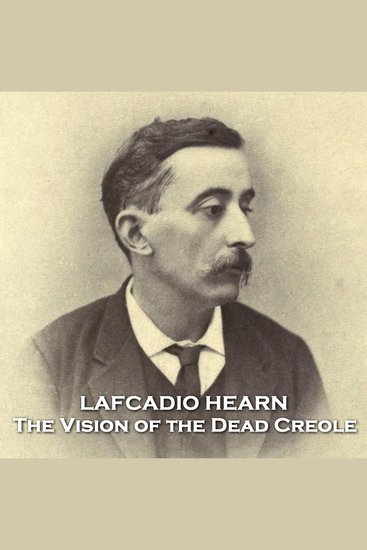
    Lafcadio Hearn was born on the 27th June 1850 on the Ionian isle of Levkás in Greece to a British Army officer and a Greek Mother. 
    His father, fearing for his career prospects at being married to a Greek Orthodox wife, sent them to Dublin whilst he continued to advance his career with further postings.  Life there was difficult for mother and son.  His father returned, wounded and traumatised, when Lafcadio was three.  He annulled the marriage and she remarried but had to give up care of Lafcadio to her sister-in law.   
    After brief periods for Catholic education in England and France he emigrated to Ohio in the United States when he was 19, taking on a series of casual jobs before embarking on a career as a journalist, publishing poems and essays in Cincinnati.  It was whilst here that he began a side-line in translating, starting with Gautier and Flaubert.  He married in 1874 to a 20 year old African-American woman in violation of Ohio's anti-miscegenation law.  The marriage soon failed. 
    In 1877 he relocated to New Orleans to write on a variety of themes before picking up a two year assignment from Harper’s to write in the West Indies, where he also wrote his first novel. 
    In 1890 Harper’s sent him to Japan.  Here he left journalism and took the remarkable decision to become a schoolteacher in the north of Japan.   Enraptured by the culture he was driven to explain it in various Western publications to those who had little, if any, knowledge of its culture.  Within the year he had fallen in love with, and married, a high-born Japanese lady, together they would have four children.   
    In 1895 he became a Japanese national and took the name Koizumi Yakumo, Koizumi being his wife’s family name. 
    The following few years, whilst a professor of Literature at the Imperial University of Japan, were his most creative and admired period.   
    Lafcadio Hearn died of heart failure on the 26th of September 1904, in Tokyo, Japan shortly before leaving to deliver a series of lectures at Cornell University in New York State.  He was 54.
    Show book
  • Juvenilia – Volume I - cover

    Juvenilia – Volume I

    Jane Austen

    • 0
    • 0
    • 0
    "I have a great mind to go to Italy and be a nun, but I don't think I should like it."
    
    Long before she created Elizabeth Bennet or Emma Woodhouse, a teenage Jane Austen was already skewering the tropes of 18th-century literature. Juvenilia – Volume I is a riotous collection of "scraps" and "sketches" that displays none of the refined restraint of her later novels. Instead, readers are treated to dark humor, absurd plots, and characters who drink too much, marry too often, and faint with alarming frequency. From the chaotic social blunders of "Frederic and Elfrida" to the wild escapades of "Henry and Eliza," this volume offers a rare, unvarnished look at the birth of a satirist who would go on to change the world of fiction.
    
    The Roots of Satire: In these early pages, Austen mocks the "Sirs" and "Madams" of the sentimental novels she grew up reading. She takes the dramatic clichés of her time—vows of eternal friendship, tragic coincidences, and fainting fits—and pushes them to a level of hilarious absurdity. It is a masterclass in parody that shows a young girl already in full command of her wit.
    
    A Window into the Austen Household: These stories were meant to be read aloud to the Austen family at Steventon Rectory. They reflect the lively, intellectual, and often irreverent atmosphere in which Jane was raised. Many stories are dedicated to her siblings or cousins, making the volume an intimate piece of literary history that bridges the gap between a private family hobby and public masterpiece.
    
    Dark Comedy and High Energy: Readers expecting the polite drawing rooms of Mansfield Park will be surprised by the energy here. In "Jack and Alice," for example, we find a world of "red-faced" drinking and physical comedy. This volume proves that Austen was always a rebel at heart, using her pen to puncture the pomposity of the world around her from the very start.
    
    Discover the girl behind the genius. Purchase "Juvenilia – Volume I" today.
    Show book
  • Edgar Allan Poe's: The Masque of the Red Death - cover

    Edgar Allan Poe's: The Masque of...

    Jason Markiewitz

    • 0
    • 0
    • 0
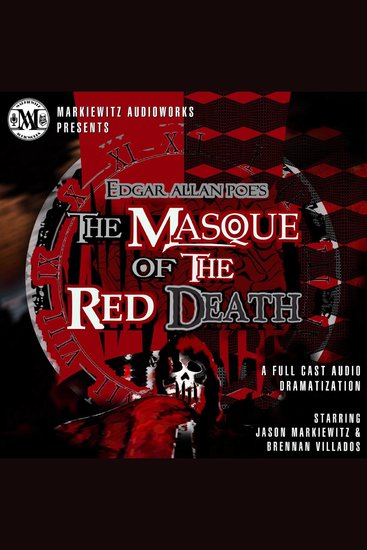
    Markiewitz Audioworks is proud to present "The Masque of the Red Death," a full-cast audio drama inspired by the 1842 short story by Edgar Allan Poe. Originally titled "The Mask of the Red Death: A Fantasy" this story has terrified readers, and now listeners, for nearly 200 years.  Having just survived the global pandemic in 2020, this story takes on a new life for those of us who managed to cheat death.    
     
    The Masque of the Red Death follows Prince Prospero and his trusted Viceroy who do everything they can to create a fortress capable of withstanding the great malady sweeping through the land.  After six months, Prince Prospero decides to hold a grand celebration to tout his victory over the plague.  But, just as Prospero's confidence rises, a mysterious mummer brings his worst fear inside his solitude. 
     
    With some new dialogue, sound effects, original music and a theatrical cast, this story is sure to be a modern classic for fans of scary stories, Poe stories, and great audio theatre! 
     
    Cast: 
    Brennan Villados as Prince Prospero 
    Jason Markiewitz as Viceroy 
    Jarod Wiggins as the Magistrate 
    Arie Knyazev as the Palace Guard / Party Guest 
    Lia Rose as the Dancing Party Girl / Party Guest 
    Tana Aivaz Colburn as Party Ensemble 
    Chad Eldridge as Party Ensemble 
    Deanne Farinha Eldridge as Party Ensemble 
    And 
    Marc Biagi as Death 
     
    Crew: 
    Cover Artist: Jon Markiewitz - http://jonmarkiewitz.com 
    Composer: Ross Bernhardt 
    Additional Music by: Hayden Folker 
    Director/Producer/Sound Design/Script: Jason Markiewitz 
     
    The Masque of the Red Death is a Markiewitz Audioworks production.  (C) 2026.
    Show book
  • The Pearls of Parlay - cover

    The Pearls of Parlay

    Jack London

    • 0
    • 0
    • 0
    The Pearls of Parlay (1911) Parlay, who has become the ruler of the atoll of Hikihoho after marrying the queen there, summons the leading traders of the South Seas to his atoll for an auction of the whole of his fabulous collection of pearls. But that day is precisely at the peak of the hurricane season and when their ships have gathered in the atoll's lagoon the barometer starts going through the floor, as the mother of all hurricanes is on the verge of destroying not only all the ships but the island as well.
    Show book
  • A Diagnosis of Death - From their pens to your ears genius in every story - cover

    A Diagnosis of Death - From...

    Ambrose Bierce

    • 0
    • 0
    • 0
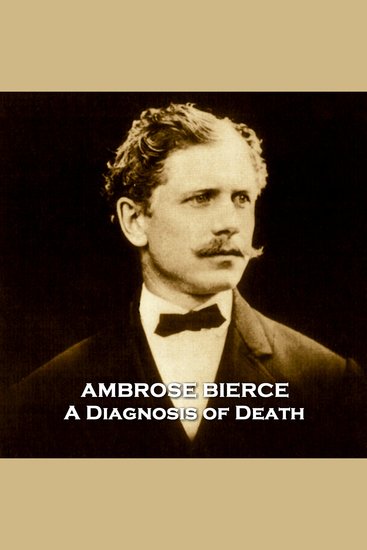
    Ambrose Gwinnett Bierce was born on 24th June 1842 at Horse Cave Creek in Meigs County, Ohio. His parents were poor but they introduced him to literature at an early age, instilling in him a deep appreciation of books, the written word and the elegance of language.  
    Growing up in Koscuisko County, Indiana poverty and religion were defining features of his childhood, and he would later describe his parents as “unwashed savages” and fanatically religious, showing him little affection but always quick to punish. He came to resent religion, and his introduction to literature appears to be their only positive effect. 
    At age 15 Bierce left home to become a printer’s devil, mixing ink and fetching type at The Northern Indian, a small Ohio paper. Falsely accused of theft he returned to his farm and spent time sending out work in the hopes of being published. 
    His Uncle Lucius advised he be sent to the Kentucky Military Institute. A year later he was commissioned as an Officer.  As the Civil War started Bierce enlisted in the 9th Indiana Infantry Regiment.  
    In April 1862 Bierce fought at the Battle of Shiloh, an experience which, though terrifying, became the source of several short stories. Two years later he sustained a serious head wound and was off duty for several months. He was discharged in early 1865.  
    A later expedition to inspect military outposts across the Great Plains took him all the way to San Francisco. He remained there to become involved with publishing and editing and to marry, Mary Ellen on Christmas Day 1871.  They had a child, Day, the following year.  
    In 1872 the family moved to England for 3 years where he wrote for Fun magazine. His son, Leigh, was born, and first book, ‘The Fiend’s Delight’, was published.  
    They returned to San Francisco and to work for a number of papers where he gained admiration for his crime reporting. In 1887 he began a column at the William Randolph Hearst’s San Francisco Examiner.  
    Bierce’s marriage fell apart when he discovered compromising letters to his wife from a secret admirer. The following year, 1889 his son Day committed suicide, depressed by romantic rejection. 
    In 1891 Bierce wrote and published the collection of 26 short stories which included ‘An Occurrence at Owl Creek Bridge’.  Success and further works including poetry followed.  
    Bierce with Hearst’s resources helped uncover a financial plot by a railroad to turn 130 million dollars of loans into a handout. Confronted by the railroad and asked to name his price Bierce answered “my price is $130 million dollars. If, when you are ready to pay, I happen to be out of town, you may hand it over to my friend, the Treasurer of the United States”.  
    He now began his first foray as a fabulist, publishing ‘Fantastic Fables’ in 1899.  But tragedy again struck two years later when his second son Leigh died of pneumonia relating to his alcoholism.  
    He continued to write short stories and poetry and also published ‘The Devil’s Dictionary’.  
    At the age of 71, in 1913 Bierce departed from Washington, D.C., for a tour of the battlefields where he had fought during the civil war. At the city of Chihuahua he wrote his last known communication, a letter to a friend. It’s closing words were “as to me, I leave here tomorrow for an unknown destination,” Ambrose Bierce then vanished without trace.
    Show book