Join us on a literary world trip!
Add this book to bookshelf
Grey
Write a new comment Default profile 50px
Grey
Subscribe to read the full book or read the first pages for free!
All characters reduced
The Case for Birth Control: A Supplementary Brief and Statement of Facts - cover

The Case for Birth Control: A Supplementary Brief and Statement of Facts

Margaret Sanger

Publisher: DigiCat

  • 0
  • 0
  • 0

Summary

In "The Case for Birth Control: A Supplementary Brief and Statement of Facts," Margaret Sanger presents a compelling argument for the necessity of birth control as a fundamental human right. Drawing on both scientific data and anecdotal evidence, Sanger employs a persuasive yet accessible literary style that underscores the social, economic, and health implications of reproductive choice. The work is set against the backdrop of early 20th-century America, a time of rigid societal norms and limited women's rights, making her arguments revolutionary and poignant in context. Through a systematic analysis, Sanger dismantles prevailing misconceptions about contraception while advocating for women's autonomy over their bodies and futures. Margaret Sanger, a pioneering figure in the birth control movement, was influenced by her early experiences witnessing the hardships faced by women due to unplanned pregnancies. Her dedication to public health and women's rights was solidified by her activism and journalism, which aimed to educate the public on reproductive issues. Sanger's commitment to social reform and her understanding of the pressing need for accessible contraception shaped her writings, making them both authoritative and personal. This essential text is highly recommended for readers interested in women's studies, public health, or the history of social reform. Sanger's articulate defense of birth control not only enriches our understanding of past struggles for reproductive rights but also resonates with ongoing debates about personal agency and health care access today.
Available since: 05/29/2022.
Print length: 279 pages.

Other books that might interest you

  • The Napoleonic War In 100 Facts - cover

    The Napoleonic War In 100 Facts

    Jem Duducu

    • 0
    • 0
    • 0
    Sparked by the French Revolution, the Napoleonic Wars became one of the largest European conflicts in history as Napoleon fought to expand his French Empire. The wars were instrumental in the formation of Europe as we know it today, and confirmed Britain's dominance as a seafaring nation. It was a period famous for strategic warfare and cunning battle tactics. From this background emerged Nelson as national hero and politician. The Napoleonic Wars in 100 Facts covers the twenty-five years of war from the 1790s to the final victory in 1815 at the Battle of Waterloo. Jem Duducu guides us through some of the key figures and their stories, for example Wellington, Napoleon and Nelson, as well some of the major battles and tactics in this era of epic conflict that took British troops to Egypt, Argentina, America and of course a little town in Belgium called Waterloo.
    Show book
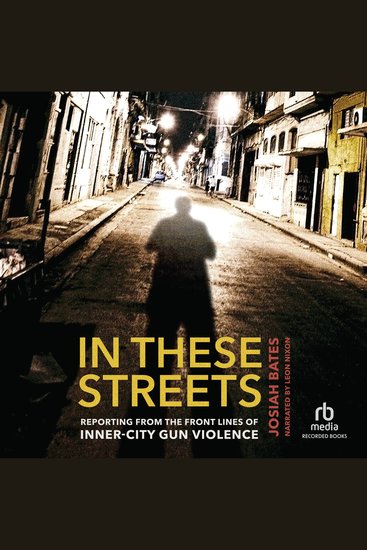
  • In These Streets - Reporting from the Front Lines of Inner-City Gun Violence - cover

    In These Streets - Reporting...

    Josiah Bates

    • 0
    • 0
    • 0
    Journalist Josiah Bates pulls back the curtain on a crisis that continues to plague the United States in this gripping narrative. Fueled by the convergence of the COVID-19 pandemic and social unrest, gun violence has surged to unprecedented levels, devastating marginalized communities and urban areas across the nation.  
     
    Bates embarks on a heart-wrenching journey, crisscrossing the country to meet victims, perpetrators, community activists, and renowned scholars. Through their powerful stories, he unearths the hidden causes behind the escalating gun violence epidemic. From the corrosive effects of poverty to the contentious debates surrounding policing and calls to defund law enforcement, Bates fearlessly navigates the intricate web of factors influencing gun violence. Through firsthand accounts and expert analysis, he exposes the systemic failures that perpetuate this cycle of destruction and delivers a powerful clarion call for change.  
     
    Bates amplifies rarely heard voices in this debate, including both victims and perpetrators of shootings, some of whom now work tirelessly to dismantle the violence in their communities. Their stories, alongside Bates’s unflinching reporting, illuminate a path toward long-term solutions. As the nation grapples with this relentless epidemic, Bates presents a compelling case for unity and action. In These Streets is a groundbreaking investigation that uncovers the deep-rooted causes of gun violence, empowering readers with the knowledge, empathy, and inspiration needed to drive meaningful transformation. 
     
    “If you want to understand gun violence but don’t know where to start, start here. Josiah Bates brings together gripping stories, solid research, and astute analysis—all in clear, readable language. By approaching violence as a problem to be solved and not an argument to be won, Bates leaves us with something in short supply these days: hope.”—Thomas Abt, author of Bleeding Out: The Devastating Consequences of Urban Violence—and a Bold New Plan for Peace in the Streets
    Show book
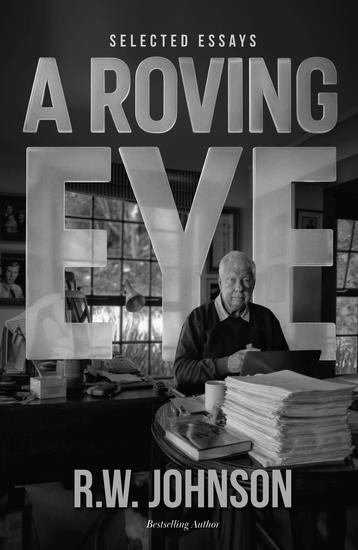
  • A Roving Eye - Selected Essays - cover

    A Roving Eye - Selected Essays

    R.W. Johnson

    • 0
    • 0
    • 0
    R.W. Johnson's articles and essays travel far beyond Southern Africa, reaching readers across continents. Their appeal lies not only in their acuity but also in his exceptional range of subjects – political, historical and cultural. As a former Oxford don and a leading international commentator, Johnson remains unmatched as an interpreter of national and world events.
    Whether he's writing about politics in South Africa, Europe or the United States, the new space race, the leading personalities of our time, or even soccer, his views are always sharp, clear, deeply informed and original.
    These essays belong unmistakably to the tradition of George Orwell. Orwell aspired to make political writing an art form, but his finest essays – even those on seemingly trivial subjects such as boys' comics – revealed both a penetrating intelligence and remarkable breadth. Johnson's writing is similar in spirit: like Orwell's, his essays can be read consecutively or dipped into at random, each one offering something striking and original.
    The result is A Roving Eye, a book that is not just distinctive but truly unique, marked by depth, range, humanity and a rare sophistication.
    R.W. Johnson, author of 17 books and innumerable articles, attended schools in the UK and South Africa, did his first degree at the University of Natal and was then a Rhodes Scholar at Oxford. For 26 years he was a Fellow and Tutor at Magdalen College, Oxford and he remains a Fellow of the College. An expert in French, British, American and South African politics, his books have ranged over all these interests and for many years he also wrote for The (London) Times, Sunday Times, the London Review of Books, Le Monde Diplomatique and other titles in the international media. Johnson's writings have been widely praised and have often excited controversy. He is a master of the essay form and his essays have had a wide circulation. He is married to the Russian scholar, Irina Filatova, and they live in Cape Town.
    Show book
  • Politics & Mission - Rediscovering the Political Power of What Christians Do - cover

    Politics & Mission -...

    Martin Gainsborough

    • 0
    • 0
    • 0
    Contrary to popular sentiment, Christianity is not dull or out of touch but fresh, relevant, exciting, and contemporary. The Church is political because it tells a radically different story from the dominant political norms of our day. Through a study of the Church’s liturgy, this book seeks to build confidence in the Church’s mission.
    
     
    Politics & Mission examines five pieces of liturgy—namely morning prayer, baptism, eucharist, footwashing and the funeral—detailing in turn the ways in which the language of the liturgy, which we often take for granted, is powerful and counter-cultural. Through its analysis, the book sheds light on three principal areas: what it is to be human, the challenges of contemporary mission, and the particular way in which the Church is political.
    
     
    In so doing, new resources are offered for the practicing Christian, those in Church leadership, and those looking at the Church from the outside, to reflect on and grapple with the challenges of this generation.
    Show book
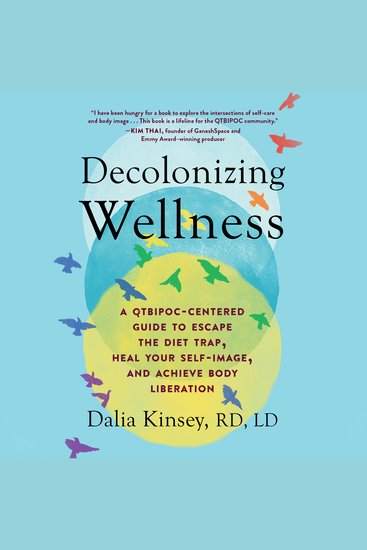
  • Decolonizing Wellness - A QTBIPOC-Centered Guide to Escape the Diet Trap Heal Your Self-Image and Achieve Body Liberation - cover

    Decolonizing Wellness - A...

    Dalia Kinsey

    • 0
    • 0
    • 0
    The lack of BIPOC and LGBTQ representation in the fields of health and nutrition has led to repeated racist and unscientific biases that negatively impact the very people they purport to help. Many representatives of the increasingly popular body-positivity movement actually add to the body-image concerns of queer people of color by emphasizing cisgender, heteronormative, and Eurocentric standards of beauty. Few mainstream body-positivity resources address the intersectional challenges of anti-Blackness, colorism, homophobia, transphobia, and generational trauma that are at the root of our struggles with wellness and self-care. In Decolonizing Wellness, registered dietitian and nutritionist Dalia Kinsey will help listeners improve their health without restriction, eliminate stress around food and eating, and turn food into a source of pleasure instead of shame. A road map to body acceptance and self-care for queer people of color, this book is filled with practical eating practices, journal prompts, affirmations, and mindfulness tools. Ultimately, decolonizing nutrition is essential not only to our personal well-being but to our community’s well-being and to the possibility of greater social transformation. This is a body-positivity and food-freedom book for marginalized folks. It’s a guide to throwing out food rules in exchange for internal cues and adopting a self-love-based approach to eating. It’s about learning to trust our bodies and turning mealtime into a time for celebration and healing.
    Show book
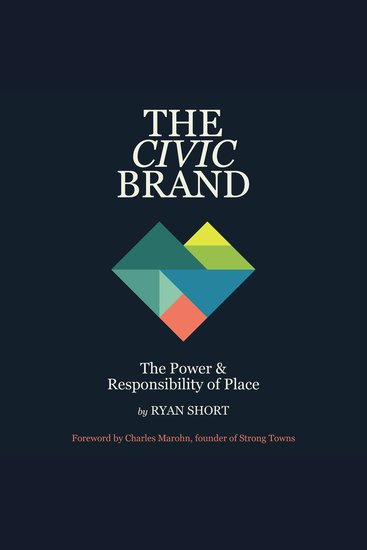
  • The Civic Brand - The Power & Responsibility of Place - cover

    The Civic Brand - The Power &...

    Ryan Short

    • 0
    • 0
    • 0
    The Civic Brand: The Power & Responsibility of Place is a bold and practical book that challenges conventional thinking about city-building, tourism, economic development, and community engagement. Author Ryan Short introduces a new framework for shaping more resilient, equitable, and loveable places that is rooted in identity, values, and a triple bottom line. 
    Drawing from years of experience working with cities, counties, and regions across the country, Ryan Short shows how fragmented efforts, siloed departments, and surface-level branding have left communities struggling to grow with intention or preserve what makes them special. The Civic Brand reveals how place branding, when done right, isn’t just logos or slogans, but about uniting people, guiding policy, and building shared civic pride. Blending strategic insight with vivid, often entertaining stories from the field, this book brings to life the challenges and triumphs of real places navigating growth, decline, and identity. 
    Whether facing overtourism or decline, rapid growth or disinvestment, division or disengagement, this book offers a bold path forward. It’s a call to city leaders, planners, business owners, developers, and residents alike to recognize their role in shaping place and to do so with purpose. 
    The Civic Brand is more than a book, it’s a movement to reimagine how we care for the places we call home.
    Show book