Join us on a literary world trip!
Add this book to bookshelf
Grey
Write a new comment Default profile 50px
Grey
Subscribe to read the full book or read the first pages for free!
All characters reduced
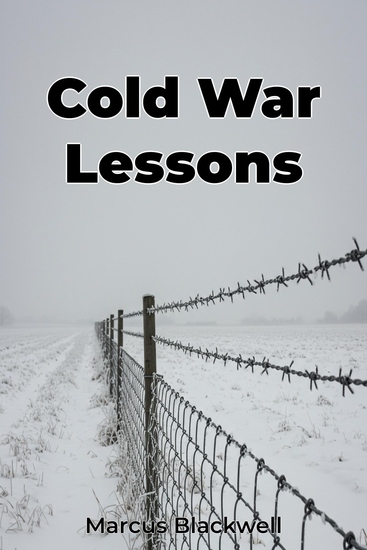
Cold War Lessons - cover

Cold War Lessons

Marcus Blackwell

Translator A AI

Publisher: Publifye

  • 0
  • 0
  • 0

Summary

Cold War Lessons explores a troubling paradox: the erosion of democratic principles in Europe after the triumph of democracy following the Cold War. Contrary to expectations, the expansion of freedom has been accompanied by increasingly restrictive policies, threatening civil liberties and free speech.

 
The book argues that while overt authoritarianism has receded, subtle forms of control are on the rise, jeopardizing the essence of democratic societies. One key area examined is the normalization of surveillance technologies, raising concerns about privacy and government overreach. Another is the impact of populism on fundamental rights, challenging the stability of established political systems.

 
The book provides a historical backdrop, contrasting the initial promise of democratization with the current socio-political landscape. Each chapter delves into specific themes like surveillance, populism, and free speech, using case studies from different European countries, highlighting both common trends and unique national experiences.

 
The comparative analysis reveals how legal frameworks and societal attitudes vary across Europe, influencing the erosion of freedoms. Cold War Lessons offers policy recommendations and potential solutions, urging readers to critically assess the state of democracy in Europe and to advocate for democratic principles.
Available since: 02/18/2025.
Print length: 77 pages.
Other books that might interest you

  • Africa 101 - The Pan African Lifestyle Guide to Relocating Investing & Living the African Dream in the Motherland - cover

    Africa 101 - The Pan African...

    Emmanuel Bope, Solange Bope

    • 0
    • 0
    • 0
    Africa 101: The Pan African Lifestyle Guide to Relocating, Investing & Living the African Dream in the Motherland is your ultimate guide to thriving in Africa. Designed for the global Black diaspora, it offers practical advice, inspiring insights, and essential steps for those ready to relocate, invest, or immerse themselves in the continent. Whether you're looking to reconnect with your roots, travel, acquire citizenship, or scale business opportunities, this guide provides the foundational essentials to embrace and enjoy a true Pan-African lifestyle.
    Show book
  • The Battle of the Sexes in Science Fiction - cover

    The Battle of the Sexes in...

    Justine Larbalestier

    • 0
    • 0
    • 0
    Runner-up for the Hugo Best Related Book Award (2003)The Battle of the Sexes in Science Fiction is a lively account of the role of women and feminism in the development of American science fiction during its formative years, the mid-20th century. Beginning in 1926, with the publication of the first issue of Amazing Stories, Justine Larbalestier examines science fiction's engagement with questions of femininity, masculinity, sex and sexuality. She traces the debates over the place of women and feminism in science fiction as it emerged in stories, letters and articles in science fiction magazines and fanzines. The book culminates in the story of James Tiptree, Jr. and the eponymous Award. Tiptree was a successful science fiction writer of the 1970s who was later discovered to be a woman. Tiptree's easy acceptance by the male-dominated publishing arena of the time proved that there was no necessary difference in the way men and women wrote, but that there was a real difference in the way they were read.
    Show book
  • Rise and Fall of the Crusader States The: The History of the Outremer in the Holy Land - cover

    Rise and Fall of the Crusader...

    Charles River Editors

    • 0
    • 0
    • 0
    Of the many campaigns during the Middle Ages, few are as remarkable or seemingly impossible to win at the start as the First Crusade (1095-99), and the true crowning achievement of that crusade, which resulted in two centuries of Western European Christian states in the Middle East and the permanent firing of the European imagination, was the conquest of Jerusalem on July 15, 1099 after three weeks of siege. That victorious siege came four years after the call for a crusade first went out, and had the Crusaders not taken Jerusalem, the First Crusade would not likely have been followed by any more and the campaign might have been no more than an historical footnote of what could have been.  
    Despite the successful First Crusade, the Crusader States were relatively small and weak, and while they tried to be a bulwark of Christianity in the Holy Land, the Crusader States were reconquered centuries before modern European colonialism began. Nonetheless, the Crusades and the Crusader States galvanized the Christians of Western Europe to expand their world. While it remains unclear how much that world expanded in practical terms such as trade, or how it affected later attitudes during the expansion to the New World and other regions, it definitely engaged the European mind in both positive and negative ways. As such, the crusades soon achieved near-mythic status in the European literature and remain among the most important events of the Middle Ages. 
    At the same time, the Crusader States were not one homogenized region but actually several distinct territories that had their own unique histories and interests. In fact, many of them were founded a century apart, with the Kingdom of Antioch established in 1097 and the Duchy of Cyprus in 1191, and they stretched across the Near East and the Mediterranean. As such, each one had different political, religious, and economic characteristics.
    Show book
  • A Poetry Handbook - A Prose Guide to Understanding and Writing Poetry - cover

    A Poetry Handbook - A Prose...

    Mary Oliver

    • 0
    • 0
    • 0
    A Poetry Handbook has descriptive copy which is not yet available from the Publisher.
    Show book
  • Demographic Dividend - Turning Population Growth into Economic Gold - cover

    Demographic Dividend - Turning...

    Priyank Agrawal

    • 0
    • 0
    • 0
    Demographic Dividend: Turning Population Growth into Economic Gold offers a comprehensive exploration of one of the most pivotal forces shaping the global economy today—demographic change. This insightful and timely book delves into the concept of the demographic dividend, a period of accelerated economic growth driven by shifts in population structure, particularly when the working-age population outnumbers dependents. Through a blend of theory, real-world case studies, and policy analysis, the book reveals how nations can harness their demographic potential to spur sustainable economic development. 
    Drawing on historical examples and contemporary trends, the book uncovers how demographic transitions—such as the shift from youthful to aging populations—can either be a boon or a burden for economies. It explores key drivers of economic success, such as human capital investment, healthcare improvements, and job creation, while also addressing the challenges posed by aging populations, dependency ratios, and unemployment. 
    This book also explores the regional perspectives of Asia, Africa, and Latin America, highlighting diverse strategies for leveraging demographic changes in different contexts. It emphasizes the role of education, healthcare, and economic policies in unlocking the full potential of a growing or transitioning population. With a forward-thinking approach, it concludes with actionable insights and a call to action for policymakers, economists, and citizens to turn demographic challenges into lasting economic opportunities. 
    Whether you are a policymaker, economist, academic, or simply an engaged citizen, Demographic Dividend: Turning Population Growth into Economic Gold provides the essential tools and knowledge to understand and navigate the complexities of demographic transitions and their transformative impact on economic development.
    Show book
  • Wolfpack Child The - Wolfpack Edition - Helping Children Build Safety Emotional Regulation and Lasting Resilience - cover

    Wolfpack Child The - Wolfpack...

    Jyee Byrne

    • 0
    • 0
    • 0
    Children do not need perfect adults. 
    They need safe ones. 
    The Wolfpack Child explores childhood through the lens of emotional safety, nervous system regulation, behaviour, connection, and healthy development. 
    Long before children can explain what they are feeling, their nervous system is already learning from the world around them. 
    Am I safe? 
    Am I loved for who I am? 
    Do I matter? 
    Every interaction helps shape those answers. 
    Instead of asking only, "How do I stop this behaviour?", Jyee Byrne invites parents, carers, educators, teachers, coaches, and support workers to ask a different question: 
    "What is this behaviour trying to protect?" 
    Through The Wolfpack Way, this book explores how children experience their environments, why behaviour often becomes communication, how children borrow regulation from safe adults, and how repeated experiences of connection and repair gradually become resilience. 
    Inside, you will explore how to: 
    • Understand the nervous system beneath children's behaviour 
    • Recognise when survival has taken over 
    • Use co-regulation to help children build self-regulation 
    • Understand the three questions every child is quietly answering 
    • Repair relationships instead of chasing perfection 
    • Hold boundaries through safe power rather than fear 
    • Help children understand big emotions 
    • Recognise a child's changing capacity limits 
    • Protect identity while correcting behaviour 
    • Build confidence through manageable challenge 
    • Understand children who experience the world more intensely 
    • Notice the quiet child who has stopped asking for help 
    • Create environments that build safety, connection, and resilience 
    Children are not born broken. 
    Their behaviours, adaptations, emotions, and survival responses tell us something about what their nervous system is experiencing. 
    When adults learn to see beyond behaviour, children experience a different world. 
    Because the child you support today is becoming the adult the world will meet tomorrow.
    Show book