Join us on a literary world trip!
Add this book to bookshelf
Grey
Write a new comment Default profile 50px
Grey
Subscribe to read the full book or read the first pages for free!
All characters reduced
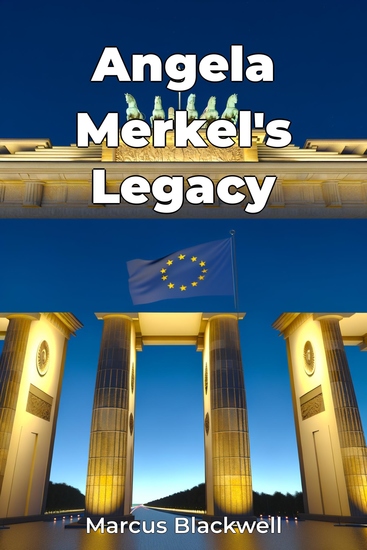
Angela Merkel's Legacy - cover

Angela Merkel's Legacy

Marcus Blackwell

Translator A AI

Publisher: Publifye

  • 0
  • 0
  • 0

Summary

Angela Merkel's Legacy chronicles the remarkable journey of a former East German physicist who became one of Europe's most influential modern leaders, offering a comprehensive analysis of her sixteen-year chancellorship.

 
The book masterfully explores how Merkel's unique leadership style, characterized by pragmatic decision-making and unwavering commitment to European values, shaped Germany and the European Union through multiple defining crises. Through meticulous research drawing from diplomatic communications and interviews with key political figures, the book examines three crucial aspects of Merkel's tenure: her management of the 2008 financial crisis, her response to the 2015 refugee crisis, and her pivotal role during Brexit negotiations.

 
The narrative begins with her emergence from East Germany's communist system, providing essential context for understanding her measured approach to governance and her emphasis on consensus-building, which became hallmarks of her leadership style. The book progresses chronologically through major challenges, including German-Russian relations, energy policy transformation, and COVID-19 response, while maintaining an analytical yet accessible approach.

 
What sets this work apart is its balanced examination of Merkel's crisis management pragmatism and its long-term implications for European integration and international relations. For readers interested in contemporary European politics and leadership studies, the book offers valuable insights into how personal background, political circumstance, and leadership style interact to shape modern global politics.
Available since: 01/17/2025.
Print length: 102 pages.

Other books that might interest you

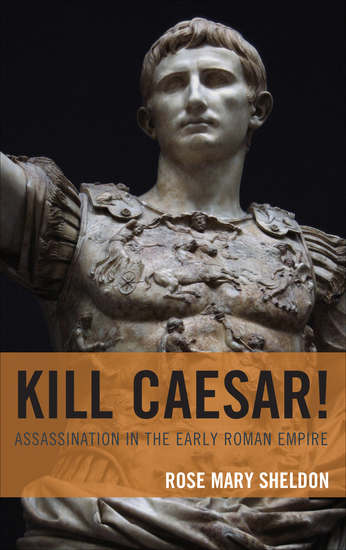
  • Kill Caesar! - Assassination in the Early Roman Empire - cover

    Kill Caesar! - Assassination in...

    Rose Mary Sheldon

    • 0
    • 0
    • 0
    “Why were Rome’s first emperors—the good, the bad, and the ugly—so vulnerable to conspiracies and assassination? . . . an expert analysis . . . compelling.” —Adrienne Mayor, author of The Poison King: The Life and Legend of Mithradates and Rome’s Deadliest Enemy Exploring the history of internal security under the first Roman dynasty, this groundbreaking book answers the enduring question: If there were 9,000 men guarding the emperor, how were three-quarters of Rome’s leaders assassinated? Rose Mary Sheldon traces the evolution of internal security mechanisms under the Julio-Claudians, evaluating the system that Augustus first developed to protect the imperial family and the stability of his dynasty. Yet in spite of the intensive precautions taken, there were multiple attempts on his life.    Like all emperors, Augustus had a number of competing constituencies—the senate, the army, his extended family, the provincials, and the populace of Rome—but were they all equally threatening? Indeed, the biggest threat would come from those closest to the emperor—his family and the aristocracy. Even Roman imperial women were deeply involved in instigating regime change. By the fourth emperor, Caligula, the Praetorian Guards were already participating in assassinations, and the army too was becoming more politicized.    Sheldon weighs the accuracy of ancient sources: Does the image of the emperor presented to us represent reality or what the people who killed him wanted us to think? Were Caligula and Nero really crazy, or did senatorial historians portray them that way to justify their murder? Was Claudius really the fool found drooling behind a curtain and made emperor, or was he in on the plot from the beginning? These and other fascinating questions are answered as Sheldon concludes that the repeated problem of “killing Caesar” reflected the empire’s larger dynamics and turmoil.
    Show book
  • A City Within One Building - Exploring the Unique Architecture of Urban Life - cover

    A City Within One Building -...

    John Harpoon

    • 0
    • 0
    • 0
    In the heart of urban landscapes, the idea of a "city within one building" has evolved from a futuristic concept to a tangible reality. These monumental structures encapsulate the essence of urban life, redefining the way we live, work, and interact within confined yet dynamic environments. At their core, they embody the idea of vertical urbanism—a vision that seeks to concentrate the diversity and vibrancy of a city into a single architectural entity. 
    The origins of this vision can be traced to the pressures of urbanization and the relentless march of technological innovation. As cities expanded horizontally, they encountered spatial limitations, environmental challenges, and infrastructural strain. The solution lay not outward, but upward. Vertical urbanism emerged as a response to these challenges, combining architectural ingenuity with a commitment to sustainability. The result is a new typology of buildings that integrate residential, commercial, recreational, and even cultural spaces into a cohesive, self-contained ecosystem. 
    One of the most compelling aspects of these megastructures is their ability to transform our perception of space and connectivity. Traditional cities rely on sprawling layouts that separate different functions—housing, offices, schools, and leisure activities are often miles apart. By contrast, a city within a building integrates these elements into a seamless whole. Residents can live, work, and play without stepping outside, reducing reliance on transportation and fostering a sense of community within the structure’s walls.
    Show book
  • The Politics of Maps - Cartographic Constructions of Israel Palestine - cover

    The Politics of Maps -...

    Izhak Schnell, Christine...

    • 0
    • 0
    • 0
    Blending science and technology studies, sociology, and geography with a host of archival material, in-depth interviews, and ethnographies, The Politics of Maps explores how the geographical sciences came to be entangled with the politics, territorial claim-making, and nation-state building of Israel/Palestine. Chapters chart the cartographic history of the region, from the introduction of Western scientific and legal paradigms that seemingly legitimized and depoliticized new land regimes to the rise of new mapping technologies and software that expanded access to cartography into the public sphere. Maps produced by various sectors like the "peace camps" or the Jewish community enhanced national belonging, while others, like that of the Green Line, served largely to divide. 


    The stories of Israel's many boundaries reveal that there is no absolute, technocratic solution to boundary-making. As boundaries continue to be controversial and the Israeli-Palestinian conflict remains intractable and unresolved, The Politics of Maps uses nationally-based cartographic discourses to provide insight into the complexity, fissures, and frictions within internal political debates, illuminating the persistent power of the nation-state as a framework for forging identities, citizens, and alliances.
    Show book
  • Storylife - On Epic Narrative and Living Things - cover

    Storylife - On Epic Narrative...

    Joel P. Christensen

    • 0
    • 0
    • 0
    Combining ancient epic and myth with analogies from biology and the natural world, Joel P. Christensen explores the creative process and how narratives develop. This bold work urges listeners to treat narratives as living things with their own agency in the world. Christensen starts by using Homeric epic to explore the way language and meaning develop alongside audiences in complex ecosystems and then moves through storytelling in the ancient Mediterranean over a thousand years. In this study, which ranges from the evolution of narratives to viral ideas, and to the dangerous side of stories in mass shootings and war, we see how narratives function as independent entities with consequences that cause lasting harm. 


    Connecting his argument to the present day, Christensen addresses contemporary cultural panics, including AI and ChatGPT, "post-truth" or alt-facts in the digital age, and free speech and cancel culture. Storylife invites listeners to rethink human creativity, the importance of collective actions, and the lives we build together with and against narrative. In an age rife with misinformation, it is time to reconsider how much control we have over stories and how to educate ourselves once we acknowledge the power that narrative exerts over us.
    Show book
  • A Roving Eye - Selected Essays - cover

    A Roving Eye - Selected Essays

    R.W. Johnson

    • 0
    • 0
    • 0
    R.W. Johnson's articles and essays travel far beyond Southern Africa, reaching readers across continents. Their appeal lies not only in their acuity but also in his exceptional range of subjects – political, historical and cultural. As a former Oxford don and a leading international commentator, Johnson remains unmatched as an interpreter of national and world events.
    Whether he's writing about politics in South Africa, Europe or the United States, the new space race, the leading personalities of our time, or even soccer, his views are always sharp, clear, deeply informed and original.
    These essays belong unmistakably to the tradition of George Orwell. Orwell aspired to make political writing an art form, but his finest essays – even those on seemingly trivial subjects such as boys' comics – revealed both a penetrating intelligence and remarkable breadth. Johnson's writing is similar in spirit: like Orwell's, his essays can be read consecutively or dipped into at random, each one offering something striking and original.
    The result is A Roving Eye, a book that is not just distinctive but truly unique, marked by depth, range, humanity and a rare sophistication.
    R.W. Johnson, author of 17 books and innumerable articles, attended schools in the UK and South Africa, did his first degree at the University of Natal and was then a Rhodes Scholar at Oxford. For 26 years he was a Fellow and Tutor at Magdalen College, Oxford and he remains a Fellow of the College. An expert in French, British, American and South African politics, his books have ranged over all these interests and for many years he also wrote for The (London) Times, Sunday Times, the London Review of Books, Le Monde Diplomatique and other titles in the international media. Johnson's writings have been widely praised and have often excited controversy. He is a master of the essay form and his essays have had a wide circulation. He is married to the Russian scholar, Irina Filatova, and they live in Cape Town.
    Show book
  • The Great Retreat - How Political Parties Should Behave and Why They Don't - cover

    The Great Retreat - How...

    Didi Kuo

    • 0
    • 0
    • 0
    Once a centralizing force of the democratic process, political parties have eroded over the past fifty years. Parties now rank among the most unpopular institutions in society—less trusted than business, the police, and the media. Identification with parties has plummeted, and even those who are loyal to a party report feeling that parties care more about special interests than about regular citizens. What does a "good" political party look like? Why do we urgently need them? And how do we get them? 


    The Great Retreat explores the development of political parties as democracy expanded across the West in the nineteenth century. It focuses in particular on mass parties, and the ways they served as intermediaries that fostered ties between citizens and governments. 


    For democracy to adapt to a new era of global capitalism, Kuo makes the case that we need strong intermediaries like mass parties—socially embedded institutions with deep connections to communities and citizens. Parties are essential to long-term democratic stability and economic growth, while the breakdown of party systems, on the other hand, has historically led to democratic collapse. As trust in political parties has plummeted, The Great Retreat provides a powerful defense of political parties—for without parties, democratic representation is impossible.
    Show book