Join us on a literary world trip!
Add this book to bookshelf
Grey
Write a new comment Default profile 50px
Grey
Subscribe to read the full book or read the first pages for free!
All characters reduced
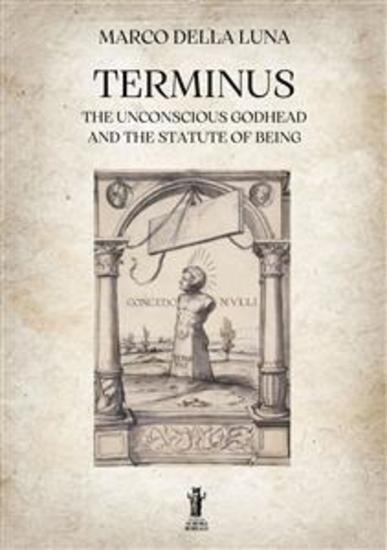
Terminus - The Unconscious Godhead and the Statute of Being - cover

Terminus - The Unconscious Godhead and the Statute of Being

Marco Della Luna

Publisher: Edizioni Aurora Boreale

  • 0
  • 0
  • 0

Summary

We feel time flowing voraciously around our being and all things, inexorably corroding them until annihilation; we try to slow this process down with technique or to transcend it with faith in a perfect and immutable Being; overall, we tend towards nihilism and depression. But this feeling is deceptive, as is the remedy for it.Terminus addresses in purely rational terms the basic questions of existence and time, of the relationship with the Infinite, reviews the great answers of ancient and modern philosophers, and opens, with a reversal of perspective, consciousness to becoming as a constituent internal to being, and co-eternal with it; and to being as pure positive, exempt from nothingness and from negation, but not from the Limit. While the perfect and immutable Being is an ontological nonsense.In his essay Terminus, The Unconscious Godhead and the Statute of Being, Marco Della Luna not only explains Philosophy in its most intimate essence as a Sacred Science, but, most important, he demonstrates this pure essence when he states that «Philosophy arises from realizing that the conception of reality, i.e. the ontological conception, implicit in common sense, and presupposing a reality “made” in a certain way, does not stand up to a logical analysis, because it manifests contradictions» and furthermore when he states that one of the goals of this new work of his is «the demonstration of total logical inconsistency of all the constructs elaborated in this way and the unsustainability of the common conception of being».Terminus is not an ordinary essay on Philosophy, as we can find on bookshelves, and it is definitely not a book for everybody, given its inevitable complexity: it is rather a book which teaches to see, discover and understand Philosophy in its most authentic light. A book that - and I say it without hesitation - can also help rewrite the concept of Ontology and the history of Philosophy itself.
Available since: 08/10/2023.


Other books that might interest you

  • Letters to My Weird Sisters - On Autism and Feminism - cover

    Letters to My Weird Sisters - On...

    Joanne Limburg

    • 0
    • 0
    • 0
    An autistic feminist author looks at women's history, in search of her 'weird sisters.' 


    It seemed to me that many of the moments when my autism had caused problems, or at least marked me out as different, were those moments when I had come up against some unspoken law about how a girl or a woman should be, and failed to meet it. 


    An autism diagnosis in midlife enabled Joanne Limburg to finally make sense of why her emotional expression, social discomfort and presentation had always marked her as an outsider. 


    Eager to discover other women who had been misunderstood in their time, she writes a series of wide-ranging letters to four 'weird sisters' from history, addressing topics including autistic parenting, social isolation, feminism, the movement for disability rights and the appalling punishments that have been meted out over centuries to those deemed to fall short of the norm. 


    This heartfelt, deeply compassionate and wholly original work humanizes women who have so often been dismissed for their differences, and will be celebrated by 'weird sisters' everywhere.
    Show book
  • Nobody Is Protected - How the Border Patrol Became the Most Dangerous Police Force in the United States - cover

    Nobody Is Protected - How the...

    Reece Jones

    • 0
    • 0
    • 0
    Late one July night in 2020, armed men, identified only by the word POLICE written across their uniforms, began snatching supporters of Black Lives Matter off the street in Portland, Oregon, and placing them in unmarked vans. These mysterious actions were not carried out by local law enforcement or even right-wing terrorists, but by the US Border Patrol. Why was the Border Patrol operating so far from the boundaries of the United States? What were they doing at a protest that had nothing to do with immigration or the border? 


    Nobody Is Protected: How the Border Patrol Became the Most Dangerous Police Force in the United States is the untold story of how, through a series of landmark but largely unknown decisions, the Supreme Court has dramatically curtailed the Fourth Amendment of the Constitution in service of policing borders. The Border Patrol exercises exceptional powers to conduct warrantless stops and interrogations within one hundred miles of land borders or coastlines, an area that includes nine of the ten largest cities and two thirds of the American population. 


    Mapping the Border Patrol's history from its bigoted and violent Wild West beginnings through the legal precedents that have unleashed today's militarized force, Reece Jones reveals the shocking true stories and characters behind its most dangerous policies.
    Show book
  • Fort Jesup - A History - cover

    Fort Jesup - A History

    Scott DeBose

    • 0
    • 0
    • 0
    Visit a Louisiana landmark that tells a big piece of the American story.Fort Jesup was founded two centuries ago, a bulwark on the youthful nation's western frontier. During its long run as a military post, it was visited by over one thousand soldiers and officers, many of whom would make a lasting impact on American history. The long list of luminaries includes Presidents Zachary Taylor and Ulysses S. Grant, over forty officers who would become Civil War generals, and two Surgeons General, one of whom would treat Abraham Lincoln after he was shot. Thousands of settlers also passed through on their way to Texas, using the fort as a waypoint on their journey. As citadel and stopping post, Fort Jesup played a critical role during the nation's formative years. Author Scott DeBose shares the sprawling story of this Louisiana icon.
    Show book
  • Russia - What Everyone Needs to Know - cover

    Russia - What Everyone Needs to...

    Timothy J. Colton

    • 0
    • 0
    • 0
    Today's Russia, also known as the Russian Federation, is often viewed as less powerful than the Soviet Union of the past. When stacked against other major nations in the present, however, the new Russia is a formidable if flawed player. 


    Russia: What Everyone Needs to Know provides fundamental information about the origins, evolution, and current affairs of the Russian state and society. The story begins with Russia's geographic endowment, proceeds through its experiences as a kingdom and empire, and continues through the USSR's three-quarters of a century, and finally the shocking breakup of that regime a generation ago. Chapters on the failed attempt to reform Communism under Mikhail Gorbachev, the halting steps toward democratization under Boris Yeltsin, and the entrenchment of central controls under Vladimir Putin bring the listener into the contemporary scene and to headline-grabbing events such as Russia's annexation of the Crimean Peninsula from Ukraine and its military intervention in Syria. Drawing on trends within Russia and on ratings and rankings compiled by international organizations, Colton discusses the challenges facing the country—ranging from economic recession to demographic stress, political stagnation, and overextension in foreign policy—and to the realistic options for coping with them.
    Show book
  • Race to the Moon The: The History and Legacy of the Cold War Competition Between the Soviet Union and the United States - cover

    Race to the Moon The: The...

    Editors Charles River

    • 0
    • 0
    • 0
    Today the Space Race is widely viewed poignantly and fondly as a race to the Moon that culminated with Apollo 11 “winning” the Race for the United States. In fact, it encompassed a much broader range of competition between the Soviet Union and the United States that affected everything from military technology to successfully launching satellites that could land on Mars or orbit other planets in the Solar System. Moreover, the notion that America “won” the Space Race at the end of the 1960s overlooks just how competitive the Space Race actually was in launching people into orbit, as well as the major contributions the Space Race influenced in leading to today’s International Space Station and continued space exploration. 
    	In fact, the Soviet Union had spent much of the 1950s leaving the United States in its dust (and rocket fuel). President Eisenhower and other Americans who could view Soviet rockets in the sky were justifiably worried that Soviet satellites in orbit could soon be spying on them, or, even worse, dropping nuclear bombs on them. And in 1960, when Eisenhower’s administration began planning and funding for the famous Apollo program that would land the first men on the Moon in 1969, the Soviet Union was already thinking further ahead to Mars. 
    	During the 1960s, NASA would spend tens of billions on the Apollo missions, the most expensive peacetime program in American history to that point, and even though Apollo 11 was only one of almost 20 Apollo missions, it was certainly the crown jewel. only one of nearly 20 Apollo missions conducted by NASA. And to make Apollo 11 a success, it would take nearly a decade of planning by government officials, hard work by NASA scientists, intense training by the astronauts, and several missions preceding Apollo 11. It also cost over $20 billion, making the Apollo program the most expensive peacetime program in American history at the time.
    Show book
  • Blue - A History of Postpartum Depression in America - cover

    Blue - A History of Postpartum...

    Rachel Louise Moran

    • 0
    • 0
    • 0
    New motherhood is often seen as a joyful moment in a woman's life; for some women, it is also their lowest moment. For much of the twentieth century, popular and medical voices blamed women who had emotional and mental distress after childbirth for their own suffering. By the end of the century, though, women with postpartum mental illnesses sought to take charge of this narrative. In Blue: A History of Postpartum Depression in America, Rachel Louise Moran explores the history of the naming and mainstreaming of postpartum depression. Coalitions of maverick psychiatrists, psychologists, and women who themselves had survived substantial postpartum distress fought to legitimize and normalize women's experiences. They argued that postpartum depression is an objective and real illness and fought to avoid it being politicized alongside other fraught medical and political battles over women's health. 


    Based on insightful oral histories and in-depth archival research, Blue reveals a secret history of American motherhood, women's political activism, and the rise of postpartum depression advocacy amid an often-censorious conservative culture. By breaking new ground with the first book-length history of postpartum mental illness in the twentieth century, Moran brings mothers' battles with postpartum depression out of the shadows and into the light.
    Show book