Join us on a literary world trip!
Add this book to bookshelf
Grey
Write a new comment Default profile 50px
Grey
Subscribe to read the full book or read the first pages for free!
All characters reduced
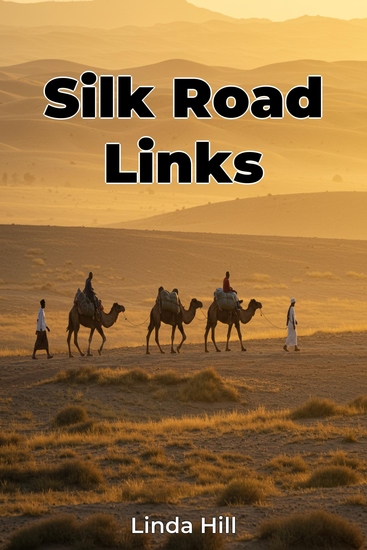
Silk Road Links - cover

Silk Road Links

Linda Hill

Translator A Ai

Publisher: Publifye

  • 0
  • 0
  • 0

Summary

"Silk Road Links" explores the historical significance of the Silk Road, a vast network of trade routes that connected East and West, serving as a conduit for economic, cultural, and technological exchange across Eurasia. The book argues that the Silk Road was more than just a trade route; it was a catalyst for societal evolution, fostering innovation and shaping the geopolitical landscape. Readers will discover how the exchange of goods like silk and spices spurred economic development and how technological advancements in mathematics and medicine spread through intercultural exchange.

 
The book examines the Silk Road's origins, economic impact, cultural diffusion, and technological transfer across chapters. It highlights how religions like Buddhism, Christianity, and Islam traversed these routes and influenced diverse societies. By understanding the Silk Road, readers gain insights into the dynamics of globalization and intercultural exchange that still resonate today.

 
Finally, "Silk Road Links" acknowledges the Silk Road's complexities, including potential exploitation and the spread of disease, offering a nuanced view of this pivotal period in world history. The book progresses from the Silk Road's establishment to its decline, concluding with its lasting legacy, making it a valuable resource for understanding ancient and medieval history.
Available since: 03/20/2025.
Print length: 60 pages.
Other books that might interest you

  • 33 Ways Not To Screw Up Your Journalism - cover

    33 Ways Not To Screw Up Your...

    Chip Scanlan

    • 0
    • 0
    • 0
    33 Ways Not to Screw Up Your Journalism is a succinct, authoritative and encouraging handbook of practical and inspiring tools, techniques and values that journalists, whether they're students or newsroom veterans, need more than ever in our fractured and fact-tossed democracy. "Excellent for journalists of all ages and experience," says broadcast legend Dan Rather. Written by award-winning journalist and writing teacher and coach Chip Scanlan, former writing program director at The Poynter Institute, the book is a survival manual for journalists at a time when the news industry is in free fall and their profession is under assault. Journalists are often thrown into their craft with the most rudimentary understanding of what it means to be a journalist in a democracy. Its short, fact-packed chapters remedy that. It can be consulted at your desk or, slim enough to fit in a jacket pocket or purse, when you face a particularly thorny problem in the field. Its subjects range from treating sources with respect, being aware of your biases, plagiarism, fabrication, and ethical decision-making to letting fear stop you, combatting writer's block, and step-by-step guides to the writing process, interviewing and revision and the importance of multimedia and data journalism. Journalism is in trouble, but it's not too late to save it--or yourself--by mastering, sharing and implementing the most critical skills any reporter can have: the basics. Based on extensive research, personal experience and interviews with reporters, editors and publishers, 33 Ways Not To Screw Up Your Journalism is the essential companion for journalists and their professors and coaches.
    Show book
  • No Haven - The Connecticut Mob and the Rise of America's Model City - cover

    No Haven - The Connecticut Mob...

    Paul Bleakley

    • 0
    • 0
    • 0
    With Boston to the north and New York City to the south, Connecticut's history of organized crime is often overlooked. This is the untold story of New Haven's illegal past. 


    One of America's most historic and enduring cities, New Haven has wrangled with a perpetual identity struggle, torn between worlds that occasionally converged in chaos and violence. In the 1930s, Connecticut became a region where Mafia families like the Genoveses, Gambinos, Colombos, and Patriarcas shared turf—working together with enough profits to go around or descending into open war to rival that experienced in any major city. Central to this conflict were three men who were, at different times, cautious allies or sworn nemeses. Representing the Genoveses, Midge Renault reigned supreme thanks to his reputation for wanton violence. Meanwhile, Colombo capo Ralph "Whitey" Tropiano maintained a lower profile, which belied his reputation as a vicious killer. But it was his lieutenant, Billy "The Wild Guy" Grasso, who ultimately rose to the top after joining the New England Patriarca Family, enjoying a short rule that ended with a murder plot that left him on the wrong end of a bullet.
    Show book
  • What I Wish I Said - Confessions of a Columnist - cover

    What I Wish I Said - Confessions...

    Jaime Watt

    • 0
    • 0
    • 0
    Just as they do on those television cooking contests when the bell rings and the contestants’ hands go up, at four o’clock on Friday afternoon, the column is filed—ready or not—to the columnist’s horror, discomfort, or self-satisfaction. Regardless, one exigent and unrelenting thought remains: what you wish you’d said.
    		 
    Such is the life of a weekly newspaper columnist.
    		 
    Unable to ignore the urge any longer, in What I Wish I Said: Confessions of a Columnist, author Jaime Watt has collected forty-eight of his most eye-opening, illuminating, and provocative Toronto Star columns and with humour, candour, and wit, he’s responded to each with what he wishes he’d said. The collection also features contributions from former senator and columnist André Pratte and from journalist and former editor-in-chief of the Toronto Star Michael Cooke.
    		 
    Widely regarded as Canada’s leading high-stakes communications strategist and the architect of groundbreaking campaigns that transformed politics with their boldness and creativity, Watt brings his insight to bear on some of the most vexing and consequential issues in Canadian life by reappraising his past work.
    		 
    Across six topical subject areas—civil liberties and human rights, portraits of leaders, the Liberal Party in power, the Conservative Party in opposition, the Donald Trump presidency, and the COVID-19 crisis—this subtle yet accessible collection offers a distinctive look at recent times. Whether he got it right or wrong, Watt pulls no punches when it comes to critiquing—and at times lambasting—his past columns.
    		 
    Revisiting his best and worst takes, Watt and his co-author Breen Wilkinson look at what might have been said in the columns he has been writing for more than seven years. And as he does, Watt challenges with new perspectives and ideas, inviting readers to consider what they wish they might have said, to consider how their points of views, and even their values, may have changed with time.
    Show book
  • Running from Bondage - Enslaved Women and their Remarkable Fight for Freedom in Revolutionary America - cover

    Running from Bondage - Enslaved...

    Karen Cook Bell

    • 0
    • 0
    • 0
    Running from Bondage tells the compelling stories of enslaved women, who comprised one-third of all runaways, and the ways in which they fled or attempted to flee bondage during and after the Revolutionary War. Karen Cook Bell's enlightening and original contribution to the study of slave resistance in eighteenth-century America explores the individual and collective lives of these women and girls of diverse circumstances, while also providing details about what led them to escape. She demonstrates that there were in fact two wars being waged during the Revolutionary Era: a political revolution for independence from Great Britain and a social revolution for emancipation and equality in which Black women played an active role. Running from Bondage broadens and complicates how we study and teach this momentous event, one that emphasizes the chances taken by these 'Black founding mothers' and the important contributions they made to the cause of liberty.
    Show book
  • Heart Of The Winter Solstice - cover

    Heart Of The Winter Solstice

    Melethril Edhellen

    • 0
    • 0
    • 0
    "HEART OF THE WINTER SOLSTICE" invites readers on a poetic odyssey that reimagines winter not as a season of desolation, but as a season of beauty and reflection. This captivating poetry novel delves deep into the heart of winter, exploring its cold, harsh nature with a warmth and tenderness that transforms perception. 
    Each poem in this collection is a tribute to winter's unique charm and character. From the crystalline beauty of snowflakes to the serene silence of frost-laden mornings, this poetry novel captures the essence of the season with an exquisite blend of imagery and emotion. 
    But "HEART OF THE WINTER SOLSTICE" is more than just a collection of winter-themed poems. It's a journey that encourages readers to find joy and peace in the stillness, to appreciate the subtle play of light on snow, and to discover the resilience and renewal that lies beneath the icy facade. With its lyrical prose and poignant insights, this book is a perfect companion for long winter nights and a reminder of the beauty that can be found in every season. 
    Whether you're a lover of poetry, a seeker of new perspectives, or simply someone who wishes to see winter in a different light, "HEART OF THE WINTER SOLSTICE" is a book that will warm your heart and illuminate the colder months. Join this enchanting exploration of winter's wonders, and find yourself falling in love with a season you thought you knew.
    Show book
  • Nineveh - History of the Ancient Assyrian City - cover

    Nineveh - History of the Ancient...

    Kelly Mass

    • 0
    • 0
    • 0
    Nineveh was an age-old Assyrian city in Upper Mesopotamia, near Mosul in modern-day northern Iraq. It was the capital and biggest city of the Neo-Assyrian Empire, and the world's biggest city for some decades, and is on the eastern bank of the Tigris River. It's now a prevalent name for the portion of Mosul that's on the Tigris' eastern bank, and it is also the name of the nation's Nineveh Governorate. 
    It was the world's largest city for about fifty years till it was sacked by a union of its previous subject tribes, including but not limited to the Babylonians, Medes, Persians, Scythians, and Cimmerians, in the year 612 BC, following a severe period of civil dispute in Assyria. The city was never ever a political or administrative center again, though it was the seat of a Christian bishop by Late Antiquity. Throughout the Middle Ages, it weakened in contrast to Mosul and was mainly deserted by the 13th century AD. 
    In the Bible, it has been mentioned several times, and it is the center of attention in the story of Jonah, who was swallowed up by a whale or fish and spat out on the beach, only to hear from God that he still needed to go to Nineveh and give the people a chance to repent. 
    There is much more to this mysterious city of the ancient. Learn more by reading or listening to this book!
    Show book