Join us on a literary world trip!
Add this book to bookshelf
Grey
Write a new comment Default profile 50px
Grey
Subscribe to read the full book or read the first pages for free!
All characters reduced
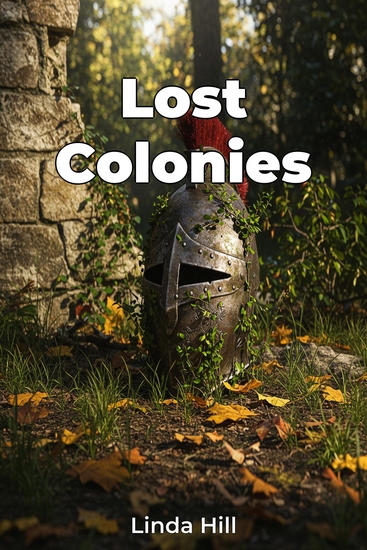
Lost Colonies - cover

Lost Colonies

Linda Hill

Translator A AI

Publisher: Publifye

  • 0
  • 0
  • 0

Summary

Lost Colonies explores the enigmatic fates of early European settlements in the Americas, focusing on the precarious nature of colonial life and the historical mysteries surrounding their disappearances. The book examines the harsh realities faced by colonists, such as disease and conflict with indigenous peoples, and delves into how incomplete records contribute to unanswered questions. For example, the Roanoke Colony vanished leaving behind only the cryptic word "Croatoan," and the Spanish colony of San Miguel de Gualdape, one of the earliest European attempts at settlement in North America, quickly dissolved due to disease, famine, and internal conflict. The book analyzes these colonial ventures as not merely isolated incidents but as consequences of systemic issues like inadequate planning and misunderstandings of the New World and its inhabitants. Chapters are dedicated to specific case studies, including Charlesfort, meticulously examining the known facts, demise factors, and evidence suggesting what may have happened. By integrating historical narratives with archaeological findings and anthropological perspectives, Lost Colonies provides a more holistic understanding of these colonial encounters. The book progresses by first introducing the major European powers and their motivations, then examining specific colonial failures, and finally drawing overarching lessons from these experiences.
Available since: 03/19/2025.
Print length: 59 pages.

Other books that might interest you

  • The Fall of Communism - Understanding the Collapse of the Soviet Union and Its Impact - cover

    The Fall of Communism -...

    Arlo Holders

    • 0
    • 0
    • 0
    The origins of communism can be traced back to the mid-19th century, largely shaped by the theories of Karl Marx and Friedrich Engels. Marx's writings, particularly The Communist Manifesto (1848), presented a vision for a classless society where the working class, or proletariat, would overthrow the capitalist bourgeoisie and establish a dictatorship of the proletariat. Marx believed this revolution would lead to the eventual abolition of private property, creating a system where resources and wealth were shared equally among all people. Engels, Marx’s collaborator, helped to spread these ideas, laying the theoretical foundation for communism as a political ideology. 
    In the early 20th century, the ideas of Marxism found fertile ground in Russia, where economic disparity and social unrest were widespread. The Russian Empire, under Tsar Nicholas II, faced increasing pressure from industrialization, a growing working class, and a largely disenfranchised peasantry. The Russian Revolution of 1917, led by the Bolshevik Party under Vladimir Lenin, marked the beginning of communism’s practical implementation. The Bolsheviks sought to establish a socialist state where the working class would control the means of production and dismantle the old Tsarist monarchy. 
    Following the revolution, the Soviet Union was formed in 1922, uniting the Russian Federation and several other Soviet republics under a single communist government. The new government, however, faced significant challenges, including civil war, foreign intervention, and the task of restructuring a country that had been predominantly agrarian into a socialist industrialized state. Lenin’s death in 1924 led to the rise of Joseph Stalin, who consolidated power through brutal purges and policies such as forced collectivization and rapid industrialization.
    Show book
  • America in World War II - From Pearl Harbor to Iwo Jima - The United States in WW2 - cover

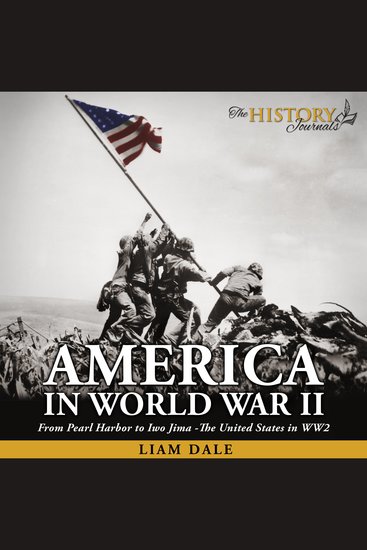
    America in World War II - From...

    Liam Dale

    • 0
    • 0
    • 0
    Join The History Journals on an hourly history tour of this pivotal era, focusing on America's entry into the war. 
     
    While World War I was once called the "war to end all wars," it wasn't long before America's young men found themselves thrust into another global conflict. On December 7th, 1941, the Japanese attack on Pearl Harbor changed the course of history. America, previously on the sidelines, now stood shoulder to shoulder with the Allies in the fight against Hitler and the Axis powers. 
     
    Explore America's journey into World War II, uncovering the remarkable courage and bravery displayed by Americans on both domestic and foreign fronts. Learn about Hollywood's role in the war effort, the contributions of American women in factories, and the paths taken by American troops who played a pivotal role in making the world safer for future generations. 
     
    Embark on this compelling exploration of America's involvement in World War II, a turning point in history.
    Show book
  • IT'S A LIVING - Surviving as a Freelancer in the 21st Century The Ultimate Guide to Success for Artists and Creative Professionals - cover

    IT'S A LIVING - Surviving as a...

    Cristian S. Aluas

    • 0
    • 0
    • 0
    FOLLOW YOUR DREAMS AND WORK FOR YOURSELF 
      
    ★★★★★ "The Artist's Way for the 21st century!" 
      
    Whether you want to quit your 9-5 job to be self-employed or you want to streamline your career to be more efficient, IT'S A LIVING is for you! 
    According to this year's most comprehensive study, there are over 57 million freelancers in the U.S. alone and growing. The largest segment of that freelance community is made up of artists and creative professionals such as designers, writers, filmmakers, etc. The appeal to become self-employed is global. Statistically, freelancers make more money per hour than traditional employees. More and more each year, Millennial and Generation Z women and men are choosing freelancing instead of traditional employment. It's a great way to have a flexible lifestyle and be your own boss. Schools don't teach what you learn in the field and it's intimidating to embark into uncharted territory. That's why this self-help guide is extremely beneficial! Cristian has been a full-time artist for over 17 years, working in Canada and the U.S., and owned an art school in the process. He wrote IT'S A LIVING to help creative people make a happy and successful living on their own terms! 
      
    "Working with Cristian was a delightful experience! Every aspect of the project was completed with the utmost professionalism. His dedication to delivering a polished finished product was apparent in every interaction we had." - Harvard Business School  
      
    With a focus on developing a diverse set of skills to be able to survive and thrive as a freelancer, Cristian also encourages you to adopt a healthy diet and exercise regiment, as well as a work schedule that's designed for maximum productivity. The book also provides sales techniques for winning online commissions on apps like Upwork and Fiverr and strategies for negotiating contract
    Show book
  • Improvised Explosive Device - cover

    Improvised Explosive Device

    Arji Manuelpillai

    • 0
    • 0
    • 0
    Improvised Explosive Device is a startlingly innovative exploration of extremism, hate crime and violence by poet Arji Manuelpillai. In this powerful and unsettling first collection, Manuelpillai presents a vision of the contemporary haunted by Melville's image of the whale – the terror beneath the surface of the sea. His uncompromising focus on violence is laced with gallows humour and the surreal, framed against the mundane detritus of modern life: two boys playing Mortal Kombat; a field of old trainers; the lonely glare of laptop light; a suspicious looking package in the back seat of a van.
    The poems in Improvised Explosive Device emerged through research and interviews with academics, sociologists, and former members of extremist groups and their families – from the English Defence League and the National Front to ISIS and the Tamil Tigers. These complex, unnerving texts ask a series of important questions. What drives a person to commit a radical act of violence? How is that violence mediated through screens and social media? And how does the British government police marginalised groups? Improvised Explosive Device is a brave, surprising and risk-taking book; it will change the way you look at the world.
    "Refusing glib analysis and easy answers, Improvised Explosive Device is a work of radical empathy, fuelled by honesty and compassion, both for those stirred to violence against minorities, and those who suffer from it." Rishi Dastidar
    "The project of Arji Manuelpillai's Improvised Explosive Device leans into the mighty disciplines of poetry, sociology, and reportage to formulate an arresting debut which contests the ways we're conditioned to internalise notions of terrorism, nationalism and belonging...a bold and startling new work." Anthony Anaxagorou
    Show book
  • The Sky Is Not the Limit - Geopolitics and Economics of the New Space Race - cover

    The Sky Is Not the Limit -...

    Alessandro Gili

    • 0
    • 0
    • 0
    Space is a contested domain for its very nature and today it is evidently becoming an increasingly important enabler of economic and military power. An increasing number of actors, infrastructures and technologies deployed in space also raises concerns for safety and security, especially in cyberspace. Many countries are striving to achieve space capabilities and autonomous access to space, and this is
    having a tremendous geopolitical impact, especially since space is emerging as an increasingly critical military and strategic domain. The development of the new space economy, which is increasingly involving the private sector and many industrial actors and services, will also be a game changer for the international economy. The space race likewise implies disruptive technologies that could contribute massively to the energy and digital transitions, accelerating solutions that could benefit humanity. A new international governance system for space is therefore needed urgently, considering that the current rules are no longer able to respond to a sector evolving at such a rapid pace. Which actors are leading the race? Which economic sectors could benefit the most and what could the new space economy mean for the world? How is space emerging as a military domain against a backdrop of increasing international tensions? What would a new system of global governance for space look like?
    Show book
  • A Treatise of Human Nature Book 3 - cover

    A Treatise of Human Nature Book 3

    David Hume

    • 0
    • 0
    • 0
    The Treatise is a classic statement of philosophical empiricism, skepticism, and naturalism. In the introduction Hume presents the idea of placing all science and philosophy on a novel foundation: namely, an empirical investigation into human nature.
    Show book