Join us on a literary world trip!
Add this book to bookshelf
Grey
Write a new comment Default profile 50px
Grey
Subscribe to read the full book or read the first pages for free!
All characters reduced
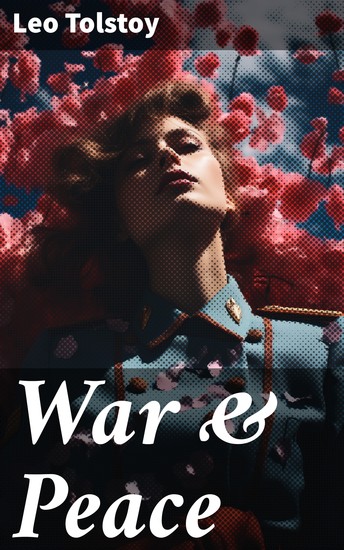
War & Peace - 'Epic Narratives of Love and War: Mastering the Human Condition in Tolstoy's Classic' - cover

War & Peace - 'Epic Narratives of Love and War: Mastering the Human Condition in Tolstoy's Classic'

Leo Tolstoy

Publisher: Good Press

  • 0
  • 0
  • 0

Summary

In 'War and Peace,' Leo Tolstoy weaves an epic narrative that intertwines the lives of several aristocratic families against the backdrop of the Napoleonic Wars. The novel is remarkable for its intricate exploration of themes such as fate, free will, and the nature of history, presented through a blend of philosophical discourse, vivid characterization, and detailed historical reference. Tolstoy'Äôs literary style is both expansive and immersive, reflecting his ambition to capture the complexities of human existence and the chaos of a world in turmoil, thereby positioning the text within the grand Russian literary tradition as a foundational work of realism. Leo Tolstoy, renowned for his moral fervor and deep philosophical questions, was profoundly influenced by his own life experiences, including his noble upbringing and his participation in the Crimean War. These elements shaped his perception of war's futility and the quest for spiritual meaning amidst societal upheaval. His writings often reflect a tension the author felt between his aristocratic origins and his desire for a more meaningful existence aligned with his ethical beliefs, particularly evident in 'War and Peace.' This monumental work is highly recommended for readers seeking a profound understanding of the human condition across both individual and societal dimensions. Tolstoy extends an invitation to reflect on the intricacies of life and history, making 'War and Peace' not only a literary masterpiece but also a timeless philosophical exploration that resonates with contemporary audiences.
Available since: 12/25/2023.
Print length: 1725 pages.
Other books that might interest you

  • A Middle-Sized Artist - From their pens to your ears genius in every story - cover

    A Middle-Sized Artist - From...

    Charlotte Perkins Gilman

    • 0
    • 0
    • 0
    Charlotte Perkins Gilman was born on 3rd July 1860 in Hartford, Connecticut, to an unaffectionate mother and a father who abandoned her and her older brother to a life of poverty. 
    Inevitably her schooling was limited and by 15 she had attended seven different schools but received only four years education.  However Charlotte was resourceful and did spend time with her father’s aunts – the suffragist Isabella Beecher Hooker and the ‘Uncle Tom Cabin’s’ author, Harriet Beecher Stowe as well as many hours at the public library studying ancient civilisations. 
    In 1878, she enrolled in classes at the Rhode Island School of Design where she met Martha Luther and they developed a close relationship until Luther married in 1881. Charlotte was devastated and detested romance and love until she met and married the artist Charles Walter Stetson.  
    Their only child, Katharine Beecher Stetson, was born in 1885 but left Charlotte with post-natal depression, then often dismissed as a case of hysteria or nerves.  Unsuited to domestic life she ruptured her life and moved to California with Katherine.  She divorced in 1894 and then sent Katharine east to live with her father and his second wife confirming that his paternal rights be acknowledged and that Katherine establish a relationship with her father. 
    After her mother died in 1893, Charlotte moved back east and became involved with her first cousin, Wall Street attorney, Houghton Gilman who she married in 1900. After his death she moved back to California, where Katherine now lived.   
    Her most popular story is ‘The Yellow Wallpaper’ which touched on her own post-partum depression and underlined the need for women to be responsible for their mental and physical well-being, as the narrator is ordered by her husband/doctor to take compete rest in her room where she is isolated and becomes obsessed with the revolting yellow wallpaper.   
    She wrote other notable short stories the best of which we also include.   
    Charlotte lectured widely for social reform, wrote important non-fiction works that questioned our patriarchal system and left a legacy as a leading and positive spokesperson for feminism.  
    She was diagnosed with incurable breast cancer in 1932 and, as she wrote in her suicide note and autobiography, she ‘chose chloroform over cancer’    
    Charlotte Perkins Gilman took her own life on 17th August 1935, aged 75, in Pasadena, California.
    Show book
  • Angel in Disguise An - From their pens to your ears genius in every story - cover

    Angel in Disguise An - From...

    T S Arthur

    • 0
    • 0
    • 0
    The bookshelves of American literature are incredible collections that have gathered together centuries of very talented authors.  From this continent their fame spread and whilst among their number many are now forgotten or neglected their talents endure.  Among them is T S Arthur.
    Show book
  • The Cask of Amontillado - cover

    The Cask of Amontillado

    Edgar Allen Poe

    • 0
    • 0
    • 0
    A harrowing tale of two, supposed, friends. Nothing is as it seems, though. What will happen to the noble Fortunato.
    Show book
  • Shunned House The (Unabridged) - cover

    Shunned House The (Unabridged)

    H. P. Lovecraft

    • 0
    • 0
    • 0
    "The Shunned House" is a horror fiction novelette by American author H. P. Lovecraft, written on October 16-19, 1924. It was first published in the October 1937 issue of Weird Tales.
    Show book
  • War and Peace - Book 14: 1812 (Unabridged) - cover

    War and Peace - Book 14: 1812...

    Leo Tolstoy

    • 0
    • 0
    • 0
    War and Peace is a literary work mixed with chapters on history and philosophy by the Russian author Leo Tolstoy. It was first published serially, then published in its entirety in 1869. It is regarded as one of Tolstoy's finest literary achievements and remains an internationally praised classic of world literature.
    Book 14: 1812: The Battle of Borodinó, with the occupation of Moscow that followed it and the flight of the French without further conflicts, is one of the most instructive phenomena in history. All historians agree that the external activity of states and nations in their conflicts with one another is expressed in wars, and that as a direct result of greater or less success in war the political strength of states and nations increases or decreases.
    Show book
  • What Is Art? - A Profound Exploration of Creativity Morality and the Purpose of Art - A Modern Translation - Adapted for the Contemporary Reader - cover

    What Is Art? - A Profound...

    Leo Tolstoy

    • 0
    • 0
    • 0
    What if art was not just for pleasure—but for the transformation of society? 
    In What Is Art?, Leo Tolstoy delivers a radical and deeply personal exploration of the meaning and value of art. Written in his later years, this philosophical essay critiques the artistic trends of his time, condemning works that prioritize beauty over moral and emotional depth. He argues that true art should inspire, educate, and connect people across class, culture, and history. 
    Through sharp analysis, Tolstoy critiques renowned artists such as Wagner, Shakespeare, and Beethoven, accusing them of creating art that serves the elite rather than the common man. Instead, he advocates for art that is simple, sincere, and universally understood—an art that speaks directly to the soul. 
    What You’ll Discover in This Modern Translation:A Revolutionary Perspective on Art’s Role – Explore Tolstoy’s argument that art should unite, not divide, society.A Fierce Critique of the Art World – Discover why Tolstoy rejects many of history’s most celebrated artistic figures.A Fresh, Accessible Translation – This modern adaptation ensures Tolstoy’s philosophical depth remains clear and engaging for today’s readers.A Timeless Debate on Beauty vs. Purpose – Reflect on the eternal question: Should art exist for art’s sake, or should it serve a higher function? 
    More than just a critique, What Is Art? is a call to artists, critics, and audiences to reconsider the power of creativity as a force for good. 
    Is great art defined by skill—or by its ability to touch the human spirit? 
    Get your copy today and explore Tolstoy’s bold and transformative vision of art.
    Show book