Join us on a literary world trip!
Add this book to bookshelf
Grey
Write a new comment Default profile 50px
Grey
Subscribe to read the full book or read the first pages for free!
All characters reduced
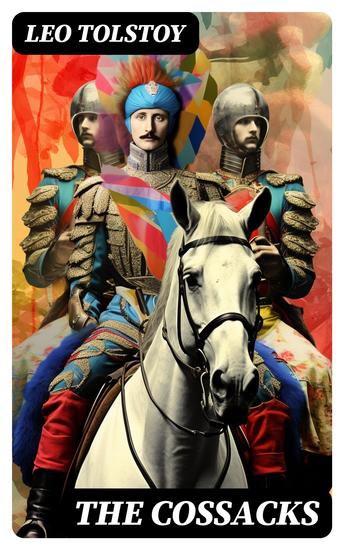
The Cossacks - Enriched edition - cover

The Cossacks - Enriched edition

Leo Tolstoy

Translator Aylmer Maude, Louise Maude

Publisher: DigiCat

  • 0
  • 0
  • 0

Summary

In 'The Cossacks,' Leo Tolstoy delves into the complexities of Russian identity and the clash between civilization and nature. Set against the vivid backdrop of the Caucasus region, the narrative follows Olenin, an aristocrat who seeks a more authentic way of life among the Cossacks. Tolstoy's lyrical prose intertwines introspective character development with profound philosophical themes, including the search for meaning and the juxtaposition of societal norms against primitive existence. This early exploration of realism foreshadows Tolstoy's later masterpieces, capturing the spirit of a turbulent period in Russian history with rich descriptions and deep emotional resonance. Leo Tolstoy, one of the most influential writers of the 19th century, was profoundly shaped by his experiences of class and culture throughout his life. His aristocratic upbringing and military service significantly impacted his worldview, informing his critique of society and his fascination with peasant life. 'The Cossacks' not only marks Tolstoy's literary debut but also reflects his desire to reconcile his roots with a deeper understanding of humanity in connection with the natural world. For readers seeking to explore themes of identity, morality, and the beauty of nature, 'The Cossacks' is an indispensable work. Tolstoy's insightful portrayal of a world at odds with itself invites readers to reflect on their understanding of freedom and community, making this novel a compelling read for anyone interested in the philosophical undercurrents of literature.

In this enriched edition, we have carefully created added value for your reading experience:
- A succinct Introduction situates the work's timeless appeal and themes.
- The Synopsis outlines the central plot, highlighting key developments without spoiling critical twists.
- A detailed Historical Context immerses you in the era's events and influences that shaped the writing.
- An Author Biography reveals milestones in the author's life, illuminating the personal insights behind the text.
- A thorough Analysis dissects symbols, motifs, and character arcs to unearth underlying meanings.
- Reflection questions prompt you to engage personally with the work's messages, connecting them to modern life.
- Hand‐picked Memorable Quotes shine a spotlight on moments of literary brilliance.
- Interactive footnotes clarify unusual references, historical allusions, and archaic phrases for an effortless, more informed read.
Available since: 11/19/2023.
Print length: 149 pages.

Other books that might interest you

  • The Horla - cover

    The Horla

    Guy de Maupassant

    • 0
    • 0
    • 0
    Title: The Horla 
    Author: Guy de Maupassant 
    Narrator: Jonathan Dunne 
    Original Publication: 1887 
    Public Domain: Yes 
    Series Placement: Timeless Terrors No. 64 
    Description: 
    The Horla is one of Guy de Maupassant’s most unsettling tales — a study of madness, obsession, and the invisible forces that may govern our lives. Told in the form of a diary, the story follows an unnamed narrator whose calm, orderly life gradually unravels as he becomes convinced that an unseen, supernatural being is haunting him — controlling his thoughts, his desires, and even his will to live. 
    Maupassant blends psychological horror with the uncanny, crafting a story where fear grows not from gore, but from the creeping realization that the human mind may be powerless against what it cannot perceive. The ordinary becomes sinister: windows seem to watch, the air feels heavy with presence, and the night is filled with a silent, inescapable dread. 
    Narrated by Amazon-bestselling horror author Jonathan Dunne, this performance captures the mounting terror and disorientation of Maupassant’s masterpiece. While the text itself is fully in the public domain, this narration and production are copyright © 2025 Jonathan Dunne. 
    Part of Timeless Terrors, a series devoted to reviving the classics of horror, The Horla is a chilling reminder that some fears are real — and some presences are beyond comprehension. 🕯️
    Show book
  • Editha's Burglar - cover

    Editha's Burglar

    Frances Hodgson Burnett

    • 0
    • 0
    • 0
    Editha was a queer little girl. She was rather old-fashioned, as her aunts used to call it, and was always very fond of books. Indeed, Editha perhaps read more than was quite good for her. She spent the greater part of her time in the library reading her papa's big books and newspapers. Her most recent obsession, derived from her daily news intake, was the subject of burglars. One night, when confronted with a real-life burglar, and with the conviction that she must protect her mother from the fright of such an intruder, Editha took it upon herself to confront the unusual nocturnal visitor.     Editha's Burglar was first published in 1888.
    Show book
  • A Farewell to Arms - cover

    A Farewell to Arms

    Ernest Hemingway

    • 0
    • 0
    • 0
    Long considered one of the best American novels of our time, A Farewell to Arms is the unforgettable tale of an American ambulance driver and his passionate affair with a beautiful English nurse. Set against the backdrop of World War I, this gripping, semi-autobiographical work captures the harsh realities of war as only Hemingway can. A story of love and pain, loyalty and desertion, A Farewell to Arms paints an intimate portrait of the pain and intensity of a love overshadowed by the inexorable creep of global war.
    Show book
  • Juvenilia – Volume III - cover

    Juvenilia – Volume III

    Jane Austen

    • 0
    • 0
    • 0
    Bold, witty, and wonderfully unrestrained—Austen's youthful voice shines brighter than ever.
    In Juvenilia – Volume III, the young Jane Austen continues her playful exploration of storytelling with tales full of mischievous heroines, dramatic twists, clever satire, and wild imagination. These early pieces capture her developing genius, revealing the humorous, daring mind that would one day craft some of literature's most beloved novels.
    
    Celebrated as "a captivating window into Austen's creative beginnings," this volume offers both laughter and literary insight, showing how her trademark wit and social sharpness took shape long before Pride and Prejudice or Emma.
    
    If you enjoy Austen's humor, lively characters, and sparkling commentary on human behavior, this collection will delight you from beginning to end.
    
    Open the book—and discover Jane Austen as she first learned to dazzle.
    Show book
  • The Episode in Room 222 - Short tale from the Staffordshire born literary great - cover

    The Episode in Room 222 - Short...

    Arnold Bennett

    • 0
    • 0
    • 0
    Enoch Arnold Bennett was born on the 27th May 1867 in Hanley, one of the six towns that formed the Potteries and that later joined together to become Stoke-On-Trent.  
    After passing entrance examinations for Cambridge University his solicitor father instead decided that he should work for him, unpaid, in his thriving office.  In the evenings the young Bennett wrote or studied and one skill he developed was Pitman’s shorthand which gave him entrance to a position as a clerk at a solicitor’s office in London.  From there followed various jobs but none seemed to be able to ignite his career as a full-time author. 
    By 1903 he had moved to live in Paris; he was 35, unmarried and keen to settle into his new life.  In 1908 he published his first remarkable novel; ‘Clayhanger’, that drew on his earlier life in the Potteries.   
    A prolific writer he was able to deliver very fine works but also write many that were described as ‘potboilers’.  Despite this disclaimer many were lapped up by an audience eager for his prose and helped turn him into the most financially successful author of the times.    
    As the First World War drew to a close, he was appointed to run the Ministry of Information.  During the 1920s he was reputedly the highest paid literary journalist in the land and continued to write novels, plays and short stories.   
    Arnold Bennett died in his flat at Chiltern Court on the 27th March 1931, from typhoid after drinking water in France on his last holiday.  He was 63.
    Show book
  • Not Good Enough - A Simon Iff Occult Detective Story - cover

    Not Good Enough - A Simon Iff...

    Aleister Crowley

    • 0
    • 0
    • 0
    Edward Alexander Crowley was born on 12th October 1875 to wealthy parents in Royal Leamington Spa in Warwickshire. 
     
    He was educated at Malvern College, Tonbridge School, Eastbourne College and finally Trinity College, Cambridge where he focused on his passions of mountaineering and poetry and published several volumes. 
     
    Life for Crowley was to abandon his parents’ Christian faith and instead to inject himself into Western esotericism.  In 1898, he joined the esoteric Hermetic Order of the Golden Dawn and was trained in ceremonial magic before studying both Hindu and Buddhist practices in India. 
     
    On his Egyptian honeymoon in 1904 he claimed contact with an entity―Aiwass―who gave him the sacred Book of the Law which served as the basis for the Thelema religion where he identified as its prophet.  During the Great War, which he spent in the United States, he claimed to be working for British Intelligence but by the 1920s he had decamped to pursue a libertine lifestyle in Sicily, and in the ensuing scandals was evicted by the Italian Government. 
     
    He divided the following two decades between France, Germany, and England, and the continuing promotion of Thelema. 
     
    During his life he gained widespread notoriety for his drug use, his bisexuality, and his alarming views on society.  In short, polite society frowned on his ways, his thoughts and his influence but to many others his stance had much of value.  Even after death he was a darling for the 60’s counterculture but his influence has since waned.   
     
    His literary works were both prolific and covered many topics.  In the early part of his career he published many poetry books, even plays, before his darker and more forceful works came to dominate his output. 
     
    Aleister Crowley died on 1st December 1947 at Hastings in England. He was 72.
    Show book