Join us on a literary world trip!
Add this book to bookshelf
Grey
Write a new comment Default profile 50px
Grey
Subscribe to read the full book or read the first pages for free!
All characters reduced
Not Without Laughter - cover

Not Without Laughter

Langston Hughes

Publisher: Caelwick Press

  • 0
  • 0
  • 0

Summary

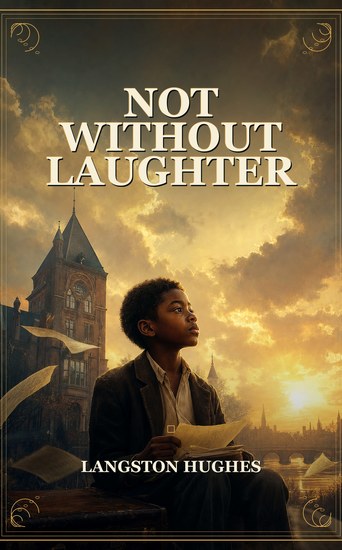
We rely on your support to help us keep producing beautiful, free, and unrestricted editions of literature for the digital age. Will you support our efforts with a donation ? The first prose novel published by Langston Hughes , Not Without Laughter is a coming-of-age novel that depicts the adolescent years of Sandy, an African-American boy growing up in a small town in Kansas. The novel is structured as a series of vignettes that depict Sandy's interactions with his family and the surrounding society, including experiences of racial discrimination. It explores how social structures of race, class, and religion shape the lives of African-American families. Hughes aimed to depict "a typical Negro family in the Middle West," drawing on his own experiences of growing up in Kansas alongside families similar to Sandy's family. Langston Hughes (died 1967) was a significant literary figure of the 20th century. Their work has endured across generations and continues to be read and studied worldwide. As a work of classic literary fiction, Not Without Laughter exemplifies the narrative craft and social insight that defined great storytelling of its era. Literary fiction of this period was characterized by careful attention to character psychology, social milieu, and the moral questions that animated public discourse.
Available since: 05/19/2026.
Print length: 263 pages.
Other books that might interest you

  • The Baront - cover

    The Baront

    Katherine Mansfield

    • 0
    • 0
    • 0
    The Baron is a short story by Katherine Mansfield: "Who is he?" I said. "And why does he sit always alone, with his back to us, too?" - "Ah!" whispered the Frau Oberregierungsrat, "he is a Baron." - She looked at me very solemnly, and yet with the slightest possible contempt - a "fancy-not-recognising-that-at-the-first-glance" expression.
    Show book
  • Wise Words in Forgotten Times - From their pens to your ears genius in every story - cover

    Wise Words in Forgotten Times -...

    Daniel Sheehan

    • 0
    • 0
    • 0
    One of the ‘truths’ about writers is that after a successful first book the agonies of the second devour both time and talent.  For Daniel Sheehan that seems to have been turned on its head.  Rather than go forward it was easier to look back, to dredge rather than furrow, gathering words, lines and phrases from the past and re-fashioning, distilling and evolving stories of simplicity, complexity, light and dark. Sometimes very dark. 
    His work is often characterized by a modern, intimate, and somewhat mysterious style, focusing deeply on the emotional connection between lovers.
    Show book
  • A Tragic Actor - cover

    A Tragic Actor

    Anton Chekhov

    • 0
    • 0
    • 0
    "A Tragic Actor" by Anton Chekhov follows the story of Masha, a young and impressionable woman who falls in love with the titular character Fenogenov, a struggling actor. Despite her father's disapproval, Masha decides to run away with Fenogenov and marry him. However, her idealized view of her husband quickly crumbles as she discovers his lack of stability and success. In a desperate moment, Masha must turn to her father for help, leading to a confrontation between father and daughter as well as a reflection on the consequences of following one's heart over practicality. The story highlights themes of love, sacrifice, and the complexities of family relationships.
    Show book
  • The Dream of the Red Chamber - cover

    The Dream of the Red Chamber

    Cao Xueqin

    • 0
    • 1
    • 0
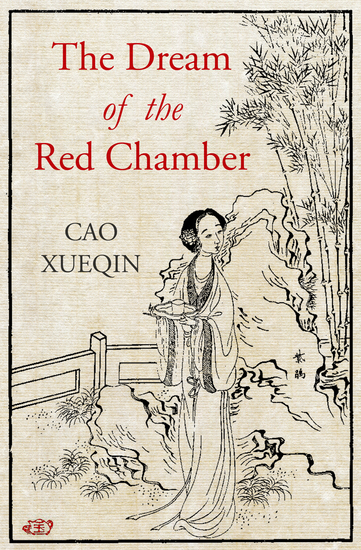
    The classic eighteenth-century saga—a masterpiece of Chinese literature— about an aristocratic family and a forbidden love during the Qing dynasty. Considered one of the four great classical novels of Chinese literature, The Dream of the Red Chamber is believed to be a semiautobiographical account of author Cao Xueqin and his aristocratic family’s rise and fall, and focuses particularly on the women in his life, including servants. Originally circulated in hand-copied manuscripts, The Dream of the Red Chamber is not only rich with psychological insight, but also enlightening in its portrayal of Chinese society during the Qing dynasty. It is an engrossing epic of imperial politics, friendship, and romantic rivalry, with an extraordinary cast of characters.
    Show book
  • The Secret of the Old Clock - cover

    The Secret of the Old Clock

    Carolyn Keene

    • 0
    • 0
    • 0
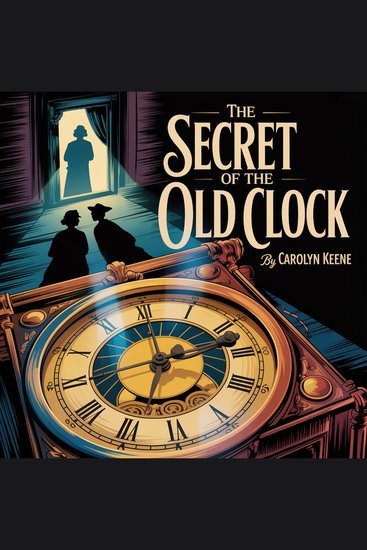
    This audiobook is narrated by an AI Voice. The Secret of the Old Clock is the first book in the beloved Nancy Drew Mystery Stories series. When young Nancy Drew witnesses an accident, she finds herself drawn into the mystery of a missing will. The late Josiah Crowley promised to leave his fortune to several deserving families, but his greedy relatives claim otherwise. With courage, wit, and determination, eighteen-year-old Nancy sets out to find the truth hidden within an old clock. This classic mystery introduces readers to one of literature's most iconic teenage detectives as she solves her first case in River Heights. A thrilling adventure filled with suspense, clever clues, and the beginning of an enduring legacy.
    Show book
  • Sicilian Limes - From their pens to your ears genius in every story - cover

    Sicilian Limes - From their pens...

    Luigi Pirandello

    • 0
    • 0
    • 0
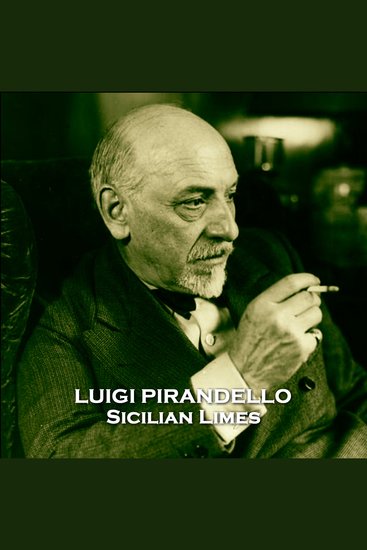
    Luigi Pirandello was born on 28th June 1867 into an upper-class family in Agrigento, in Sicily. 
    In 1880, the family moved to Palermo and there he completed high school and thence to the University of Palermo, at that time the centre of what became the Fasci Siciliani movement.  Although not an active member he had close friendships with many of its leading ideologists.  Pirandello then completed his university studies in Rome and Bonn, receiving his Doctorate in March, 1891. 
    His time in Rome had provided him with the opportunity to visit its many theatres. "Oh the dramatic theatre! I will conquer it. I cannot enter into one without experiencing a strange sensation, an excitement of the blood through all my veins..." 
    1894 brought marriage, at his father's suggestion, to a shy, withdrawn girl: Mara Antonietta Portulano.  The marriage encouraged his studies and writings and, the following year, the first part of the ‘Dialoghi tra Il Gran Me e Il Piccolo Me’ was published. 
    In 1903 the flooding of the sulphur mines in which his father had invested the family capital and Antonietta's dowry, brought financial catastrophe.  She, on hearing the news, was mentally broken.  Pirandello would now work a full day and then watch over his troubled wife at night. Somehow he found time to write ‘The Late Mattia Pascal’.  It was an immediate and resounding success.  
    In 1909, Pirandello began his collaboration with the prestigious Corriere della Sera.  Whilst his fame as a writer was increasing his private life was poisoned by the suspicion and jealousy of Antonietta who now turned physically violent.  His plays were now being regularly performed but, within a decade, Antonietta had to be placed into an asylum from which she never left. 
    In 1921, in Rome his play, ‘Six Characters in Search of an Author’ debuted.  It was a failure.  However, when presented in Milan it was a great success, as it also was in London and New York. 
    In 1925, Pirandello, with Mussolini’s help, assumed the artistic direction and ownership of the Teatro d'Arte di Roma.  He now described himself both as ‘a Fascist because I am Italian’ and ‘I'm apolitical, I'm only a man in the world...’  However his later conflicts with fascist leaders meant he fell under close surveillance by the OVRA, the secret police. 
    In 1934 he won the Nobel Prize but asked that the medal be melted down for Italy’s occupation of Abyssinia Campaign to which he had given his support.  
    Pirandello's canon stretches across novels, short stories, poetry, essays and some 40 plays.  His tragic farces are often cited as forerunners of the Theatre of the Absurd. 
    Luigi Pirandello died on the 10th December 1936 at his home at Via Bosio, Rome, Italy.  He was 69.
    Show book