Join us on a literary world trip!
Add this book to bookshelf
Grey
Write a new comment Default profile 50px
Grey
Subscribe to read the full book or read the first pages for free!
All characters reduced
The Sufistic Quatrains of Omar Khayyam - cover

The Sufistic Quatrains of Omar Khayyam

Khayyam Omar

Translator Edward FitzGerald, E. H. Whinfield, J. B. Nicolas

Publisher: DigiCat

  • 0
  • 0
  • 0

Summary

Omar Khayyam's "The Sufistic Quatrains" is a profound exploration of the metaphysical and existential themes that permeate Sufism, distilled into the elegant form of quatrains, or rubaiyat. With their succinct yet evocative language, these poems reflect a confluence of philosophical inquiry and spiritual yearning, showcasing Khayyam's mastery in blending complex ideas with lyrical beauty. The literary context of these quatrains situates them at the intersection of Persian mysticism and medieval philosophical thought, offering insight into the human condition and the pursuit of truth through personal awakening and divine love. Khayyam (1048-1131) was a polymath whose contributions spanned poetry, mathematics, and astronomy. Born in Nishapur, Persia, his exposure to the vibrant intellectual climate of the Islamic Golden Age undoubtedly influenced his poetic voice. His pursuits in science, particularly in astronomy, are mirrored in the rational inquiries present in his poetry, leading to a synthesis of artistic expression and philosophical inquiry that has left an indelible mark on Persian literature. For readers seeking not only literary beauty but also a deeper understanding of Sufi philosophy, "The Sufistic Quatrains of Omar Khayyam" is an essential addition to their collection. It invites contemplation on the relationship between the self and the cosmos, making it a timeless work that resonates with seekers of wisdom across cultures and eras.
Available since: 09/16/2022.
Print length: 219 pages.
Other books that might interest you

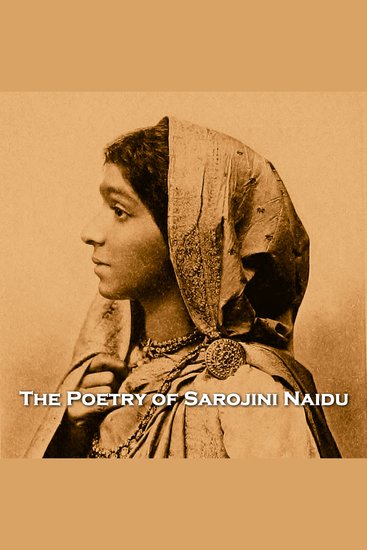
  • The Poetry of Sarojini Naidu - One of the finest modern global poets - cover

    The Poetry of Sarojini Naidu -...

    Sarojini Naidu

    • 0
    • 0
    • 0
    Sarojini Chattopadhyay was born into a Bengali family in Hyderabad, India on 13th February 1879, the eldest of the eight siblings. The family was well-respected in Hyderabad and were established artists. 
     
    Naidu passed her matriculation examination at the University of Madras and took a four-year break from her studies.  
     
    In 1895, H.E.H. the Nizam's Charitable Trust founded by the 6th Nizam, Mahbub Ali Khan, gave her the chance to study in England, first at King's College, London and later at Girton College, Cambridge.  
     
    Even in these early times she was a social activist.  It was whilst in England that she worked as a suffragist and was first drawn to the Indian National Congress' Hindu movement for India's independence from British Colonial rule.  
     
    She began writing at the age of twelve. Her play, ‘Maher Muneer’, written in Persian, impressed the Nawab of Hyderabad. It was an auspicious start. 
     
    Sarojini met Paidipati Govindarajulu Naidu, a physician, and after finishing her studies at age 19 married him. The couple would have five children.  Interestingly their families approved their marriage even though they were from different castes and society was not as tolerant as it might be today.  Additionally, Sarojini was from Bengal and Naidu from Andhra Pradesh and marriages between those from the north and south were frowned upon.  Happily, they overcame these problems and both marriage and careers thrived. 
     
    In 1905, her first collection of poems, ‘The Golden Threshold’ was published. 
     
    Naidu became a part of the Indian nationalist movement and was a follower of Mahatma Gandhi and his idea of swaraj (this was an India without its colonial administration systems).  Despite her growing political career she still found time to write and published several further volumes of poetry. Such was her eloquence that she became known as the ‘Nightingale of India’. 
    Sarojini was appointed the President of the Indian National Congress in 1925 and was a major influence and figure in the Independence movement.  
     
    Along with several other Congress leaders including Gandhi and Jawaharlal Nehru she was arrested for taking part in the 1930 Salt March.  Indeed Sarojini faced frequent arrest by the British Authorities and spent, in total, many months in prison. 
     
    Following India's independence from British rule in 1947, Sarojini was appointed as the governor of the present-day Uttar Pradesh in so doing she became India's first female governor. 
     
    Returning from work in New Delhi on 15th February, 1949 she was advised to rest by her doctors, and her official engagements were cancelled.  Her health deteriorated rapidly and on 1st March bloodletting was performed after she complained of severe headache.  
     
    Sarojini Naidu died of a cardiac arrest on 2nd March 1949.  She was 70.
    Show book
  • More Than Weeds - cover

    More Than Weeds

    L Kiew

    • 0
    • 0
    • 0
    More Than Weeds, the debut poetry collection by L. Kiew, explores the language of migration and how it is used in relation to plant and animal species, as well as peoples. These knowledgeable and verdant poems draw deeply on botanical and ecological detail and reveal secret histories thriving in the gaps between definitions; here are precious seedlings, unforced flowers, tongues of leaves, tangled roots and rhizomes.
    With roots in decolonialising botany and horticulture movements, and influenced by the impact of the climate crisis and regenerative gardening practices, Kiew's poetry is alive and thronging with the interconnected nature of things – and the formative forces of nurture, family, food, refuge and love. Human and plant voices speak for themselves of experiences of belonging and displacement, as well as encounters with violence. These vivid poems that ask us to scrutinise what is really contained or constrained by demarcations – whether those of weed or wildflower, or of borders and hostile environments.
    Show book
  • Immigrantish Poetry - cover

    Immigrantish Poetry

    Tim Hakadosh

    • 0
    • 0
    • 0
    Immigrantish Poetry by Timotheus Hakadosh is a captivating collection of poems that explores the experiences of immigrants. Through the lens of his own personal journey as an immigrant, Hakadosh's poetry delves into themes of identity, belonging, and cultural displacement.
    Show book
  • Timeless Tall from Two Distinct Perspectives A - A Sailor's Dream: - cover

    Timeless Tall from Two Distinct...

    Christian Capri, Amon Aeinarr

    • 0
    • 0
    • 0
    This opus is loosely based on a true story – and it is dedicated to the twenty-nine men who lost their lives on Michigan’s Lake Superior, the evening that the S.S. Edmund Fitzgerald mysteriously went down. “Does anyone know where the love of God goes when the waves turn the minutes to hours?”Gordon Lightfoot… The Mysterious Wreck of The S.S. Edmund Fitzgerald: there’s songs sung about her! Books written about her! Stories upon stories are told about her, and each year in Detroit, Michigan, a play about her is performed! “The legend lives on from the Chippewa on down from the big lake they called Gitchee Gumee…” Now isn’t it time for another fabulous tale, and a movie?!www.davidswarbrick.webs.com
    Show book
  • A Gateway Has Opened - cover

    A Gateway Has Opened

    Liam Blackford

    • 0
    • 0
    • 0
    A Gateway Has Opened is a poetry collection by Hong Kong-based poet, LIAM BLACKFORD, containing 36 missives on truth and reality, anger and rage, complexity and change, and power as manifested in people, corporations, governments, borders and cultures. The poems inhabit a chaotic and psychedelic world where water flows into the sky, nightclubs have hundreds of floors and where banks and malls publish theories on knowledge and personhood. Therein, human society is fraught with harm and violence but also euphoric with the widening horizons of possibility. The collection is notable for its strict adherence to a unique poetic form (each poem has six stanzas, each stanza with six lines, and each line with six syllables), which in its red-eyed absoluteness suggests that the poems are giving voice to an alien, an angel or a machine. Though avant-garde and philosophical, the collection is highly reflective of the poet’s place and time, in which Hong Kong is at the epicentre of epochal political and cultural change. 
    “The poems ... ‘quiver with tension’ as the speaker straddles the liminal space between dreams and the mundane.” —Ryan Fenton. “In Blackford’s verse, one is in our world, with its political and environmental anxieties, with its affluence and parallel unease.”―Andrew S. Guthrie, Proverse Prize Finalist 2013. “... what bubbles beneath the surface is the courage to find astounding beauty and inspiration amidst confounding and cruelty, and hold them both.” —Jack Mayer, Winner of the Proverse Prize 2019. “...unique explorations of poetic form.”—Philip Mead, Emeritus Professor, University of Western Australia.  “Blackford’s worlds are jarring and harsh; psychedelic yet pungent with our reality. His strict form is muscular and fascinating. Gateway seethes with energy – I loved it.”―David West, Western Australia.
    Show book
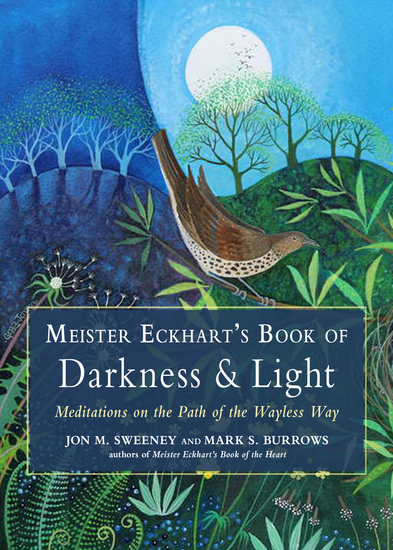
  • Meister Eckhart's Book of Darkness & Light - Meditations on the Path of the Wayless Way - cover

    Meister Eckhart's Book of...

    Meister Eckhart, Jon M Sweeney,...

    • 0
    • 0
    • 0
    “Within each of us is a divine treasure, and if we hope to discover it we need to go deep into the heart of who we are.”—Meister Eckhart Meister Eckhart has been a huge influence on spirituality for more than 800  years, including to philosopher Arthur Schopenhauer, Eckhart Tolle, Richard Rohr, D. T. Suzuki, Rudolf Steiner, and Matthew Fox—all crediting Eckhart as being an important influence on their thought.   This book of Meister Eckhart meditations is for people seeking the “wayless way.” It is not for those looking for a simple path. Many people in our time still go looking for a straight path toward a defined goal, without detours, led by a guide who tells them what to do and what not to do. They would be uncomfortable with Meister Eckhart—a Christian mystic from the century of Rumi and Francis of Assisi—who said to “take leave of God for the sake of God.” And, “Learn not to love in order that you may learn to love.” And, “All things are equal and alike in God and are God.”   These fresh, stunning renderings of his writings in poetic form bring life to one of the great spiritual voices of any age. They reveal what it means to love God and find meaning in darkness. In a culture that craved light—and what culture does not?—Eckhart dared to imagine that the darkness is what matters most. Not darkness in general, but your darkness, because it is the one thing you know something about, and without facing your darkness, you’ll never know what it means to desire the light. You’ll never even imagine what light is about. Only when you are in the darkness, Meister says, do you have even the possibility of seeing the light.
    Show book