Join us on a literary world trip!
Add this book to bookshelf
Grey
Write a new comment Default profile 50px
Grey
Subscribe to read the full book or read the first pages for free!
All characters reduced
The Capital & The Communist Manifesto - Enriched edition Including Two Important Precursors to Capital (Wage-Labour and Capital & Wages Price and Profit) - cover

The Capital & The Communist Manifesto - Enriched edition Including Two Important Precursors to Capital (Wage-Labour and Capital & Wages Price and Profit)

Karl Marx

Translator Frederick Engels, Samuel Moore, Edward Aveling, Eleanor Marx

Publisher: Musaicum Books

  • 0
  • 0
  • 0

Summary

Karl Marx's 'The Capital & The Communist Manifesto' is a groundbreaking work that delves into the themes of capitalism, socialism, and class struggle. In 'The Capital,' Marx critically analyzes the capitalist economic system, highlighting its exploitative nature and the alienation of labor. His writing style is precise and analytical, combined with a revolutionary tone that challenges the status quo. The book is considered a cornerstone of Marxist literature and a must-read for anyone interested in understanding the complexities of modern economics. 'The Communist Manifesto' serves as a political manifesto, advocating for the overthrow of capitalist society and the establishment of a classless society. Its passionate rhetoric and call for social change have inspired revolutions and movements across the globe. Karl Marx, a German philosopher and economist, was deeply influenced by the social injustices and inequalities of his time. His experiences fueled his desire to critique and dismantle the capitalist system, leading to the creation of 'The Capital' and 'The Communist Manifesto.' Marx's expertise in political economy and philosophy shines through in his work, positioning him as a key figure in the development of socialist thought. I highly recommend 'The Capital & The Communist Manifesto' to readers interested in political theory, economics, and social justice. Marx's insights are as relevant today as they were during his time, offering valuable perspectives on the dynamics of class struggle and the possibilities of a more equitable society.

In this enriched edition, we have carefully created added value for your reading experience:
- A comprehensive Introduction outlines these selected works' unifying features, themes, or stylistic evolutions.
- The Author Biography highlights personal milestones and literary influences that shape the entire body of writing.
- A Historical Context section situates the works in their broader era—social currents, cultural trends, and key events that underpin their creation.
- A concise Synopsis (Selection) offers an accessible overview of the included texts, helping readers navigate plotlines and main ideas without revealing critical twists.
- A unified Analysis examines recurring motifs and stylistic hallmarks across the collection, tying the stories together while spotlighting the different work's strengths.
- Reflection questions inspire deeper contemplation of the author's overarching message, inviting readers to draw connections among different texts and relate them to modern contexts.
- Lastly, our hand‐picked Memorable Quotes distill pivotal lines and turning points, serving as touchstones for the collection's central themes.
Available since: 11/02/2018.
Print length: 2151 pages.

Other books that might interest you

  • Stalin's Harvest of Despair - 1932-1933 - cover

    Stalin's Harvest of Despair -...

    Sarah Willards

    • 0
    • 0
    • 0
    In the aftermath of the Russian Revolution, the Soviet Union emerged as a bold experiment in socialist governance. The promise of equality, worker empowerment, and rapid industrial advancement stirred hope among the masses, particularly in a country long plagued by aristocratic rule and widespread poverty. Following Vladimir Lenin’s death in 1924, the Soviet Union stood at a crossroads. Competing visions of the nation's future vied for dominance, but it was Joseph Stalin who would seize the reins of power and chart a course that would forever change the fate of the Soviet people. 
    Stalin was not initially seen as Lenin's most likely successor. Quiet and often underestimated, he used his position as General Secretary to quietly build alliances, marginalize rivals, and install loyalists in key positions. Through political maneuvering and calculated ruthlessness, he eliminated opposition, including figures like Leon Trotsky, who posed significant ideological challenges to his authority. By the end of the 1920s, Stalin had effectively become the uncontested leader of the Soviet Union. 
    With Stalin’s rise came a dramatic shift in the nation’s priorities. While Lenin’s New Economic Policy had allowed for a degree of private enterprise and economic flexibility, Stalin viewed such policies as a betrayal of Marxist principles. He replaced them with a command economy, aiming to accelerate industrialization and bring agriculture under state control. This transition was not merely economic—it was deeply ideological. Stalin envisioned a centralized Soviet state capable of projecting power, crushing resistance, and transforming society through sheer force of will.
    Show book
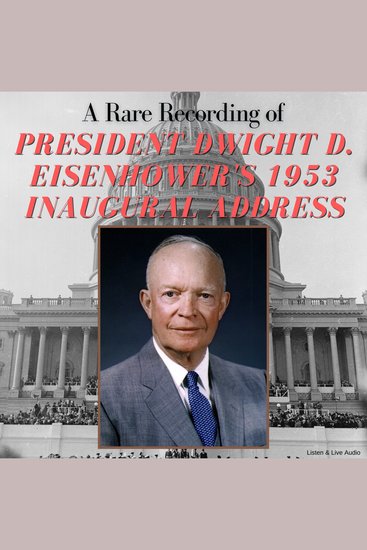
  • A Rare Recording of President Dwight D Eisenhower's 1953 Inaugural Address - cover

    A Rare Recording of President...

    President Dwight D. Eisenhower

    • 0
    • 0
    • 0
    Dwight David "Ike" Eisenhower (October 14, 1890 - March 28, 1969 was an American military officer and statesman who served as the 34th president of the United States from 1953 to 1961. During World War II, he served as Supreme Commander of the Allied Expeditionary Force in Europe and achieved the five-star rank as General of the Army. President Eisenhower delivered his first inaugural address on January 20, 1953.
    Show book
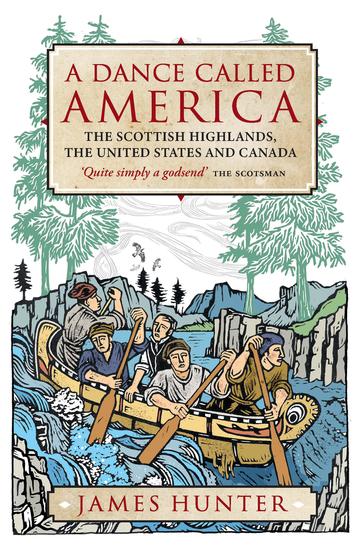
  • A Dance Called America - The Scottish Highlands the United States and Canada - cover

    A Dance Called America - The...

    James Hunter

    • 0
    • 0
    • 0
    Journey from the Isle of Skye to the Deep South, to the Rockies and beyond.
    A dance was devised in eighteenth-century Skye. An exhilarating dance. A dance, a visitor reports, 'the emigration from Skye has occasioned'. The visitor asks for the dance's name. 'They call it America,' he's told.
    Over a period of three centuries, many thousands of people left the islands and wider north of Scotland to make new lives across the sea. In this new edition of his acclaimed book, historian James Hunter follows in their footsteps – from the Deep South to the Rockies and beyond – to tell the story of the Highland impact on the New World.
    In doing so, he reveals how soldiers, explorers, guerrilla fighters, fur traders, lumberjacks, railways builders and settlers from Scotland's glens and islands contributed much to the USA and Canada. It is the story of how a hard-pressed people found in North America a land of opportunity.
    In this edition features a new introduction from James Hunter, where he reflects on what led him to embark on travels and researches that took him across a continent.
    Show book
  • Healing Honestly - The Messy and Magnificent Path to Overcoming Self-Blame and Self-Shame - cover

    Healing Honestly - The Messy and...

    Alisa Zipursky

    • 0
    • 0
    • 0
    The Least Retraumatizing Read on Childhood Sexual Abuse.  
    For Survivors, by a Survivor. 
     
    Healing Honestly is a candid, poignant, and often funny survivor-to-survivor guide to navigating the salty waters of untrue stories and victim-blaming narratives that survivors of child sex abuse hear every day. 
     
    Survivors of child sex abuse (CSA) are inundated with untrue stories of their abuse, the aftermath, and what their healing journey should look like. The truth is those stories are a bunch of hot garbage.  
      
    Healing Honestly is a guide for survivors, written by a survivor, helping to break through the negative self-talk and debunk the myths that impact victims of CSA, such as:  
    -	There is a "real" survivor out there, and we are not it.  
    -	It happened so long ago that we should be over it by now.  
    -	We are having too much sex because of our trauma, and also, we are having too little sex because of our trauma.  
      
    With an approachable style that makes heavy topics not so damn scary, this book shows how trauma survivors can learn to identify these untrue stories that often come up in dating, in friendships, in families, at work, and more. Readers will discover strategies for turning down the volume on the bullshit so that they can hear their own wisdom and inner truth more clearly.   
      
    Full of wit and humor, Healing Honestly offers practical strategies for survivors of sex abuse to support themselves in living full and vibrant lives.
    Show book
  • Saints and Liars - The Story of Americans Who Saved Refugees from the Nazis - cover

    Saints and Liars - The Story of...

    Debórah Dwork

    • 0
    • 0
    • 0
    Long before their country officially joined the war, American aid workers were active in rescue efforts across Europe. Two such Americans were Martha and Waitstill Sharp, who were originally sent to Prague as part of a relief effort but turned immediately to helping Jews and dissidents after the 1939 invasion by Germany. 


    They were not the only ones. Renowned historian Debórah Dwork follows the story of rescue workers in five major cities as the refugee crisis expanded to Vilna, Shanghai, Marseille, and Lisbon. Followed by Nazi agents, spiriting people across borders, they learned secrecy. 


    Others negotiated with government representatives, like Laura Margolis, who worked with the Japanese, to get enough food and warm shelter for the refugees in Shanghai. Yet, the women also often faced lack of support from their agencies; if part of a couple, they fought to get paid even at a low salary despite working as long and hard as their husbands. 


    Moving and revelatory, Saints and Liars illuminates the unpredictable circumstances with which these aid workers contended, while revealing the moral questions they encountered and the devastating decisions they had to make.
    Show book
  • The Great Schism - How the Catholic Church Split up - cover

    The Great Schism - How the...

    Kelly Mass

    • 0
    • 0
    • 0
    The East–West Schism, also called the Great Schism or the Schism of 1054, was a profound and enduring rupture in communion between the Catholic Church and the Eastern Orthodox Church that took place during the 11th century. This division marked one of the most significant splits in Christian history, fundamentally shaping the religious landscape of Europe and beyond. At the time, Eastern Christianity likely accounted for a narrow majority of Christians globally, with the remainder adhering to Catholicism. The schism was the culmination of centuries of doctrinal, cultural, and political differences between the Greek-speaking East and the Latin-speaking West. 
    The definitive break in 1054 did not emerge in isolation but was preceded by a long history of ecclesiastical conflicts and theological disputes. Among the central issues were the *Filioque* clause—an addition to the Nicene Creed by the Western Church asserting that the Holy Spirit proceeds from both the Father and the Son—the use of leavened versus unleavened bread in the Eucharist, the bishop of Rome’s assertion of universal jurisdiction, and the status of the See of Constantinople in relation to the pentarchy (the five major episcopal sees of the early Church). These disagreements highlighted fundamental differences in theological perspectives, liturgical practices, and ecclesiastical authority. 
    The formal steps toward the schism began in 1053 when Greek churches in southern Italy were ordered to conform to Latin traditions, under the threat of closure if they refused. In retaliation, Michael I Cerularius, the Patriarch of Constantinople, ordered the closure of all Latin churches in Constantinople. This act escalated tensions and set the stage for the events of 1054.
    Show book