Join us on a literary world trip!
Add this book to bookshelf
Grey
Write a new comment Default profile 50px
Grey
Subscribe to read the full book or read the first pages for free!
All characters reduced
Secret Diplomatic History of The Eighteenth Century - cover

Secret Diplomatic History of The Eighteenth Century

Karl Marx

Publisher: DigiCat

  • 0
  • 0
  • 0

Summary

In "Secret Diplomatic History of The Eighteenth Century," Karl Marx offers a profound analysis of the political machinations and alliances that shaped Europe in a time rife with revolutionary fervor and imperial ambition. Written with a critical yet accessible style, the book delves into previously obscured diplomatic activities, exposing the interplay between economic interests and state politics. Marx's insights reflect a historical materialist perspective, emphasizing the importance of class struggle and economic forces in driving historical events, thus situating this work in the broader context of his contributions to political economy and revolutionary theory. Karl Marx, born in 1818, was a German philosopher, economist, and revolutionary socialist, whose engagement with the complexities of capitalism and power dynamics profoundly influenced his writing. His extensive studies in law, history, and philosophy, alongside his experiences in politically tumultuous environments, informed this work's incisive critique of statecraft. "Secret Diplomatic History" encapsulates Marx's methodical examination of historical documents, revealing an intricate tapestry of economic motives behind diplomatic relationships that characterizes the era. This book is essential reading for anyone seeking to understand the foundational principles of Marxist thought applied to political history. It serves as an invaluable resource for historians, political scientists, and students alike, illustrating the underlying economic factors that continue to shape diplomatic relations in modern times. By engaging with Marx's meticulous research, readers gain a deeper appreciation for how historical narratives are constructed and challenged.
Available since: 11/21/2022.
Print length: 84 pages.


Other books that might interest you

  • Sleep - How to Fall Asleep Fast and beat Insomnia - cover

    Sleep - How to Fall Asleep Fast...

    Vincenzo Onio

    • 0
    • 0
    • 0
    If you have sleeping problems, then you know how frustrating it can be to get a good night's sleep. 
    Slowing down your thoughts, finding peace of mind, and learning how to relax are all necessary for better sleep. This guided sleep meditation bundle is meant to help you relax, fall asleep faster, and sleep better. 
    Studies continue to show that deep REM sleep is vital to reducing stress and anxiety, boosting immune system, increasing mental clarity, maintaining weight loss, and even extending lifespan by preventing the onset of disease. 
    In the short term, quality sleep will help you feel incredible. 
    In the long term, it could save your life.
    Show book
  • A Country Called Prison - Mass Incarceration and the Making of a New Nation Second Edition - cover

    A Country Called Prison - Mass...

    Mary D. Looman, John D. Carl

    • 0
    • 0
    • 0
    In the first edition of A Country Called Prison, Mary Looman and John Carl presented persuasive data calling for downsizing of America's prisons. Their novel approach continues in their second edition, shifting the beliefs many people have about prisons and their role in the American society. Since the original edition was published, the landscape of incarceration has been changing. 


    In their second edition, Carl and Looman discuss the significant world events, such as the COVID epidemic, that impacted the American society in the past decade, which lead to an overall twenty percent reduction in prison populations across the board. The second edition includes a new chapter covering the history of prisons that clearly establishes the fact that prisons have always been about making money and less about rehabilitating offenders. They also introduce the new era of decarceration and desistance, encouraging courts to defer sentences and keep minor offenders at home with their families and in their communities while they work, attend education classes, and receive mental health treatment. Once again Carl and Looman end their book with a rational and daring proposal—Marshall Plan 2024—that envisions a way to bring the criminal justice system into the twenty-first century focusing on social equity and humane compassion for those who want to emigrate out.
    Show book
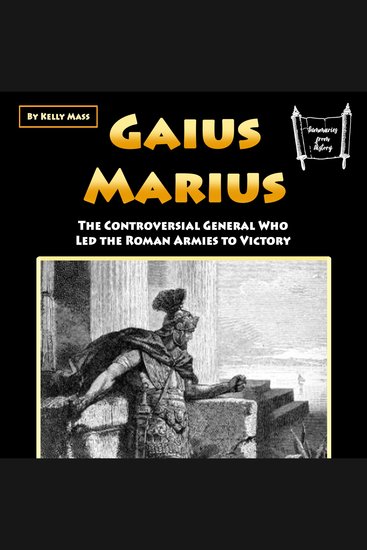
  • Gaius Marcus - The Controversial General Who Led the Roman Armies to Victory - cover

    Gaius Marcus - The Controversial...

    Kelly Mass

    • 0
    • 0
    • 0
    Gaius Marius was one of the most influential military commanders and statesmen of the late Roman Republic. Born into a well-off, provincial Italian family in Arpinum, Marius rose from relatively humble beginnings to become a key figure in Rome’s transformation from a republic to an empire. Known for his military prowess and political savvy, Marius served as consul an unprecedented seven times, a record that set him apart from other Roman leaders. 
    His career began in earnest during the Siege of Numantia in 134 BC, where he gained valuable military experience under the command of Scipio Aemilianus. Marius was not born into the traditional aristocracy of Rome but quickly ascended through the ranks of Roman politics. In 119 BC, he was elected as tribune of the plebs, where he passed significant legislation that aimed to curb the influence of the aristocracy in Roman elections. His political career continued to build momentum as he was elected praetor in 115 BC and later became the governor of Further Spain, where he fought against bandit forces. Marius’s personal life also intertwined with the leading families of Rome—he married Julia, the aunt of the future dictator Julius Caesar, cementing ties with one of Rome’s most powerful clans. 
    Marius’s most famous military achievements came in the course of the Jugurthine War in Numidia, which he brought to a successful conclusion in 107 BC. That same year, he was appointed to command Roman forces in the war against the Germanic tribes, the Cimbri and Teutones, who threatened Rome’s existence. He was elected consul for the second time in 104 BC, a post he would hold consecutively for five years. His victories at the battles of Aqua Sextiae in 102 BC and Vercellae in 101 BC cemented his reputation as one of Rome’s greatest military leaders, and he was hailed as the “third founder of Rome,” a title that reflected his role in securing the republic’s future.
    Show book
  • The Faded Map - The Lost Kingdoms of Scotland - cover

    The Faded Map - The Lost...

    Alistair Moffat

    • 0
    • 0
    • 0
    In this modern age the regional and national boundaries which define Scotland seem fixed and permanent. But of course this has not always been so.
    In this book Alistair Moffat looks at the shifting political shape of the land long before its modern borders were created. In doing so he brings to vivid life the half-forgotten kingdoms that came and went during Roman times, the Dark Ages and the early medieval period. This is a fascinating journey into a tantalisingly little-known period of our history, yet one which is crucial to our understanding of who we are and where we came from.
    'Moffat's tireless reasearch ... and commanding knowledge bring these forgotten peoples to life' – Scottish Field
    Show book
  • Georgia O'Keeffe: A short biography - 5 Minutes: Short on time – long on info! - cover

    Georgia O'Keeffe: A short...

    5 Minutes, 5 Minute Biographies,...

    • 0
    • 0
    • 0
    Georgia O'Keeffe, American paintress and founder of Modernism: Life and work in a short biography! Everything you need to know, brief and concise. Infotainment, education and entertainment at its best!
    Show book
  • Family Abolition - Capitalism and the Communizing of Care - cover

    Family Abolition - Capitalism...

    M.E. O’Brien

    • 0
    • 0
    • 0
    For some of us, the family is a source of love and support. But for many others, the family is a place of private horror, coercion, and personal domination. In a capitalist society, the private family carries the impossible demands of interpersonal care and social reproductive labor. Can we imagine a different future? 


    In Family Abolition, author M. E. O'Brien uncovers the history of struggles to create radical alternatives to the private family. O'Brien traces the changing family politics of racial capitalism in the industrial cities of Europe and the slave plantations and settler frontier of North America, explaining the rise and fall of the housewife-based family form. From early Marxists to Black and queer insurrectionists to today's mass protest movements, O'Brien finds revolutionaries seeking better ways of loving, caring, and living. Family Abolition takes us through the past and present of family politics into a speculative future of the commune, imagining how care could be organized in a free society.
    Show book