Join us on a literary world trip!
Add this book to bookshelf
Grey
Write a new comment Default profile 50px
Grey
Subscribe to read the full book or read the first pages for free!
All characters reduced
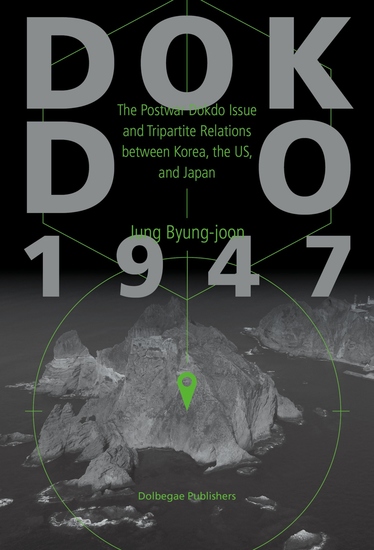
Dokdo 1947 - The Postwar Dokdo Issue and Tripartite Relations between Korea the US and Japan - cover

Dokdo 1947 - The Postwar Dokdo Issue and Tripartite Relations between Korea the US and Japan

Jung Byung-joon

Publisher: Dolbegae Publishers

  • 0
  • 0
  • 0

Summary

1947 was a watershed year for the Dokdo issue.

Many think that the differences between Korea and Japan over the historical title to the island are what caused the Dokdo issue. From my studies, however, I came to learn that the Dokdo issue is a ramification, or one of the shadows, of the sway and decision power the U.S. exerted on the post-war policies for Northeast Asia. Therefore, it would be more accurate to say that the dispute over the sovereignty of Dokdo after the Second World War involves the U.S. as well and that it is a matter of regional and international politics rather than that of history.

\"The idea for this book came about in 2001 when I was studying the U.S. State Department’s diplomatic documents from the 1950s in the National Archives and Records Administration. The records were telling a different story from what average Koreans know about Korea-Japan relations and the Dokdo issue. Although much of the documents about Korea-Japan relations and the Dokdo issue were still classified, I was able to see that the 1951 Treaty of San Francisco was the starting point of, as well as a turning point for, the U.S. policies and diplomatic decisions on Dokdo. So I started delving into the archives of the U.S., Japan, Korea, and the UK. I looked into how the San Francisco Treaty—which officially settled the war between Japan and the U.S.-led Allies—relates to Korea and how it became a turning point for Korea-Japan relations, Korea-U.S. relations, and U.S.-Japan relations. I found myself on a journey of exploring how the San Francisco system shaped the new post-war order in Northeast Asia; how Korea, the U.S., Japan, and the UK viewed and responded to Japan’s territorial issues including that of Dokdo; and how Korea-U.S. relations, U.S.-Japan relations, and Korea-Japan relations had changed over the years.

This book is a summary of what I learned during my journey, and it delineates how and when Korea, the U.S., and Japan began introducing policies, as they became more aware of Dokdo after the Second World War, and how these policies evolved before and after the San Francisco Treaty.\" (_ Excerpt from the Preface)
Available since: 11/11/2022.
Print length: 590 pages.

Other books that might interest you

  • The Rise and Decline of Nations - Economic Growth Stagflation and Social Rigidities - cover

    The Rise and Decline of Nations...

    Mancur Olson, Edward L. Glaeser

    • 0
    • 0
    • 0
    The updated edition of Mancur Olson's award-winning book The Rise and Decline of Nations.
    Show book
  • Socialism Looks Forward - cover

    Socialism Looks Forward

    John Strachey

    • 0
    • 2
    • 0
    The author and politician analyzes the troubled state of Britain’s post–World War II political and economic systems, and proposes a solution.When World War II ended for Great Britain in 1945, MP John Strachey wondered what he and his country were going to do with the freedom they had fought for and won. The men who ran the country before the war had taken England so far down the road to disaster that it seemed almost impossible to save. To prevent history from repeating itself, changes needed to be made.In Socialism Looks Forward, Strachey shares his plan to lead Great Britain into a prosperous future in which its people are free from want. Examining both political and economic factors, he breaks down why the system in Britain was in such disrepair prior to World War II, with some of its citizens being even better off during the war. He then outlines his proposed solution—Socialism—explaining what it would be like and how Britain could make it happen. Originally published in 1945, Socialism Looks Forward provides insight into Great Britain’s political and economic history in the post–World War II era, as well as an introduction to Socialist thought.
    Show book
  • The Black Boom - cover

    The Black Boom

    Jason L Riley

    • 0
    • 0
    • 0
    Economic inequality continues to be one of the most hotly debated topics in America, but there has been relatively little discussion of the fact that black-white gaps in joblessness, income, poverty, and other measures were shrinking prior to the pandemic. Why was it happening, and why did this phenomenon go unacknowledged by so much of the media? 


    In The Black Boom, Jason L. Riley—acclaimed Wall Street Journal columnist and senior fellow at the Manhattan Institute—digs into the data and concludes that the economic lives of black people improved significantly under policies put into place during the Trump administration. 


    Less inequality is something that everyone wants, but disapproval of Trump's personality and methods too often skewed the media's appraisal of effective policies advocated by his administration. If we want to make real progress in improving the lives of low-income minorities, says Riley, we must look beyond our partisan differences at what works and keep doing it. Unfortunately, many press outlets were unable or unwilling to do that.
    Show book
  • Global Authoritarianism - Perspectives and Contestations from the South - cover

    Global Authoritarianism -...

    International Research Group on...

    • 1
    • 0
    • 0
    We are witnessing a worldwide resurgence of reactionary ideologies and movements, combined with an escalating assault on democratic institutions and structures. Nevertheless, most studies of these phenomena remain anchored in a methodological nationalism, while comparative research is almost entirely limited to the Global North. Yet, authoritarian transformations in the South — and the struggles against them — have not only been just as dramatic as those in the North but also preceded them, and consequently have been studied by Southern scholars for many years. 
    
    This volume brings together the work of more than 15 scholar-activists from across the Global South, combining in-depth studies of regional processes of authoritarian transformation with a global perspective on authoritarian capitalism. 
    
    With a foreword by Verónica Gago.
    Show book
  • The Lion and the Fox - Two Rival Spies and the Secret Plot to Build a Confederate Navy - cover

    The Lion and the Fox - Two Rival...

    Alexander Rose

    • 0
    • 0
    • 0
    From the New York Times bestselling author of Washington’s Spies, the thrilling story of the Confederate spy who came to Britain to turn the tide of the Civil War—and the Union agent resolved to stop him. 
     
    In 1861, soon after the outbreak of the Civil War, two secret agents—one a Confederate, the other his Union rival—were dispatched to neutral Britain, each entrusted with a vital mission. 
    The South’s James Bulloch, charming and devious, was to acquire a cutting-edge clandestine fleet intended to break President Lincoln’s blockade of Confederate ports, sink Northern merchant vessels, and drown the U.S. Navy’s mightiest ships at sea. The profits from gunrunning and smuggling cotton—Dixie’s notorious “white gold”—would finance the scheme. Opposing him was Thomas Dudley, a resolute Quaker lawyer and abolitionist. He was determined to stop Bulloch by any means necessary in a spy-versus-spy game of move and countermove, gambit and sacrifice, intrigue and betrayal. If Dudley failed, Britain would ally with the South and imperil a Northern victory. The battleground was the Dickensian port of Liverpool, whose dockyards built more ships each year than the rest of the world combined, whose warehouses stored more cotton than anywhere else on earth, and whose merchant princes, said one observer, were “addicted to Southern proclivities, foreign slave trade, and domestic bribery.” 
    From master of historical espionage Alexander Rose, The Lion and the Fox is the astonishing, untold tale of two implacable foes and their twilight struggle for the highest stakes.  
    Supplemental enhancement PDF accompanies the audiobook.
    Show book
  • The Problem of Democracy - America the Middle East and the Rise and Fall of an Idea - cover

    The Problem of Democracy -...

    Shadi Hamid

    • 0
    • 0
    • 0
    What happens when democracy produces "bad" outcomes? Is democracy good because of its outcomes or despite them? This "democratic dilemma" is one of the most persistent, vexing problems for America abroad, particularly in the Middle East—we want democracy in theory but not necessarily in practice. 


    When Islamist parties rise to power through free elections, the United States has too often been ambivalent or opposed, preferring instead pliable dictators. With this legacy of democratic disrespect in mind, and drawing on new interviews with top American officials, Shadi Hamid explores universal questions of morality, power, and hypocrisy. Why has the United States failed so completely to live up to its own stated ideals in the Arab world? And is it possible for it to change? 


    In The Problem of Democracy, Hamid offers an ambitious reimagining of this ongoing debate and argues for "democratic minimalism" as a path to resolving democratic dilemmas in the Middle East and beyond. In the seemingly eternal tension between democracy and liberalism, recognized by the ancient Greeks and the American founders alike, it may be time to prioritize one over the other, rather than acting as if the two are intertwined when increasingly they are not.
    Show book