Join us on a literary world trip!
Add this book to bookshelf
Grey
Write a new comment Default profile 50px
Grey
Subscribe to read the full book or read the first pages for free!
All characters reduced
Marriage Patterns - cover

Marriage Patterns

Julian Beaumont

Translator A AI

Publisher: Publifye

  • 0
  • 0
  • 0

Summary

Marriage Patterns offers a deep dive into the evolving world of marriage, examining how societal shifts have reshaped relationships and family structures. It investigates key trends such as the increasing age at which people marry and the changing dynamics of partner choice, influenced by factors like education and technology. The book provides a factual, data-driven analysis of how these elements intertwine to define modern marriage.

 
The book explores the influence of social networks on mate selection and analyzes marriage trends across diverse cultural and geographical contexts. Interestingly, historical factors like industrialization and evolving gender roles play a significant part in shaping current marriage practices. Marriage Patterns presents this information in a clear style across chapters, starting with core concepts and progressing through detailed analyses of marriage age, partner choice, and comparative studies.

 
Unique in its approach, the book integrates insights from sociology, economics, and psychology to provide a holistic understanding, rather than offering prescriptive advice. By emphasizing the interplay between individual choices and societal forces, Marriage Patterns equips readers with the tools to critically analyze marriage patterns and their implications for social policies and individual well-being.
Available since: 05/06/2025.
Print length: 68 pages.
Other books that might interest you

  • Chester Alan Arthur - A Life from Beginning to End - cover

    Chester Alan Arthur - A Life...

    Hourly History

    • 0
    • 0
    • 0
    Chester A. Arthur is not a name that immediately comes to mind when one thinks of great American presidents. He is, in many ways, the forgotten man of the White House, and most Americans would probably struggle to place him, let alone recall what he actually did. And yet his story is remarkable and, in many ways, surprising. 
    Arthur was one of those so-called accidental presidents who never sought the nation's highest office but stumbled into it only because an assassin's bullet cut down his predecessor, President James Garfield. Nobody expected much of him. He was a machine politician—a product of the corrupt New York patronage system and a man whose chief qualification for high office appeared to be his loyalty to the right people. What happened next surprised everyone, including, perhaps, Arthur himself. 
    Faced with the weight of an office he never asked for, and privately battling a terminal kidney disease that would kill him just a year after leaving the White House, Chester Arthur rose to the occasion in ways that nobody had thought possible. He took on the very system that had made him, signed landmark legislation that transformed the US government, and left office more respected than any man could reasonably have expected when he first took the oath. This is his life and his story in full.
    Show book
  • Rare Recording of Carl Jung A - Volume 2 - cover

    Rare Recording of Carl Jung A -...

    Carl Jung

    • 0
    • 0
    • 0
    Carl Gustav Jung (July 26, 1875 - June 6, 1961) was a Swiss psychiatrist and psychoanalyst who founded analytical psychology. Jung's work was influential in the fields of psychiatry, anthropology, archaeology, literature, philosophy, and religious studies. Working as a research scientist, Jung came to the attention of Sigmund Freud, and the two men conducted a lengthy correspondence for a while. However, while Jung worked on his Psychology of the Unconscious, tensions manifested between him and Freud because of various disagreements, including those concerning the nature of libido. While Jung did think libido was an important source for personal growth, unlike Freud, he did not believe that libido alone was responsible for the formation of the core personality.
    Show book
  • How to Be a Patriot: Why love of country can end our very British culture war - cover

    How to Be a Patriot: Why love of...

    Sunder Katwala

    • 0
    • 0
    • 0
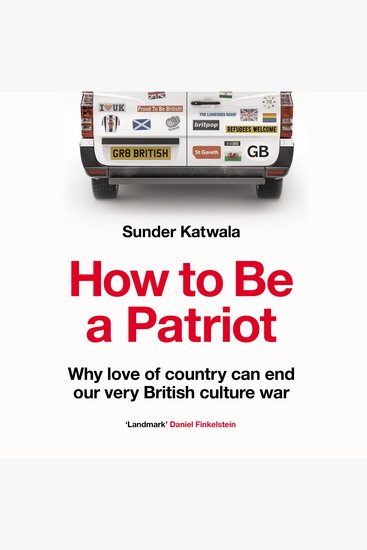
    How do we define patriotism in a diverse society?What divides us and what brings us together?Why do we feel uncomfortable celebrating our country’s history? 
    How to be a Patriot offers a new way of understanding our collective identity in a country wracked by division and brimming with markers of selfhood – faith, race, gender, age, sexuality. 
    Sunder Katwala himself grew up with some questions to work through. As a half-Indian, Irish Catholic child of the NHS, the chequered history of post-imperial Britain seemed very personal to him, but he realised that with that background he could hardly be anything but British, and proud of it too. 
    His timely and clear-eyed analysis seeks to navigate the many crises of this increasingly disunited kingdom: extremism and integration after 7/7; fear of immigration and the deep divides of Brexit; the resurgence of online racism; and the debate over our cultural heritage. Equipped with a nuanced understanding of the subject and a wealth of supporting data, he sets out to foster a more open and tolerant society: one that welcomes alternative ideas and cultures rather than shutting them out. 
    Ultimately, How to be a Patriot is a rousing story of lives lived together and shared values. Far from being divisive, it concludes, an inclusive and confident patriotism is a reminder that our differences need not define us. 
    Sunder Katwala's How to be a Patriot is a top non-fiction book that offers a unique perspective on nationalism and policy. It's a public commentary on the social science of our time, exploring discrimination and ideologies. 
    For fans of Tony Blair (A Journey), Ezra Klein (Why We're Polarized), Derek Thompson (Hit Makers), Daniel Dorling (Shattered Nation), and Matthew J. Goodwin (Values, Voice and Virtue). 
    HarperCollins 2023
    Show book
  • The History of Nazi Germany’s Legendary Tank Commanders - cover

    The History of Nazi Germany’s...

    Charles River Editors

    • 0
    • 0
    • 0
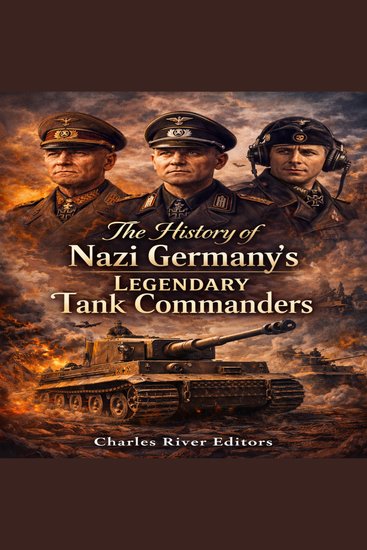
    One of his biographers called him “a complex man: a born leader, a brilliant soldier, a devoted husband, a proud father; intelligent, instinctive, brave, compassionate, vain, egotistical, and arrogant.” As that description suggests, every account of Erwin Rommel’s life must address what appears to be its inherent contradictions. Fittingly, and in the same vein, he remains one of the best remembered generals of World War II and history at large, despite the fact he was on the losing side, and he was defeated at the most famous battle of his career, the decisive Battle of El Alamein. Nonetheless, the Desert Fox has been a legend on both sides of the Atlantic for over 70 years, thanks to the crucial role he played in history’s deadliest conflict.  While there is a great division when it comes to historical opinion with respect to Rommel’s merits as a general as well as the moral choices he made, both historians and the public continue to be intrigued by this man who has been dead for over 80 years. People at large continue to consider Rommel one of the greatest generals of the 20th century, an opinion shared by many of his contemporaries on both sides of World War II.  
    Heinz Wilhelm Guderian was one of the most respected commanders and theoreticians of World War II. An innovative tank commander, he was a pioneer of German Blitzkrieg tactics and therefore, a hugely influential figure in the way the war was fought. Guderian's profile was not always what might have been expected for a man of his abilities and influence warrant due to the shape of his career. As a German commander during the war, Guderian fought for one of the most appalling regimes in history, so while his skills are respected, it is hard to celebrate a man who led the troops of the Reich, especially to such success. 
    Show book
  • Christianity and Critical Race Theory - A Faithful and Constructive Conversation - cover

    Christianity and Critical Race...

    Robert Chao Romero, Jeff M. Liou

    • 0
    • 0
    • 0
    Critical Race Theory (CRT) has become a lightning rod in American politics and evangelical Christianity. This book offers a critical but constructive and sympathetic introduction to CRT written from a perspective rooted in Scripture and Christian theology. The authors take us beyond caricatures and misinformation to consider how CRT can be an analytical tool to help us understand persistent inequality and injustice—and to see how Christians and churches working for racial justice can engage CRT in faithful and constructive ways. 


    The authors explore aspects of CRT that resonate with well-trod Christian doctrine but also that challenge or are corrected by Christian theology. They also address the controversial connection that critics see between CRT and Marxism. Their aim is to offer objective analysis and critique that go beyond the debates about social identity and the culture wars and aid those who are engaging the issues in Christian life and ministry. Reflection/discussion questions, exercises, a glossary of key CRT terms, and suggested readings make the book helpful for students or small groups.
    Show book
  • Tibet Was Never A Part of China Since Antiquity - Using China’s Official Authoritative Documents as Proof - cover

    Tibet Was Never A Part of China...

    Professor Hon-Shiang Lau

    • 0
    • 0
    • 0
    As a signatory to the League of Nations and United Nations covenants, China promised not to conquer new territories after 1919. Therefore, after the People’s Republic of China (PRC) conquered Tibet in 1950, she saw the necessity of lying to the world that Tibet has always been an inseparable part of China. In this groundbreaking work, Dr. Hon-Shiang Lau, Ph.D., dismantles that narrative with clarity and precision. Drawing on official Chinese sources, imperial records, treaties, and eyewitness accounts, Lau demonstrates that Tibet’s relationship with China was neither one of continuous subjugation nor sovereign control. Instead, he reveals a far more complex and independent Tibetan history that stands apart from Beijing’s propaganda.
    		 
    With meticulous scholarship and accessible prose, Lau takes readers on a journey through centuries of contested borders, political maneuvering, and shifting alliances. The result is a compelling account that restores historical truth to the Tibetan people and dispels the many lies and fabrications propagated by the PRC. This book is not only a critical resource for historians and policymakers but also an essential work for anyone seeking to understand Tibet’s rightful place in world history.
    Show book