Join us on a literary world trip!
Add this book to bookshelf
Grey
Write a new comment Default profile 50px
Grey
Subscribe to read the full book or read the first pages for free!
All characters reduced
The Secret Agent - cover

The Secret Agent

Joseph Conrad

Publisher: REA Multimedia

  • 0
  • 0
  • 0

Summary

The Secret Agent: A Simple Tale is a novel by Joseph Conrad, first published in 1907. The story is set in London in 1886 and deals with Mr. Adolf Verloc and his work as a spy for an unnamed country (presumably Russia). The Secret Agent is one of Conrad's later political novels in which he moved away from his former tales of seafaring. The novel is dedicated to H. G. Wells and deals broadly with anarchism, espionage, and terrorism. It also deals with exploitation of the vulnerable in Verloc's relationship with his brother-in-law Stevie, who has an intellectual disability. Conrad’s gloomy portrait of London depicted in the novel was influenced by Charles Dickens’ Bleak House.
The novel was modified as a stage play by Conrad himself and has since been adapted for film, TV, radio and opera.
Available since: 08/30/2023.

Other books that might interest you

  • The Antichrist - cover

    The Antichrist

    Friedrich Nietzsche

    • 0
    • 0
    • 0
    Friedrich Nietzsche's "The Antichrist" is a philosophical work that presents his critical analysis of Christianity and its impact on Western culture. Written in 1888, towards the end of Nietzsche's productive life, "The Antichrist" reflects his deep-seated criticisms of traditional Christian values and morality. In the text, Nietzsche vehemently opposes what he sees as the life-denying aspects of Christianity. He argues that the Christian emphasis on otherworldly concerns, asceticism, and moral values such as humility and self-sacrifice are detrimental to the flourishing of human life. Nietzsche contends that Christianity has fostered a culture of weakness, passivity, and resentment, suppressing the natural instincts and drives that lead to individual strength and vitality. 
     
    "The Antichrist" also delves into Nietzsche's critique of the figure of Jesus Christ, whom he views as a symbol of weakness and a distortion of true strength. Nietzsche contends that the Christian notion of God represents a negation of life, promoting an idealized realm beyond this world at the expense of embracing earthly existence. Nietzsche's writing style in "The Antichrist" is often controversial and provocative, reflecting his desire to challenge established beliefs and provoke critical thinking. The work serves as a forceful critique of organized religion, morality, and the cultural influence of Christianity in Western societies. 
     
    It's essential to approach Nietzsche's "The Antichrist" within the broader context of his philosophical works, as it contributes to his overarching critique of morality, metaphysics, and the prevailing cultural values of his time. While the title may suggest a direct opposition to Christian beliefs, Nietzsche intends to provoke thought and encourage a reevaluation of existing values rather than presenting a straightforward condemnation.
    Show book
  • New Accelerator The (Unabridged) - cover

    New Accelerator The (Unabridged)

    H. G. Wells

    • 0
    • 0
    • 0
    The New Accelerator features a fascinating depiction of the invention of what sounds a lot like an amphetamine (though technically they had already been invented a dozen years earlier). It will also remind Star Trek fans of the episode called Wink of an Eye.
    Show book
  • Adventures of Huckleberry Finn The - with Lectures for Use as a Study Guide - cover

    Adventures of Huckleberry Finn...

    Mark Twain, Kevin O'Brien

    • 0
    • 0
    • 0
    Actor and comedian Kevin O'Brien performs Mark Twain's classic - and delivers four lectures analyzing the brilliance of this great American novel.
    Show book
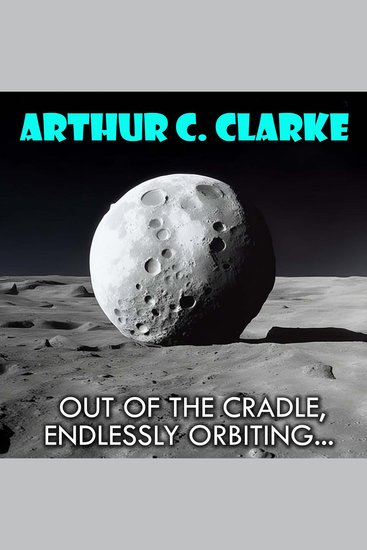
  • Out Of The Cradle Endlessly Orbiting - cover

    Out Of The Cradle Endlessly...

    Arthur C. Clarke

    • 0
    • 0
    • 0
    "Out of the Cradle, Endlessly Orbiting…" is a short story by Arthur C. Clarke, originally published in Dude magazine in 1959. It's a science fiction narrative that, like Clarke's other works, explores the intersection of science, technology, and humanity. The story's title also serves as a fitting tribute to Clarke himself, as it was his idea to put a communications satellite into geosynchronous orbit, a concept that has been instrumental in modern communications. The story follows a group of people who have settled on the moon. They are the first generation to have lived there, and they are in constant communication with the Earth through the satellite, which is endlessly orbiting above. The story explores the themes of human connection, the evolution of technology, and the challenges of living in a new environment.
    Show book
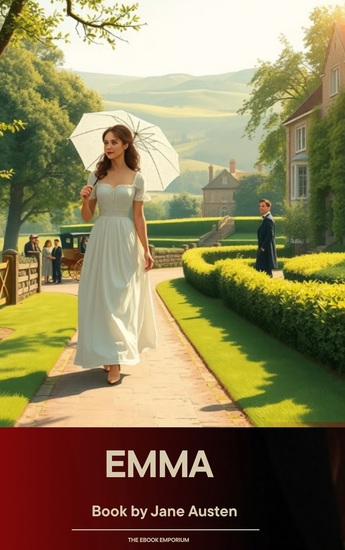
  • Emma - cover

    Emma

    Jane Austen

    • 0
    • 0
    • 0
    "I am going to take a heroine whom no one but myself will much like." — Jane Austen
    
    Emma Woodhouse is perfectly content with her life in the quiet village of Highbury. Wealthy, independent, and perhaps a bit too sure of her own judgment, she occupies her time by orchestrating the romantic lives of those around her. However, her well-intentioned meddling—particularly with her protégé, Harriet Smith—leads to a comedy of errors that threatens the happiness of her friends and herself. As Emma navigates a maze of social blunders and misplaced affections, she must confront the wisdom of her longtime friend and mentor, Mr. Knightley, and finally recognize the true desires of her own heart.
    
    The Art of the "Comedy of Manners": Austen's sharp wit shines as she satirizes the social pretensions and gossip of 19th-century provincial life. Through Emma's eyes, we see a world where a misunderstood glance or a misinterpreted letter can change a person's fate. It is a brilliant study of human nature that remains as relevant today as it was in the Regency era.
    
    A Heroine's Growth: Unlike many romantic leads of her time, Emma doesn't need to marry for money or status. Her journey is internal—it is a transformation from a spoiled, self-important young woman into a mature adult who understands the weight of her influence on others. The tension between her and the stoic, honorable George Knightley provides one of the most satisfying "slow-burn" romances in fiction.
    
    Rediscover the wit and warmth of Austen's most playful work. Purchase "Emma" today.
    Show book
  • Crime and Punishment - cover

    Crime and Punishment

    Fyodor Dostoyevsky

    • 0
    • 0
    • 0
    tbc
    Show book