Join us on a literary world trip!
Add this book to bookshelf
Grey
Write a new comment Default profile 50px
Grey
Subscribe to read the full book or read the first pages for free!
All characters reduced
The Meaning of Infancy - cover

The Meaning of Infancy

John Fiske

Publisher: DigiCat

  • 0
  • 0
  • 0

Summary

In "The Meaning of Infancy," John Fiske embarks on a profound exploration of the early stages of human development, blending insights from philosophy, psychology, and sociology. Written in an accessible yet intellectually stimulating style, the book delves into the significance of infancy in shaping identity and cognition. Fiske situates his work within the broader context of late 19th-century thought, drawing on contemporary theories of evolution and social progress to elucidate the transformative nature of this formative period. With a keen eye for detail, he examines the interplay between innate instincts and environmental influences that mold the human experience from birth onward. John Fiske (1842-1901), an influential American philosopher and historian, was significantly impacted by the scientific advancements of his time, particularly the theory of evolution proposed by Darwin. His interdisciplinary approach reflects not only his scholarly background but also a profound empathy for human development. Fiske's commitment to understanding the complexities of infancy aligns with his broader philosophical inquiries into human nature and society. This compelling text is highly recommended for scholars and lay readers alike who seek to grasp the intricate connections between early childhood experiences and the broader tapestry of human existence. Fiske's engaging prose invites readers to reflect on the foundational stages of life, making it a vital addition to both philosophical and developmental literature.
Available since: 09/16/2022.
Print length: 24 pages.

Other books that might interest you

  • The Truce - Progressives Centrists and the Future of the Democratic Party - cover

    The Truce - Progressives...

    Hunter Walker, Luppe B. n

    • 0
    • 0
    • 0
    The Truce is a definitive history of a half-decade of upheaval in the Democratic Party in which a new generation aggressively pursued their progressive ideals while the powerful, centrist establishment adapted to remain in command. Journalists Hunter Walker and Luppe B. Luppen illuminate this story of backroom maneuvering and political strategy with new revelations about pivotal events and exclusive, on-the-record comments from activists, campaign operatives, and members of Congress. 


    The Truce explores the major fault lines that define Democratic politics today and asks big questions about the future of the party. Will economic or social justice hold primacy at the top of the Democratic agenda? Who will lead the major wings of the party after two defining figures, Biden and Sanders, exit the stage? The Truce surveys the major shifts underway, from the rise of the Squad and new Democratic leadership in the House to a complete overhaul of the primary process. By digging into the divide between left and center, Walker and Luppen expose the creeping generational and political tensions that Biden has—for the moment—kept at bay. 


    An engrossing work, and a surprising must-listen, The Truce grapples with the dangers that threaten American democracy and the complicated cast of characters who are trying to save it.
    Show book
  • Sociopath and Psychopath - Decoding Deviant Minds: Unraveling the Enigma of Sociopathy and Psychopathy - cover

    Sociopath and Psychopath -...

    Sonny Miller

    • 0
    • 0
    • 0
    Sociopath and Psychopath: Decoding Deviant Minds: Unraveling the Enigma of Sociopathy and PsychopathyWelcome to the captivating world of Sociopathy and Psychopathy, where the minds of the deviant are shrouded in mystery. In the audiobook "Sociopath and Psychopath: Decoding Deviant Minds: Unraveling the Enigma of Sociopathy and Psychopathy," we embark on a profound journey of understanding, peeling back the layers to reveal the intricate workings of these complex disorders.With this audiobook, you will delve into the depths of the sociopathic and psychopathic minds, as we unravel the enigma that surrounds them. From exploring the roots of these disorders to dissecting their impact on individuals and society, "Sociopath and Psychopath" provides a comprehensive guide to decoding deviant minds. Gain a deep understanding of the distinct traits that differentiate sociopathy from psychopathy, while also recognizing the overlapping patterns that exist between them.But this audiobook goes beyond mere observation—it equips you with knowledge and strategies to navigate encounters with individuals on the sociopathic and psychopathic spectrum. Learn how to identify warning signs, protect yourself from manipulation, and establish healthy boundaries. Discover the psychological and emotional impact of interacting with individuals who lack empathy and conscience, and explore pathways to healing and recovery.Are you ready to embark on a journey of understanding? Open the doors to the world of Sociopathy and Psychopathy and decode the deviant minds that inhabit it. "Sociopath and Psychopath: Decoding Deviant Minds: Unraveling the Enigma of Sociopathy and Psychopathy" is your guidebook to unraveling the mysteries and gaining a deeper understanding of these intriguing disorders.
    Show book
  • Crime and Punishment - cover

    Crime and Punishment

    Fyodor Dostoevsky

    • 0
    • 0
    • 0
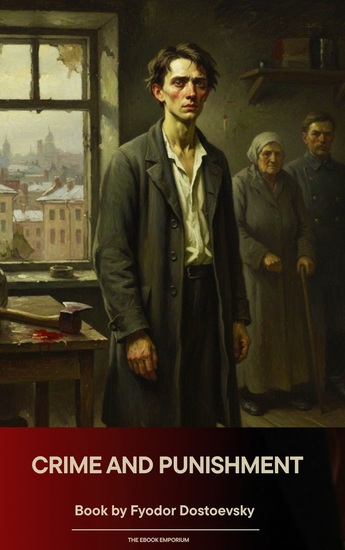
    "I did not kill a human being, but a principle!"
    
    In the sweltering slums of St. Petersburg, a brilliant but destitute student named Rodion Raskolnikov conceives a terrifying theory: that "extraordinary" men are above the law, permitted to commit any crime for the sake of a higher purpose. To prove his hypothesis, he murders a cynical old pawnbroker. But as a cat-and-mouse game ensues with the cunning investigator Porfiry Petrovich, Raskolnikov finds himself haunted not by the law, but by his own conscience. His only hope for salvation lies with Sonia, a young woman forced into a life of suffering, who offers a path of radical humility and spiritual rebirth.
    
    A Descent into the Human Mind: Crime and Punishment is arguably the greatest psychological study ever written. Dostoevsky takes the reader deep into the feverish, fractured mind of a killer, making us complicit in his rationalizations and his subsequent agony. It is a visceral experience that explores the thin line between genius and madness, and the devastating weight of a secret.
    
    The Battle for the Soul: The novel is a masterpiece of ideological conflict. Raskolnikov is pulled between the cold, rational nihilism of the 19th-century "New Men" and the profound, self-sacrificing faith represented by Sonia. Through their interactions, Dostoevsky argues that no intellectual theory can withstand the fundamental human need for connection and moral truth.
    
    A Timeless Search for Redemption: Beyond the murder and the investigation, this is a story about the possibility of a second chance. It is a grueling journey through the "hell" of the human ego toward the light of confession and renewal. Crime and Punishment is not just a book you read; it is an experience that stays with you forever.
    
    Step into the mind of a killer. Purchase "Crime and Punishment" today and discover the depth of the human heart.
    Show book
  • My Road from Damascus - A Memoir - cover

    My Road from Damascus - A Memoir

    Jamal Saeed

    • 1
    • 0
    • 0
    “A lyrical, extremely rich narrative of loss, memory, and trauma.” — STARRED review, Kirkus Reviews
    		 
    An extraordinary account of survival in Syria’s most notorious military prisons that is written with “brutal clarity — and yet, there is a poetic quality to the telling.” — Frances Itani, award-winning author of Deafening and Remembering the Bones
    		 
    Jamal Saeed arrived as a refugee in Canada in 2016. In his native Syria, as a young man, his writing pushed both social and political norms. For this reason, as well as his opposition to the regimes of the al-Assads, he was imprisoned on three occasions for a total of 12 years. In each instance, he was held without formal charge and without judicial process. 
    		 
    My Road from Damascus not only tells the story of Saeed’s severe years in Syria’s most notorious military prisons but also his life during the country’s dramatic changes. Saeed chronicles modern Syria from the 1950s right up to his escape to Canada in 2016, recounting its descent from a country of potential to a pawn of cynical and corrupt powers. He paints a picture of village life, his youthful love affairs, his rebellion as a young Marxist, and his evolution into a free thinker, living in hiding as a teenager for 30 months while being hunted by the secret police. He recalls his brutal prison years, his final release, and his family’s harrowing escape to Canada.
    		 
    While many prison memoirs focus on the cruelty of incarceration, My Road from Damascus offers a tapestry of Saeed’s whole life. It looks squarely at brutality but also at beauty and poetry, hope and love.
    Show book
  • The State of the Arts - Culture in Toronto - cover

    The State of the Arts - Culture...

    Alana Wilcox, Christina Palassio

    • 0
    • 0
    • 0
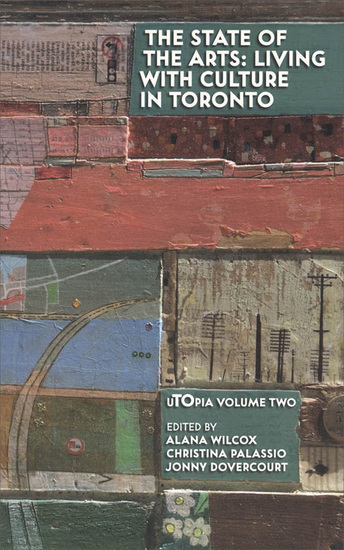
    City Hall proclaimed 2006 the Year of Creativity. 'Live With Culture' banners flap over the city. And across the city, donors are ponying up millions for the ROM and the AGO. Culture's never had it so good. Right?


       The State of the Arts  explores the Toronto arts scene from every angle, applauding, assailing and arguing about art in our fair burg. The essays consider the big-ticket and the ticket-free,from the Opera House and the CNE to the subconscious art of graffiti eradication and underground hip-hop. In between, you'll find considerations art in the suburbs, how business uses art to sell condos, questions of infrastructure, an examination of Toronto on film and a history of micro press publishing. You'll read about the fine line between party and art, the trials of being a capitalist in a sea of left-wing artists, the power of the internet to create arts communities and a plea for spaces that cater to musicians and their kids.


      Throughout, you'll find equal doses of optimism and frustration, and a good measure of T.O. love. Taken together, the thoughts of these writers, thinkers, musicians and city-builders aim to create an honest survey of where we're at and where we can go.


      Includes sixteen colour pages of eye-level Toronto, and cover art by Susan Szenes.


      Withessays by Sandra Alland, Jason Anderson, Anna Bowness, Stephen Cain, Kate Carraway, Hanna Cho, Brendan Cormier, Natalie De Vito, Liz Forsberg, Mark Fram, Marc Glassman, Katarina Gligorijevic-Collins, Brenda Goldstein, Amy Lavender Harris, Karen Hines, Sarah B. Hood, Christopher Hume, Sam Javanrouh, Dory Kornfeld, Adam Krawesky, More Or Les, John Lorinc, James MacNevin, Claudia McKoy, Brian McLachlan, Ryan McLaren, Shawn Micallef, Jill Murray, Matt O'Sullivan, Christopher Pandolfi, Michael Redhill, Dylan Reid, Damian Rogers, Stuart Ross, Lisa Rundle, Dana Samuel, Nadja Sayej, Susan Szenes, Kevin Temple, Pablo Torres, Gayla Trail, Rannie Turingan, Jason van Eyk, Adam Vaughan, RM Vaughan, Stéphanie Verge, Lisa Whittington-Hill and Carl Wilson.
    Show book
  • Rocking in the Free World - Popular Music and the Politics of Freedom in Postwar America - cover

    Rocking in the Free World -...

    Nicholas Tochka

    • 0
    • 0
    • 0
    Progressive and libertarian, anti-Communist and revolutionary, Democratic and Republican, quintessentially American but simultaneously universal. By the late 1980s, rock music had acquired a dizzying array of political labels. These claims about its political significance shared one common thread: that the music could set you free. 


    Rocking in the Free World explains how Americans came to believe they had learned the truth about rock 'n' roll, a truth shaped by the Cold War anxieties of the fifties, the countercultural revolutions (and counter-revolutions) of the sixties and seventies, and the end-of-history triumphalism of the eighties. How did rock 'n' roll become enmeshed with so many different competing ideas about freedom? And what does that story reveal about the promise-and the limits-of rock music as a political force in postwar America?
    Show book