Join us on a literary world trip!
Add this book to bookshelf
Grey
Write a new comment Default profile 50px
Grey
Subscribe to read the full book or read the first pages for free!
All characters reduced
The American Revolution & The French Revolution - cover

The American Revolution & The French Revolution

John Fiske, Charles Downer Hazen

Publisher: e-artnow

  • 0
  • 0
  • 0

Summary

The Age of Revolution is the period from approximately 1774 to 1849 in which a number of significant revolutionary movements occurred in many parts of Europe and the Americas. The period is noted for the change in government from absolutist monarchies to constitutionalist states and republics. Two most significant events of the period were the American Revolution and the French Revolution. This edition will give you the complete insight into these events, explaining the causes, connections and consequences of these two major revolutions that changed the entire course of human history.
Available since: 12/15/2023.
Print length: 611 pages.

Other books that might interest you

  • The History of the Prominent Algonquian Tribes - cover

    The History of the Prominent...

    Editors Charles River

    • 0
    • 0
    • 0
    Throughout the 19th century, American settlers pushing across the Western frontier came into contact with diverse American tribes, producing a series of conflicts ranging from the Great Plains to the Southwest, from the Trail of Tears to the Pacific Northwest. Indian leaders like Geronimo became feared and dreaded men in America, and Sitting Bull’s victory over George Custer’s 7th Cavalry at Little Bighorn was one of the nation’s most traumatic military endeavors. Given this history, it’s no surprise that the Shawnee continue to be closely associated with their most famous leader, Tecumseh, the most famous Native American of the early 19th century. While leading the Shawnee, he attempted to peacefully establish a Native American nation east of the Mississippi River in the wake of the American Revolution. One of the most famous Native American tribes on the Great Plains is the Cheyenne, and their fame may be surpassed only by their influence on American history. 
    Like other notable Plains tribes, the Arapaho split off from other groups around the 16th-17th centuries and shifted from a sedentary agricultural society to the kind of nomadic group many envision when thinking of groups on the Plains. That nomadic lifestyle brought them into contact with the Sioux and Cheyenne, both of whom became allies as white settlers pushed west and led to conflicts. The United States sought to defuse tensions with natives during the westward push by drafting treaties regarding major pieces of land, often without understanding the complex structure of the various tribes, and subgroups within those tribes. 
    Outside of the Midwest, the Chippewa are not as well-known as other Native American tribes like the Sioux or Cherokee, but they have long been one of the biggest groups in all of North America. Not surprisingly, their presence around the Great Lakes region made them especially important to early European explorers who sailed the St. Lawrence.
    Show book
  • Roman Innovations - Engineering Marvels of the Ancient World - cover

    Roman Innovations - Engineering...

    Rogan Fish

    • 0
    • 0
    • 0
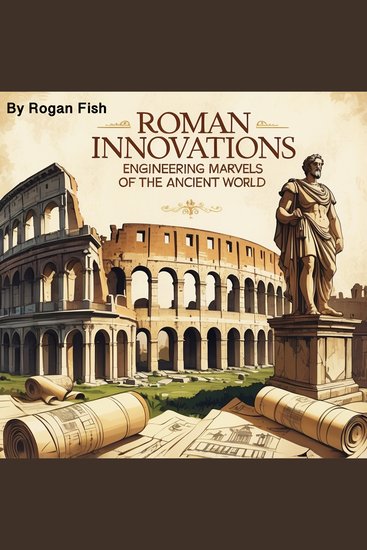
    Roman engineering formed the bedrock upon which the Roman Empire’s power and prosperity were built. The Romans, known for their advanced construction techniques, utilized a deep understanding of engineering principles to create infrastructure that stood the test of time. The strategic use of roads, bridges, and construction materials allowed them to expand and maintain control over their vast empire. Roman innovations not only provided practical solutions to everyday challenges but also played a pivotal role in shaping the empire’s military, economic, and social systems. 
    The Romans’ extensive network of roads was one of the cornerstones of their engineering achievements. Roads connected distant regions of the empire, facilitating trade, communication, and the rapid movement of the Roman military. These roads were engineered with precision, employing layers of different materials to ensure durability and effectiveness in various terrains. The roads, often straight and well-maintained, allowed the Roman legions to travel efficiently and helped bind together the sprawling empire. 
    Roman construction materials were key to their engineering marvels. One of the most significant Roman innovations was the development of concrete, a material that enabled the Romans to build large, durable structures such as aqueducts, bridges, and amphitheaters. Roman concrete, made from a mixture of volcanic ash, lime, and seawater, was stronger and more water-resistant than earlier forms of concrete. This breakthrough allowed for the creation of monumental structures, such as the Colosseum and the Pantheon, that could withstand the test of time and the elements.
    Show book
  • DISASTER PREPARATION - A Comprehensive Guide to Effective Disaster Preparedness (2023) - cover

    DISASTER PREPARATION - A...

    Percival Moore

    • 0
    • 0
    • 0
    "Disaster Preparation: A Comprehensive Guide to Effective Disaster Preparedness" is a vital resource for individuals and families looking to proactively safeguard themselves against unforeseen emergencies. This book offers a step-by-step approach to preparing for various disasters and ensuring the safety and well-being of loved ones. 
    ·       Assessing Vulnerabilities: Identify potential risks and vulnerabilities specific to your location, considering natural disasters, technological emergencies, and health crises. 
    ·       Creating a Customized Plan: Develop a comprehensive disaster preparedness plan tailored to your family's needs, including communication strategies and evacuation routes. 
    ·       Home Preparedness: Implement practical strategies to fortify your home against disasters, from reinforcing structures to safeguarding utilities. 
    ·       Emergency Communication: Establish effective communication channels with family members, neighbors, and authorities during emergencies. 
    ·       First Aid and Medical Readiness: Acquire the knowledge and skills required to administer basic first aid and address medical needs in disaster situations. 
    "Disaster Preparation" serves as a comprehensive manual for individuals and families to confidently face emergencies head-on. This book empowers you to navigate challenging situations and ensure the safety and security of your loved ones in times of crisis. 
    So, scroll up and click the “Buy Now” button right now!!! 
     
    Show book
  • SILENT CONVERSATION THE - Understanding the Power of Nonverbal Communication in Everyday Interactions (2024 Guide for Beginners) - cover

    SILENT CONVERSATION THE -...

    AIDEN HARMONY

    • 0
    • 0
    • 0
    "The Silent Conversation" unveils the profound impact of nonverbal communication, exploring the unspoken language that shapes our interactions, relationships, and perceptions. Delve into the world of silent cues, gestures, and expressions, and learn how to decipher the nuanced messages that influence the dynamics of human connection.Body Language Decoded: Gain insights into the subtle signals conveyed through posture, gestures, and facial expressions.Emotional Intelligence: Develop the ability to recognize and respond to the emotions conveyed by others without words.Cultural Influences: Explore how cultural nuances shape nonverbal communication and influence understanding.Enhancing Personal Presence: Learn techniques to enhance your own nonverbal communication for impactful and authentic interactions.Building Trust and Rapport: Understand how nonverbal cues contribute to building trust and establishing meaningful connections.Navigating Social Dynamics: Explore the silent conversation in professional settings, social gatherings, and personal relationships. 
    🌐 Ready to master the silent language that speaks volumes? Dive into "The Silent Conversation" and equip yourself with the skills to navigate the intricate world of nonverbal communication. Whether in business, social, or personal contexts, this book empowers you to decode the unspoken messages that shape your interactions. Elevate your communication skills—start understanding the silent conversation today! 🌐 
     
    Show book
  • Social Capital: Life online in the shadow of Ireland’s tech boom - cover

    Social Capital: Life online in...

    Aoife Barry

    • 0
    • 0
    • 0
    A David and Goliath story about Ireland’s role as prime real estate for the world’s largest tech multinationals, and the considerable impact it has had on us as individuals. 
    At the start of the millennium, the Tech giants landed on Ireland’s shores. Dublin, once one of Europe’s poorest cities, became a beacon of Silicon Valley’s promise of progress and power. As the face of the capital was remade in the image of Big Tech, Irish society embraced technology like no other. Romantic Ireland was dead and gone: social media was here to stay. 
    In this provocative account, Aoife Barry explores the human cost of Ireland’s Faustian pact with Big Tech, from the local communities uprooted by Google to the traumatised moderators squirrelled in the capital’s pockets, keeping the internet safe at a terrible price. Unsettling, insightful, and wryly funny, she paints a portrait of a country addicted to the internet, refreshing the news, refreshing Twitter, scrolling and scrolling towards a feverish future. She turns an equally honest eye on her own life online, from her humble beginnings using dial-up in her parent’s kitchen to working for Ireland’s first digital-only newsroom, and asks what we bargain in exchange for life in the metaverse. 
    Social Capital is the coming of age story of Ireland 3.0: set against the backdrop of the tech revolution, it chronicles how we collapse the boundary between physical and virtual reality, and where we might go from here. 
    Barry's new book, Social Capital, is a popular science exploration into the world of computers and information technology. It's a top pick for anyone interested in the intersection of culture, economics, and the latest developments in the tech industry. 
    For fans of Bill Gifford (Ledyard), Britney Spears (The woman in me), Dolly Alderton (Everything I Know About Love), Bono (Surrender), and Ian H. Robertson (How Confidence Works). 
    HarperCollins 2023
    Show book

  • Flying Start - A Fighter Pilot's War Years - cover

    Flying Start - A Fighter Pilot's...

    Hugh Dundas

    • 0
    • 0
    • 0
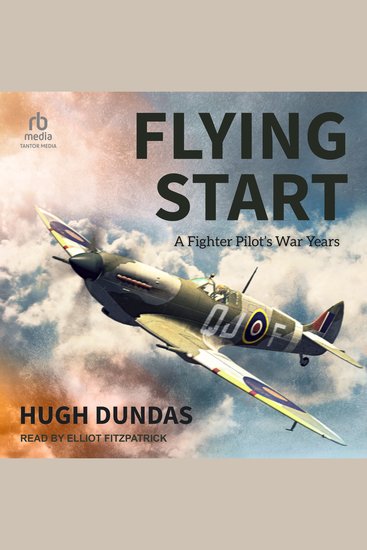
    "A personal and vivid view of the Royal Air Force's (RAF) engagement of the Luftwaffe in World War II . . . Exciting, valuable, and good reading." —Library Journal 


    This is the autobiography of Group Captain Sir Hugh Dundas CBE, DSO, DFC, who was one of the most distinguished fighter pilots of World War II. He writes of his wartime experiences, and particularly of his period as Squadron Leader and Wing Commander and his involvement in the Battle of Britain. 


    "It stands out from many other accounts of war-time air operations because of its very clear coverage of events both at the fighting and at the operational levels . . . It is a gripping tale well told, and one that easily holds the reader's attention throughout." —the Bulletin (Military Historical Society) 


    "This is an important book for historians and enthusiasts, but it is also an important social history of a period that is rapidly passing into history as those who were there and survived now approach the end of their life." —Firetrench
    Show book