Join us on a literary world trip!
Add this book to bookshelf
Grey
Write a new comment Default profile 50px
Grey
Subscribe to read the full book or read the first pages for free!
All characters reduced
The way of mindfulness is a path of personal growth - cover

The way of mindfulness is a path of personal growth

Jean Michel P.s.

Publisher: Jean Michel P.s

  • 0
  • 0
  • 0

Summary

"The Path of Mindfulness: A Personal Growth Journey in 27 Chapters"
Immerse yourself in the world of mindfulness and transform your life with this comprehensive and in-depth book. Through detailed chapters and practical exercises, you will learn to develop awareness, manage stress, improve relationships, and achieve emotional and physical well-being. Start this journey of personal growth and discover how mindfulness can become the key to living a more balanced and fulfilling life.
Available since: 08/07/2024.

Other books that might interest you

  • Epinomis - The Sequel to Laws – A Late Dialogue on Astronomy Theology and the Nature of the Divine - cover

    Epinomis - The Sequel to Laws –...

    Plato, Tim Zengerink

    • 0
    • 0
    • 0
    What if studying the stars could lead to the divine? 
    In Epinomis, Plato or his student unveils a breathtaking conclusion to his philosophical journey. Here, the cosmos becomes the classroom, and astronomy is the curriculum of the soul. This sequel to Laws invites the listener to consider the stars as more than distant objects—they are keys to understanding virtue, order, and the mind of God. 
    What you'll discover inside: 
    •	A Theological Expansion of Laws – Explore how Plato connects divine reason to legal and moral order 
    •	The Stars as Guides to Wisdom – Learn why celestial study is the highest form of education 
    •	A Dialogue on Divine Nature – Thought-provoking discussion on soul, fate, and spiritual truth 
    •	A Clear Modern Translation – Accessible for new readers, faithful to the gravity of Plato’s thought 
    Embark on a final celestial journey with one of antiquity’s greatest thinkers.
    Show book
  • Sing Memory - The Remarkable Story of the Man Who Saved the Music of the Nazi Camps - cover

    Sing Memory - The Remarkable...

    Makana Eyre

    • 0
    • 0
    • 0
    In October 1942, SS guards at the Sachsenhausen concentration camp violently disbanded a rehearsal of a secret Jewish choir led by conductor Rosebery d'Arguto. Many in the group did not live to see morning, and those who survived were deported to Auschwitz-Birkenau. Only one of its members survived the Holocaust. Yet their story survives, thanks to Aleksander Kulisiewicz. An amateur musician, he was not Jewish, but became friends with d'Arguto in Sachsenhausen. D'Arguto tasked him with a mission: to save the musical heritage of the victims of the Nazi camps. 


    In Sing, Memory, Makana Eyre recounts Kulisiewicz's transformation from a Polish nationalist into a guardian of music and culture from the Nazi camps. Aided by an eidetic memory, Kulisiewicz was able to preserve for posterity not only his own songs about life at the camp, but the music and poetry of prisoners from a range of backgrounds. They composed symphonies, organized clandestine choirs, and gathered to perform for one another. For many, music enabled them to resist, bear witness, and maintain their humanity in some of the most brutal conditions imaginable. 


    After the war, Kulisiewicz returned to Poland and assembled an archive of camp music, which he went on to perform in more than a dozen countries. He dedicated the remainder of his life to the memory of the Nazi camps.
    Show book
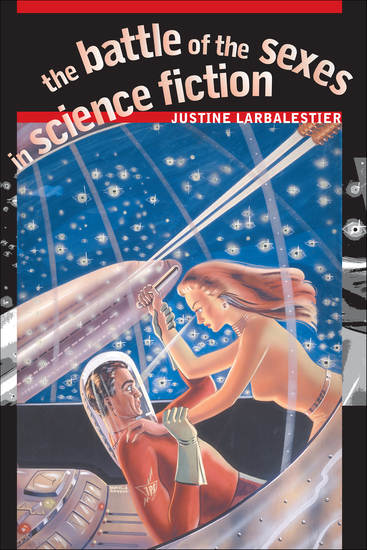
  • The Battle of the Sexes in Science Fiction - cover

    The Battle of the Sexes in...

    Justine Larbalestier

    • 0
    • 0
    • 0
    Runner-up for the Hugo Best Related Book Award (2003)The Battle of the Sexes in Science Fiction is a lively account of the role of women and feminism in the development of American science fiction during its formative years, the mid-20th century. Beginning in 1926, with the publication of the first issue of Amazing Stories, Justine Larbalestier examines science fiction's engagement with questions of femininity, masculinity, sex and sexuality. She traces the debates over the place of women and feminism in science fiction as it emerged in stories, letters and articles in science fiction magazines and fanzines. The book culminates in the story of James Tiptree, Jr. and the eponymous Award. Tiptree was a successful science fiction writer of the 1970s who was later discovered to be a woman. Tiptree's easy acceptance by the male-dominated publishing arena of the time proved that there was no necessary difference in the way men and women wrote, but that there was a real difference in the way they were read.
    Show book
  • The Eurasian Century - Hot Wars Cold Wars and the Making of the Modern Century - cover

    The Eurasian Century - Hot Wars...

    Hal Brands

    • 0
    • 0
    • 0
    We often think of the modern era as the age of American power. In reality, we're living in a long, violent Eurasian century. That giant, resource-rich landmass possesses the bulk of the global population, industrial might, and potential military power. Eurasia is a strategic prize without equal—which is why the world has been roiled, reshaped, and nearly destroyed by clashes over the supercontinent. 


    Since the early twentieth century, autocratic powers have aspired for dominance by seizing commanding positions in the world's strategic heartland. Offshore sea powers, namely the United Kingdom and America, have sought to make the world safe for democracy by keeping Eurasia in balance. America's rivalries with China, Russia, and Iran are the next round in this geopolitical game. If this new authoritarian axis succeeds in enacting a radically revised international order, America and other democracies will be vulnerable and insecure. 


    Hal Brands argues that a better understanding of Eurasia's strategic geography can illuminate the contours of rivalry and conflict in today's world. The Eurasian Century explains how revolutions in technology and warfare, and the rise of toxic ideologies of conquest, made Eurasia the center of twentieth-century geopolitics—with pressing implications for the struggles that will define the twenty-first.
    Show book
  • Great Southland Revival - Tracing the Spirit's Flame from Acts to Australia - cover

    Great Southland Revival -...

    Kurt Mahlburg, Warwick Marsh

    • 0
    • 0
    • 0
    Discover Australia’s Great Awakenings 
    Australia is a nation forged in the furnace of revival. Long forgotten, Australia’s Spirit-filled history comes to life in Great Southland Revival. Discover how the flame of Pentecost spread from the book of Acts all the way to the South Pacific. Journey on convict ships and city trams, to goldfields, outback communities and far-flung islands transformed by the gospel. Most of all, be inspired that God longs to revive the church, sweep multitudes into His kingdom, and renew our world once again. 
    “Excellent, well-researched and important.” 
    —John Anderson AO, Former Deputy Prime Minister of Australia 
    “Great Southland Revival is a wonderful read.” 
    —Ps Margaret Court AO MBE, Former World Tennis Number One 
    “This book will inform, inspire and challenge.” 
    —Karl Faase, CEO, Olive Tree Media
    Show book
  • Volga Blues - A Journey into the Heart of Russia - cover

    Volga Blues - A Journey into the...

    Marzio G. Mian

    • 0
    • 0
    • 0
    Winner of the Estense Prize 
      
    A risky undercover reporting trip along Russia’s great mother-river, the Volga, reveals the tortuous history and frightening current fantasies of a nation. 
      
    Since the invasion of Ukraine and ban on foreign reporters, Russia seems to have sunk into an even deeper shadow than in the darkest times of the Soviet Union. Only by presenting himself as an historian was Italian journalist Marzio G. Mian able to penetrate the Russian heartland, leading to his groundbreaking cover story for Harpers’ Magazine, “Behind the New Iron Curtain.” 
      
    In Volga Blues, Russian history and literature inform every step of Mian’s revealing and perilous journey along Russia’s most culturally significant river, the fulcrum of its history, “the mother.” Along with Alessandro Cosmelli, his photographer; Vlad, their translator and fixer; and Katya, Vlad‘s girlfriend, Mian manages to gather firsthand accounts from ordinary Russians. They discuss not only the impact of the war, Western sanctions, and their country’s isolation, but how Russian culture has changed as a result. Stalin is back in favor, Lenin has been downgraded as a “Europeanized intellectual.” Newly sophisticated local and seasonal cuisine is all the rage. People cite centuries-old grievances to explain their fear of Western invasion, as they claim a willingness to accept nuclear apocalypse to save Russian pride. Talking with contemporary Russian intellectuals, entrepreneurs, priests, widows, mercenaries, and pacifists, Mian discovers how little the West knows about Russia and Russians. Deeply distrustful of democracy, yearning for the ideological and spiritual purity of the Orthodox Church, betrayed by and fearful of the West, and reassured by the brutal, fragile, ancient dream of an imperial civilization, they make clear that the Cold War has not yet ended. 
      
    In visceral prose, Mian takes us across the floodplains where the Russian Orthodox faith first took root, where the Soviet empire asserted itself, and where the neo-imperial project of Vladimir Putin’s post-Soviet autocracy is currently being consolidated. The result is a harrowing, haunting vision of today’s great clash of civilizations—between Russia and the West—including a United States that at times seems uncannily similar. 
      
    "Volga Blues blends history, myth, and comedy with the paranoia of a nation in which Stalin seems to be rising from the dead, minus the communism but with brutality intact. Marzio Mian is Alexis de Tocqueville in what has once again become a land of the czars, a Joan Didion for the new authoritarianism's absurdity and sorrow."—Jeff Sharlet, New York Times bestselling author of The Undertow: Scenes from a Slow Civil War
    Show book