Join us on a literary world trip!
Add this book to bookshelf
Grey
Write a new comment Default profile 50px
Grey
Subscribe to read the full book or read the first pages for free!
All characters reduced
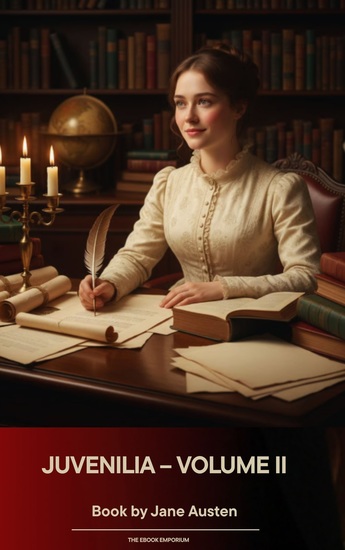
Juvenilia – Volume II - cover

Juvenilia – Volume II

Jane Austen

Publisher: The Ebook Emporium

  • 0
  • 0
  • 0

Summary

"Run mad as often as you choose; but do not faint!"

If Volume I was the spark, Juvenilia – Volume II is the fire. In this volume, a mid-teen Jane Austen takes aim at the "cult of sensibility" that dominated the novels of her day. The centerpiece, "Love and Freindship" (spelled intentionally with Austen's original flourish), is a brilliant epistolary parody featuring heroines who faint on every sofa they encounter and wander the countryside in a state of perpetual, melodramatic "distraction." This volume also features her iconic "History of England," where she gleefully abandons historical accuracy to defend Mary, Queen of Scots, and mock the "vile" Elizabeth I. It is a collection that proves Austen was a master of irony before she was even twenty.

The Masterpiece of Parody: Love and Freindship: Through a series of letters, Austen deconstructs the romantic tropes of the era. Her characters, Laura and Sophia, believe that "feeling" is more important than "common sense," leading to a series of absurd adventures involving stolen money, secret marriages, and dying of a "chill" caught while fainting in the dew.

The Bias of a Historian: In The History of England, Austen mocks the dry, "objective" historians of her time. Writing as a "partial, prejudiced, and ignorant historian," she proves that history is often just a matter of who you like and who you don't—a biting critique of how narratives are constructed that still feels modern today.

A Developing Genius: From the unfinished "Lesley Castle" to the sharp "Collection of Letters," this volume shows Austen experimenting with different voices and structures. You can see the DNA of Northanger Abbey and Sense and Sensibility being formed in these rowdy, rebellious pages.

Join the fun at the Austen family table. Purchase "Juvenilia – Volume II" today.
Available since: 01/12/2026.
Print length: 146 pages.
Other books that might interest you

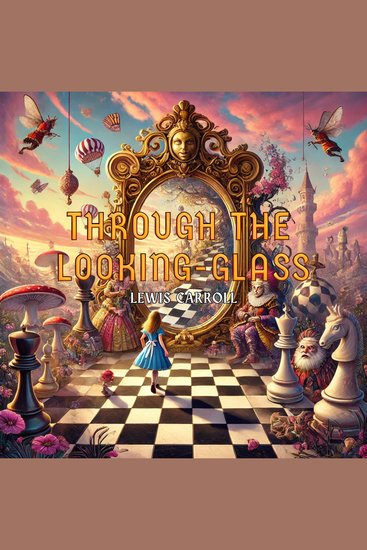
  • Through the Looking-Glass - cover

    Through the Looking-Glass

    Lewis Carroll

    • 0
    • 0
    • 0
    Step through the mirror into the whimsical world of Through the Looking-Glass, Lewis Carroll’s enchanting sequel to Alice’s Adventures in Wonderland. Join Alice as she embarks on a fantastical journey through a topsy-turvy land where logic is reversed, and everything is a delightful puzzle. From her encounters with the Red Queen and Tweedledee and Tweedledum to her meetings with peculiar creatures like Humpty Dumpty and the White Knight, Alice navigates a chessboard-like landscape filled with riddles, poetry, and wonder. 
    Carroll’s timeless classic brims with imagination, wit, and charm, captivating readers of all ages with its playful language and unforgettable characters. Through the Looking-Glass is a literary treasure that celebrates curiosity and the magic of dreams. 
    Narrated with warmth and whimsy, this audiobook brings Alice’s extraordinary journey to life, making it an enchanting experience for listeners everywhere. 
    Start listening to Through the Looking-Glass today and follow Alice into a world where anything is possible!
    Show book
  • Mansfield Park - cover

    Mansfield Park

    Jane Austen

    • 0
    • 0
    • 0
    Taken from the poverty of her parent's home in Portsmouth, Fanny Price is brought up with her rich cousins at Mansfield Park, acutely aware of her humble rank and with her cousin Edmund as her sole ally. During her uncle's absence in Antigua, the Crawfords arrive in the neighborhood bringing with them the glamour of London life and a reckless taste for flirtation. Mansfield Park is considered Jane Austen's first mature work, with its quiet subtle examination of social position and moral integrity. 
     
    Jane Austen was an English novelist known primarily for her six major novels, which interpreted, critiqued, and commented upon the British landed gentry at the end of the 18th century. Austen's plots often explore the dependence of women on marriage in the pursuit of favorable social standing and economic security.
    Show book
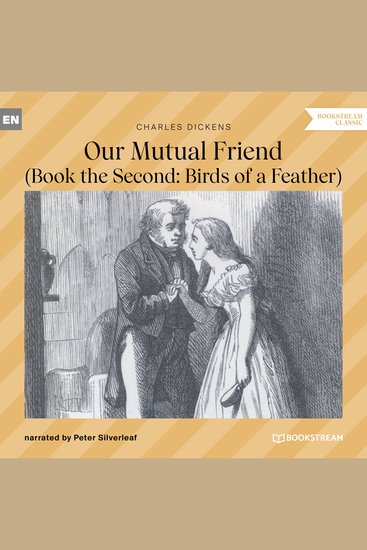
  • Our Mutual Friend - Book the Second: Birds of a Feather (Unabridged) - cover

    Our Mutual Friend - Book the...

    Charles Dickens

    • 0
    • 0
    • 0
    Charles Dickens was a writer and social critic who created some of the world's best-known fictional characters and is regarded as the greatest novelist of the Victorian era. His works enjoyed unprecedented popularity during his lifetime, and by the twentieth century critics and scholars had recognised him as a literary genius. His novels and short stories enjoy lasting popularity.
    BOOK THE SECOND: BIRDS OF A FEATHER: The school at which young Charley Hexam had first learned from a book the streets being, for pupils of his degree, the great Preparatory Establishment in which very much that is never unlearned is learned without and before book was a miserable loft in an unsavoury yard. Its atmosphere was oppressive and disagreeable; it was crowded, noisy, and confusing; half the pupils dropped asleep, or fell into a state of waking stupefaction; the other half kept them in either condition by maintaining a monotonous droning noise, as if they were performing, out of time and tune, on a ruder sort of bagpipe.
    Show book
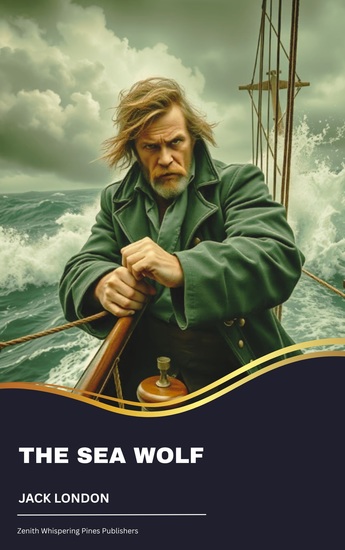
  • The Sea Wolf - cover

    The Sea Wolf

    Jack London

    • 0
    • 0
    • 0
    A shipwreck. A ruthless captain. A captive forced to confront the darkness within himself.
    When literary critic Humphrey Van Weyden is rescued at sea, he finds himself under the command of Wolf Larsen—a brilliant, brutal captain whose strength is matched only by his cruelty. Trapped aboard the sealing schooner Ghost, Humphrey must survive brutal storms, violent men, and Larsen's relentless psychological games. What follows is a gripping struggle between intellect and might, courage and fear, humanity and raw instinct.
    
    Praised as "one of the greatest sea adventures ever written," Jack London's masterpiece blends action, philosophy, and unforgettable character conflict. Its intensity, moral tension, and vivid maritime drama continue to captivate readers worldwide.
    
    If you crave powerful character clashes, ocean survival, and stories where the human spirit is tested to its limit, this classic will keep you on edge.
    
    Open the book—and meet the sea captain who becomes literature's most unforgettable force of nature.
    Show book
  • A Midsummer Night's Dream - cover

    A Midsummer Night's Dream

    Maria Krestovskaya

    • 0
    • 0
    • 0
    Maria Krestovskaya demonstrates her incredibly astute understanding of human mind as she gives us a unique glimpse into the mental turmoils associated with one boy's first love.
    Show book
  • Richard Bruce - Burglar - Former soldier and journalist that became a revered author and screenwriter - cover

    Richard Bruce - Burglar - Former...

    Edgar Wallace

    • 0
    • 0
    • 0
    Richard Horatio Edgar Wallace was born on the 1st April 1875 in Greenwich, London.  Leaving school at 12 because of truancy, by the age of fifteen he had experience; selling newspapers, as a worker in a rubber factory, as a shoe shop assistant, as a milk delivery boy and as a ship’s cook.  
     
    By 1894 he was engaged but broke it off to join the Infantry being posted to South Africa. He also changed his name to Edgar Wallace which he took from Lew Wallace, the author of Ben-Hur.  
     
    In Cape Town in 1898 he met Rudyard Kipling and was inspired to begin writing. His first collection of ballads, The Mission that Failed! was enough of a success that in 1899 he paid his way out of the armed forces in order to turn to writing full time.  
     
    By 1904 he had completed his first thriller, The Four Just Men. Since nobody would publish it he resorted to setting up his own publishing company which he called Tallis Press. 
      
    In 1911 his Congolese stories were published in a collection called Sanders of the River, which became a bestseller. He also started his own racing papers, Bibury’s and R. E. Walton’s Weekly, eventually buying his own racehorses and losing thousands gambling.  A life of exceptionally high income was also mirrored with exceptionally large spending and debts.  
     
    Wallace now began to take his career as a fiction writer more seriously, signing with Hodder and Stoughton in 1921. He was marketed as the ‘King of Thrillers’ and they gave him the trademark image of a trilby, a cigarette holder and a yellow Rolls Royce. He was truly prolific, capable not only of producing a 70,000 word novel in three days but of doing three novels in a row in such a manner. It was estimated that by 1928 one in four books being read was written by Wallace, for alongside his famous thrillers he wrote variously in other genres, including science fiction, non-fiction accounts of WWI which amounted to ten volumes and screen plays. Eventually he would reach the remarkable total of 170 novels, 18 stage plays and 957 short stories. 
     
    Wallace became chairman of the Press Club which to this day holds an annual Edgar Wallace Award, rewarding ‘excellence in writing’.  
     
    Diagnosed with diabetes his health deteriorated and he soon entered a coma and died of his condition and double pneumonia on the 7th of February 1932 in North Maple Drive, Beverly Hills. He was buried near his home in England at Chalklands, Bourne End, in Buckinghamshire.
    Show book