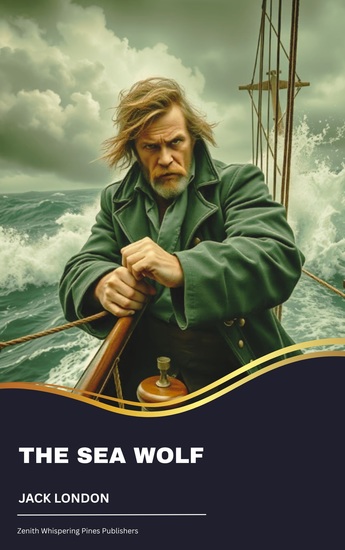
A shipwreck. A ruthless captain. A captive forced to confront the darkness within himself.
When literary critic Humphrey Van Weyden is rescued at sea, he finds himself under the command of Wolf Larsen—a brilliant, brutal captain whose strength is matched only by his cruelty. Trapped aboard the sealing schooner Ghost, Humphrey must survive brutal storms, violent men, and Larsen's relentless psychological games. What follows is a gripping struggle between intellect and might, courage and fear, humanity and raw instinct.
Praised as "one of the greatest sea adventures ever written," Jack London's masterpiece blends action, philosophy, and unforgettable character conflict. Its intensity, moral tension, and vivid maritime drama continue to captivate readers worldwide.
If you crave powerful character clashes, ocean survival, and stories where the human spirit is tested to its limit, this classic will keep you on edge.
Open the book—and meet the sea captain who becomes literature's most unforgettable force of nature.
Rose Macaulay was a fascinating and influential British writer, known for her wit and intellect. She wrote numerous novels, essays and biographies, and she was highly regarded for her versatility as a writer. Her works often explored themes of social change, women’s rights and the complexities of human relationships. She had a unique ability to capture the essence of her characters and the world they inhabited, making her a much-admired figure in the literary world.
First published in 1920, Potterism is a powerful satire about the Potter newspaper empire, and the ways in which journalists struggled during the First World War and the 1920s to balance the truth and what would sell. While Jane and Johnny Potter are at Oxford they learn to despise their father’s popular newspapers, though they still end up working for the family business. But Jane is greedy and wants more than society will let her have. Showcasing Macaulay’s wit and use of social commentary, Potterism is considered one of her most significant works.
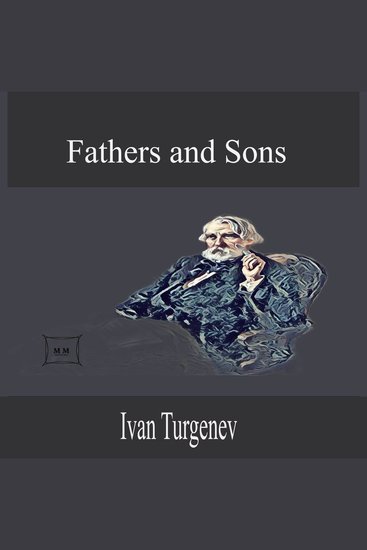
"Bazarov—a gifted, impatient, and caustic young man—has journeyed from school to the home of his friend Arkady Kirsanov. But soon Bazarov's outspoken rejection of authority and social conventions touches off quarrels, misunderstandings, and romantic entanglements that will utterly transform the Kirsanov household and reflect the changes taking place across all of nineteenth-century Russia.A timeless depiction of generational conflict during social upheaval, it vividly portrays the clash between the older Russian aristocracy and the youthful radicalism that foreshadowed the revolution to come—and offers modern-day readers much to reflect upon as they look around at their own tumultuous, ever changing world. Support us at https://manifoldmedia.net/donate
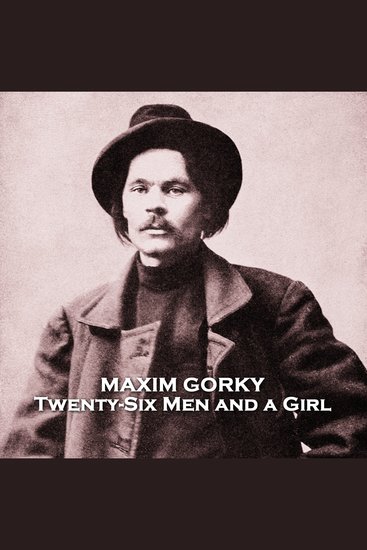
Alexei Maximovich Peshkov was born on 28th March 1868, in Nizhny Novgorod, Russia.
Better known as Maxim Gorky he was orphaned at 11 and ran away from home at 12. At 19 he had already attempted suicide and thereafter travelled, by foot, across the Russian Empire for 5 years.
His first book ‘Essays & Stories’ in 1898 was a sensation and so began a long career as an author of short stories, novels and plays. Gorky saw writing as a moral and political act that would help to change the unjust world around him. He was an ardent early advocate of the emerging Marxist movement and publicly opposed the Tsarist regime leading several times to his arrest.
In 1904 he began his own theatre but the censor banned every play and Gorky was forced to abandon the project.
But Gorky was a financially successful author, editor, and playwright and gave monies to political parties as well as for civil rights and social reform. The brutal shooting of workers, which set in motion the Revolution of 1905, pushed Gorky more decisively toward radical solutions.
In 1906 he went to the United States to raise funds for the Bolsheviks. Those experiences including a scandal over travelling with his lover and not his wife deepened his contempt for the ‘bourgeois soul.’
Gorky now moved to Capri in Italy, both for health reasons and to escape the increasingly repressive times in Russia.
An amnesty for the 300th anniversary of the Romanov dynasty saw him return to Russia in 1914. His politics remained close to the Bolshevik cause. But soon, after the 1918 revolution, his essays referred to Lenin as a tyrant for his senseless arrests and repression. He was soon appealing to the outside world for food aid after the catastrophic crop failure.
In October 1921 Gorky returned to Italy, now in Fascist hands, and settled in Sorrento until 1932. His health worsened with the onset of tuberculosis.
He wrote several successful books there but now decided to find an understanding with the communist regime. Stalin invited him home and his return was hailed as a major propaganda victory. He was decorated with the Order of Lenin, and a province, a park, and various streets re-named in his honour.
But he had his faults too. In 1933, Gorky co-edited a book on the White Sea-Baltic Canal and denied even a single prisoner died during its construction, but thousands had. As well, knowing that some Nazis were homosexual, a phrase was attributed to him that said ‘exterminate all homosexuals and fascism will vanish’. Although he was himself was quoting another he was decidedly homophobic.
With the increase of Stalinist repression in 1935 Gorky was placed under unannounced house arrest.
Maxim Gorky died on the 18th June 1936 from pneumonia. He was 68.
Stalin and Molotov were among those who carried Gorky's urn of ashes at his funeral.
Considered a literary classic, "Great Expectation" follows the life of orphan Pip, who rises from humble beginnings to become a gentleman with 'great expectations' from a mysterious benefactor who he believes is Miss Havisham. The story explores Pip's developing relationship with the beautiful yet cold Estella, whom he loves but who seems unable to return his affection for some reason.
Pip is deeply influenced by his experiences, particularly in his encounters with an escaped convict, Magwitch, and the eccentric Miss Havisham, leading to a journey of moral development as he confronts issues of social class, unrequited love, and false expectation.
"Dead Body" is one of the stories by Anton Chekhov, a classic of world literature. The story is about two men serving and protecting a dead man. This story is based on an incident that happened to the author of the story in Zvenigorod.
"A Study in Scarlet is an 1887 detective novel by British writer Arthur Conan Doyle. The story marks the first appearance of Sherlock Holmes and Dr. Watson, who would become the most famous detective duo in literature1. The book's title derives from a speech given by Holmes, a consulting detective, to his friend and chronicler Watson on the nature of his work, in which he describes the story's murder investigation as his "study in scarlet": ""There's the scarlet thread of murder running through the colourless skein of life, and our duty is to unravel it, and isolate it, and expose every inch of it.""1 The novel begins with Dr. John Watson returning to London after serving in the Second Anglo-Afghan War. He seeks a place to live and is introduced to Sherlock Holmes, who is looking for someone to share the rent at 221B Baker Street. Watson moves in, and after witnessing Holmes's deductive skills, becomes his close companion. A telegram requesting consultation on a murder case leads them to an abandoned house on Brixton Road. The victim is Enoch Drebber of Cleveland, Ohio, and the investigation reveals a mysterious message written in red: "RACHE" (German for "revenge"). Holmes deduces that the victim died from poison and provides a description of the murderer. Thus begins their first adventure together"
Ihr Account wird momentan auf einem anderen Gerät benutzt.
Es ist bereits eine Sitzung auf einem anderen Gerät geöffnet.
Abmelden
Erneut verbinden
Ihr Account wird momentan auf einem anderen Gerät benutzt.
Um darauf zugreifen zu können, müssen die Berechtigungen und obligatorischen Richtlinien (markiert mit *) überprüft und akzeptiert werden.
Wenn Sie Hilfe oder weitere Informationen benötigen, schreiben Sie an support@24symbols.com
Akzeptieren
Ihr Account wird momentan auf einem anderen Gerät benutzt.
OK
Bestätigungs-E-Mail noch einmal schicken
Ihr Account wird momentan auf einem anderen Gerät benutzt.
Wir haben versucht, Ihr Abo abzubuchen, aber es ist uns nicht gelungen. Das teilt uns Ihre Bank/Karte mit:
Wenn Sie weiterlesen möchten, müssen Sie sich möglicherweise an Ihre Bank wenden oder Ihre Zahlungsinformationen hier ändern:
Ich möchte meine Karte aktualisieren!
Haben Sie Fragen? Schreiben Sie uns an support@24symbols.com und wir werden Ihnen weiterhelfen.
Cookies helfen uns bei der Bereitstellung unserer Dienste. Durch die Nutzung unserer Dienste erklären Sie sich damit einverstanden, dass wir Cookies setzen.Mehr erfahren