Join us on a literary world trip!
Add this book to bookshelf
Grey
Write a new comment Default profile 50px
Grey
Subscribe to read the full book or read the first pages for free!
All characters reduced
Ulysses - cover

Ulysses

James Joyce

Publisher: Open Road Media

  • 0
  • 5
  • 2

Summary

This iconic work of experimental modernism “comes nearer to being the perfect revelation of a personality than any book in existence” (The New York Times).   Taking place on June 16, 1904, Ulysses follows the itinerant journeys of Leopold Bloom and Stephen Dedalus as they make their way through an ordinary day in Dublin. With stream-of-conscious narration, Joyce weaves a sprawling yet incisive portrait of his characters, the nature of desire, and Dublin itself.   First published in Paris in 1922, Joyce’s masterwork was once banned for obscenity in the United States and Britain. Hailed as a work of genius by Ezra Pound, Ernest Hemingway, and many others, Ulysses remains one of the most significant works in English literature.
Available since: 03/01/2022.
Print length: 1531 pages.

Other books that might interest you

  • Heart of Darkness - cover

    Heart of Darkness

    Joseph Conrad

    • 0
    • 0
    • 0
    Heart of Darkness is Joseph Conrad's haunting and profoundly influential novella, a powerful exploration of imperialism, moral ambiguity, and the darkness that lies within the human soul. Framed as a seafaring tale yet unfolding as a psychological journey, the novel remains one of the most enduring works of modern literature.
    
    The story follows Charles Marlow, a seasoned sailor who recounts his voyage up the Congo River while working for a Belgian trading company. Tasked with transporting supplies and eventually meeting the enigmatic agent Kurtz, Marlow travels deeper into the African interior, where the trappings of European "civilization" gradually dissolve. As the jungle closes in, so too does a sense of unease, revealing the brutal realities of colonial exploitation and unchecked power.
    
    Kurtz, once celebrated as a man of exceptional promise and ideals, becomes the embodiment of moral collapse. His descent into tyranny and madness exposes the hypocrisy of imperial ambitions and challenges the belief that progress and enlightenment accompany empire. Through Marlow's reflections, Conrad interrogates the fragile boundaries between civilization and savagery, reason and obsession.
    
    Written in Conrad's dense, evocative prose, Heart of Darkness is as much an inward journey as a physical one. The novella confronts readers with unsettling questions about human nature, greed, and responsibility, suggesting that the true "darkness" resides not in distant lands but within the hearts of men themselves.
    
    Provocative, unsettling, and timeless, Heart of Darkness continues to inspire debate and interpretation, influencing countless writers, filmmakers, and thinkers. It is an essential work for readers seeking a profound meditation on power, conscience, and the complexities of the modern world.
    Show book

  • The Doctor's Sweetheart - cover

    The Doctor's Sweetheart

    Lucy Maud Montgomery

    • 0
    • 0
    • 0
    Lucy Maud Montgomery (November 30, 1874 – April 24, 1942), published as L. M. Montgomery, was a Canadian author best known for a series of novels beginning in 1908 with Anne of Green Gables. The book was an immediate success. The title character, orphan Anne Shirley, made Montgomery famous in her lifetime and gave her an international following.
    The Doctor's Sweetheart: Just because I am an old woman outwardly it doesn't follow that I am one inwardly. Hearts don't grow old—or shouldn't. Mine hasn't, I am thankful to say. It bounded like a girl's with delight when I saw Doctor John and Marcella Barry drive past this afternoon.
    Show book
  • The Looking-Glass - cover

    The Looking-Glass

    Anton Chekhov

    • 0
    • 0
    • 0
    "The Looking Glass" is a short story by Anton Chekhov about a young woman named Nellie who is sitting in her room and staring into a mirror. Nellie is dreamy and lost in thoughts of her future and the man she loves. As she stares into the mirror, she sees the reflection of her future husband and begins to imagine her life with him. Suddenly, Nellie's dream is interrupted by a crisis. Her husband is ill and Nellie rushes to the doctor's house for help. However, the doctor is exhausted from treating patients with typhus and is unable to help Nellie's husband. Despite Nellie's pleas, the doctor refuses to see him, leaving Nellie in despair. The story ends with Nellie left to deal with the situation on her own, questioning the reality of her dreams and the future she had envisioned.
    Show book
  • Waltz Through Eternity - cover

    Waltz Through Eternity

    Margaret Teegarden

    • 0
    • 0
    • 0
    Sit back and relax. Let your mind slip right into the characters of the pages that follow. When you completely drift into the lives of the characters you'll experience frustration, anger, hurt and despair and soon you'll feel pain and agony that lasts for all eternity. This type of suffering can only be relieved by truth and everlasting love.
    Show book
  • Knulp - cover

    Knulp

    Herman Hesse

    • 0
    • 0
    • 0
    Wandering from town to town, Knulp is the eternal vagabond who just does not want to settle down. Even in an aimless life, he realises, he has some purpose... 
    Knulp was Hesse's most popular book when it first came out. It remains one of his classic works: evocative, subtle and moving.
    Show book
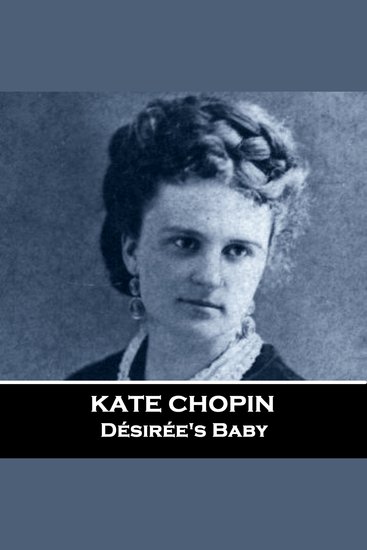
  • Désirée's Baby - From their pens to your ears genius in every story - cover

    Désirée's Baby - From their pens...

    Kate Chopin

    • 0
    • 0
    • 0
    Katherine O'Flaherty was born on the 8th February 1850 in St Louis, Missouri to parents of French and Irish descent. 
    At age 5, she was sent to the Sacred Heart Academy and, apart from a 2 year period at home when her father died, remained there until graduating in 1868.  Whilst there she began writing and became an avid reader of almost anything that crossed her path.   
    Kate married Oscar Chopin in 1870 and the couple moved to New Orleans, and later to the rural setting of Cloutierville, Louisiana to raise their 6 children.  
    In 1882 her husband died leaving her in a deep trench of debt.  Despite her best efforts to turn the businesses around they were sold, and she moved the family back to St Louis and the financial help of her mother.  Sadly, her mother died within the year.  Kate, now struggling with depression, pushed herself to write and gained a local reputation as a writer of short stories that captured the local color and vibrancy of her surroundings.  
    By the early 1890’s her short stories were published nationally.  With this widespread audience also came negative reviews, controversy, and cries of immorality as themes such as interracial relationships, the rights of women and other burning issues of the day were written about. 
    Despite the criticism, which unnerved her, she continued to write though in the main her works, around 100 short stories and two novels, were not attributed with any literary worth. 
    Kate Chopin died from a brain haemorrhage in St Louis Missouri on the 22nd of August 1904.  She was 54. 
    For much of the 20th Century her work was forgotten and out of print.  It was only in early 1970’s, with the rise of feminism and the call for a more just society that she was given the status her works had long described and shone a literary light at.  She is now safely revered as one of America’s great authors.
    Show book