Join us on a literary world trip!
Add this book to bookshelf
Grey
Write a new comment Default profile 50px
Grey
Subscribe to read the full book or read the first pages for free!
All characters reduced
The Scarlet Plague - A Post-Apocalyptic Classic of Survival Memory and the Fall of Civilization - cover

The Scarlet Plague - A Post-Apocalyptic Classic of Survival Memory and the Fall of Civilization

Jack London, Zenith Maple Leaf Press

Publisher: Zenith Maple Leaf Press

  • 0
  • 0
  • 0

Summary

A world once vibrant, now reduced to ashes—and one man remembers it all.

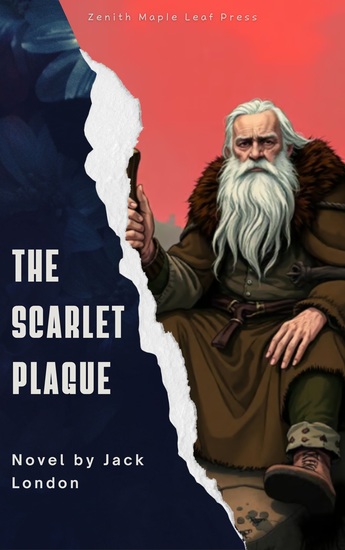
In the year 2073, the earth is quiet. Civilization has crumbled, cities are ruins, and the few survivors live scattered and primitive. James Howard Smith, a former professor, is one of the last men who remembers the golden age before the Scarlet Plague—a devastating pandemic that wiped out nearly all of humanity in 2013. As he recounts his memories to his grandsons, a haunting tale of societal collapse, human fragility, and the unstoppable force of nature unfolds.

First published in 1912, The Scarlet Plague is Jack London's visionary foray into science fiction and dystopian literature. Written decades before modern post-apocalyptic fiction took shape, it eerily anticipates global pandemics and their lasting impact on humanity. A chilling yet thought-provoking masterpiece, it continues to resonate with readers over a century later.

"One of the earliest and most haunting depictions of a global pandemic in fiction."
– The Guardian

"Jack London's prophetic vision remains as urgent as it is unforgettable."
– The New York Times

✅ Why Readers Love It:

🌍 One of the first pandemic-based dystopian novels

🕰 A gripping blend of survival tale and reflective memoir

📚 Themes of societal fragility, memory, and resilience

🎯 Click 'Buy Now' to journey into Jack London's chilling vision of a world forever changed by plague.
Available since: 08/14/2025.
Print length: 91 pages.

Other books that might interest you

  • Art and the Handicraftman (Unabridged) - cover

    Art and the Handicraftman...

    Oscar Wilde

    • 0
    • 0
    • 0
    Oscar Wilde (16 October 1854 - 30 November 1900) was an Irish poet and playwright. After writing in different forms throughout the 1880s, he became one of the most popular playwrights in London in the early 1890s.
    ART AND THE HANDICRAFTSMAN: The fragments of which this lecture is composed are taken entirely from the original manuscripts which have but recently been discovered. It is not certain that they all belong to the same lecture, nor that all were written at the same period. Some portions were written in Philadelphia in 1882.
    Show book
  • The Virgin of the Sun - cover

    The Virgin of the Sun

    H. Rider Haggard

    • 1
    • 2
    • 0
    In this swashbuckling tale of medieval adventure, an English fisherman lost at sea finds romance, intrigue, and war among the peoples of Peru.While exploring the jumble of curiosities at the home of an eccentric antiquarian, an editor discovers a collection of letters dating back to the era of King Richard II. These letters recount the incredible life story of one Hubert of Hastings, a fisherman turned London goldsmith whose turbulent fortunes brought him to a strange new land that would become his home. Shortly after a whirlwind wedding, Hubert finds himself both widowed and framed for murder. Together with his old friend Kari, he escapes by ship, only to be storm-tossed across the Atlantic. Undertaking a voyage to Kari’s homeland along the Pacific coast, they hope to finally find peace. Instead they find a brewing war between the Chancas and the Incas, and Hubert finds an unattainable love that could change the course of history.
    Show book
  • Star The (Unabridged) - cover

    Star The (Unabridged)

    H. G. Wells

    • 0
    • 0
    • 0
    "The Star" is an 1897 apocalyptic short story by H.G. Wells. In January (about 1900, presumably), the people of Earth awaken to the news that a strange luminous object has erupted, into the Solar System, after disturbing the normal orbit of the planet Neptune. The object is a celestial body whose luminosity is distinguishable on the sky about the constellation of Leo.
    Show book
  • Poems in Prose (Unabridged) - cover

    Poems in Prose (Unabridged)

    Oscar Wilde

    • 0
    • 0
    • 0
    Oscar Wilde (16 October 1854 - 30 November 1900) was an Irish poet and playwright. After writing in different forms throughout the 1880s, he became one of the most popular playwrights in London in the early 1890s.
    POEMS IN PROSE: One evening there came into his soul the desire to fashion an image of The Pleasure that abideth for a Moment. And he went forth into the world to look for bronze. For he could think only in bronze.
    Show book
  • Winnie-the-Pooh - cover

    Winnie-the-Pooh

    A. A. Milne

    • 0
    • 0
    • 0
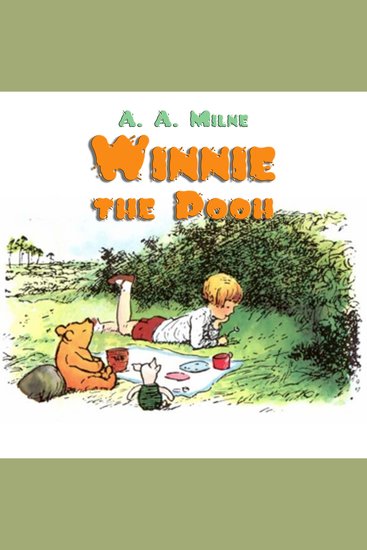
    Winnie-the-Pooh (also known as Edward Bear, Pooh Bear or simply Pooh) is a fictional anthropomorphic teddy bear created by English author A. A. Milne and English illustrator E. H. Shepard. Winnie-the-Pooh first appeared by name in a children's story commissioned by London's Evening News for Christmas Eve 1925. The character is inspired by a stuffed toy that Milne had bought for his son Christopher Robin in Harrods department store, and a bear they had viewed at London Zoo. 
    The first collection of stories about the character is the book Winnie-the-Pooh (1926), and this was followed by The House at Pooh Corner (1928). Milne also included a poem about the bear in the children's verse book When We Were Very Young (1924) and many more in Now We Are Six (1927). All four volumes were illustrated by E. H. Shepard. The stories are set in Hundred Acre Wood, which was inspired by Five Hundred Acre Wood in Ashdown Forest in East Sussex—situated 30 miles (48 km) south of London—where the Londoner Milne's country home was located. 
    A. A. Milne named the character Winnie-the-Pooh after a teddy bear owned by his son, Christopher Robin Milne, on whom the character Christopher Robin was based. 
    CREATED: 
    Narrated by Nick Donovan 
    Author: A. A. Milne 
    Date of original publication: 1925 
    Genre: children's story 
    Language : English 
    Version : unabridged, full/complete 
    Without subtitles
    Show book
  • The Vicar of Wakefield - cover

    The Vicar of Wakefield

    Oliver Goldsmith

    • 0
    • 0
    • 0
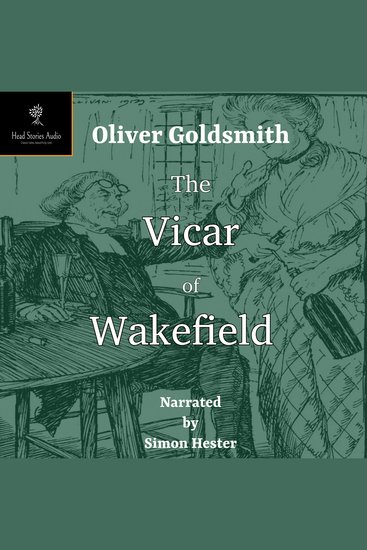
    The Vicar of Wakefield, a novel by Oliver Goldsmith, first published in 1766, has long been regarded as a literary treasure of 18th-century English fiction. Though often simple in plot and unassuming in its narrative style, the novel reveals the depth of Goldsmith's genius and the charm of his storytelling, which has captivated readers across generations. 
    The novel recounts the trials and tribulations of Dr. Charles Primrose, the vicar of the title, and his family. A man of virtuous character, the vicar's steadfast belief in providence and moral integrity is tested through a series of misfortunes—financial ruin, deception, and personal calamity. Yet, it is through these trials that the narrative explores themes of resilience, forgiveness, and the essential goodness of the human spirit. Goldsmith’s portrayal of the Primrose family, especially the vicar’s unwavering faith, serves as both a reflection of the virtues of 18th-century morality and an enduring commentary on human dignity.
    Show book