Join us on a literary world trip!
Add this book to bookshelf
Grey
Write a new comment Default profile 50px
Grey
Subscribe to read the full book or read the first pages for free!
All characters reduced
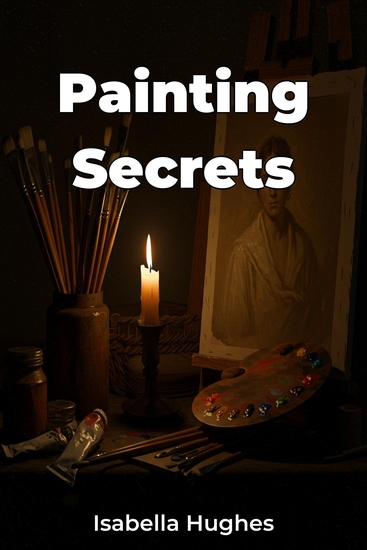
Painting Secrets - cover

Painting Secrets

Isabella Hughes

Translator A AI

Publisher: Publifye

  • 0
  • 0
  • 0

Summary

"Painting Secrets" unveils the hidden world within historical paintings, transforming how we view art history. It explores not only the aesthetic beauty of iconic artworks but also the ingenious artistic techniques and coded symbolism employed by masters from the Renaissance to the Neoclassical periods.

 
Readers will discover how artists used innovative methods and materials, like specific pigments that defined eras, and how practices such as x-ray analysis reveal layers beneath the surface, showing the evolution of a painting's composition.

 
The book examines how paintings function as visual documents, reflecting the cultural, religious, and political ideologies of their time. By dissecting famous works, "Painting Secrets" reveals how artists embedded hidden meanings and messages that continue to intrigue and inform our understanding of the past.

 
The journey starts with fundamental art concepts, progresses through case studies of renowned paintings, and culminates in modern techniques used to uncover artistic secrets, offering a fresh perspective on familiar masterpieces and their historical context.
Available since: 02/25/2025.
Print length: 58 pages.
Other books that might interest you

  • Up Jumped the Devil - The Real Life of Robert Johnson - cover

    Up Jumped the Devil - The Real...

    Anonymous

    • 0
    • 0
    • 0
    Robert Johnson is the subject of the most famous myth about the blues: he allegedly sold his soul at the crossroads in exchange for his incredible talent, and this deal led to his death at age twenty-seven. But the actual story of his life remains unknown save for a few inaccurate anecdotes. Up Jumped the Devil is the result of over fifty years of research. Gayle Dean Wardlow has been interviewing people who knew Robert Johnson since the early 1960s, and he was the person who discovered Johnson's death certificate in 1967. Bruce Conforth began his study of Johnson's life and music in 1970 and made it his mission to fill in what was still unknown about him. In this definitive biography, the two authors relied on every interview, resource, and document, most of it material no one has seen before. As a result, this book not only destroys every myth that ever surrounded Johnson, but also tells a human story of a real person. It is the first book about Johnson that documents his years in Memphis, details his trip to New York, uncovers where and when his wife Virginia died and the impact this had on him, fully portrays the other women Johnson was involved with, and tells exactly how and why he died and who gave him the poison that killed him. Up Jumped the Devil will astonish blues fans who thought they knew something about Johnson.
    Show book
  • Summary: Kasher in the Rye - The True Tale of a White Boy from Oakland Who Became a Drug Addict Criminal Mental Patient and Then Turned 16 By Moshe Kasher: Key Takeaways Summary & Analysis - cover

    Summary: Kasher in the Rye - The...

    Brooks Bryant

    • 0
    • 0
    • 0
    DISCLAIMER: THIS IS NOT THE OFFICIAL BOOK. 
    This is a summary & it does not accompany the official. 
    "Kasher in the Rye" by Moshe Kasher is a hilarious memoir of the life of rising comedian Moshe Kasher, who survived a tumultuous journey through addiction, psychoanalysis, and a chaotic childhood. From his early drug use at age 12 to stints in mental institutions and a move to Oakland initiated by his unconventional mother, Kasher's life reads like a mix of Augusten Burroughs and David Sedaris, with a strong Jewish twist. Despite the harrowing experiences, the book finds humor in the darkest moments, offering a brutally honest and laugh-out-loud funny perspective on a turbulent life.
    Show book
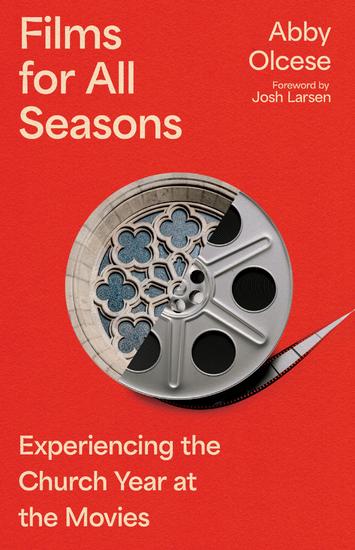
  • Films for All Seasons - Experiencing the Church Year at the Movies - cover

    Films for All Seasons -...

    Josh Larsen, Abby Olcese

    • 0
    • 0
    • 0
    The Spiritual Practice of Watching Movies
    What's your favorite Christmas movie? Easter movie? Pentecost movie? Casual viewers and movie buffs alike have favorite movies to watch at certain times of the year. But for film critic Abby Olcese, movies with spiritual themes aren't just limited to the holiday season. They're part of a deep human need to connect our favorite stories to the natural rhythms of our lives, and to let them shape and give meaning to our experience of the seasons all year long.
    The life of the church is also defined by stories, which we revisit through the pattern of the Christian year. In Films for All Seasons, Olcese invites us to reflect on the great themes of the church calendar through the lens of film. From superhero movies and Star Wars to classics and arthouse films, she chooses movies for each liturgical season and leads us through them with skill and infectious enthusiasm, exploring how each one can inform and deepen our appreciation of its corresponding season.
    Films for All Seasons is more than just a book about movies—it's a model for how we engage with art as Christians.
    Includes:
    
    - Explorations of popular, classic, and arthouse films and how they relate to liturgical seasons
    - Reflections on the great themes of the church calendar
    - Discussion questions after each movie designed to facilitate discussion with small groups and friends
    Show book
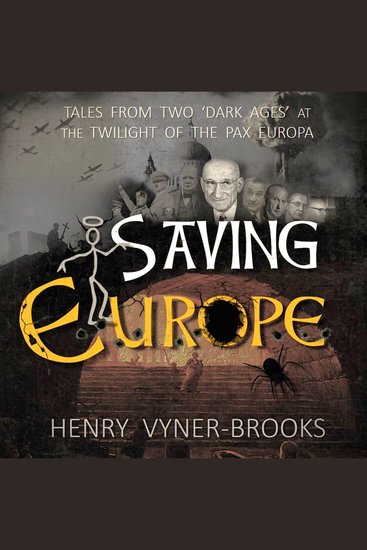
  • SAVING EUROPE - A Tale of Two Dark Ages at the Twilight of the Pax Europa - cover

    SAVING EUROPE - A Tale of Two...

    Henry Vyner-Brooks

    • 0
    • 0
    • 0
    SAVING EUROPE ​is a SPLIT BIOGRAPHY OF TWO UNSUNG HEROES IN TWO DARK AGES​. At either end of European history, the decisive leadership showed by (6th-century Irish monk) Columbanus, and (20th-century French statesman) Robert Schuman, helped tip the balance against the forces of cultural anarchy in their day. The author travels to 12 countries in search of their lives and legacies - which serve as both inspiration and warning.​ 
    ​This book also explores the​ ARRIVAL, SURVIVAL, VICTORY & ATROPHY OF EUROPEAN CIVILISATION​. From Abraham to Athens; Byzantium to Brussels, this book explores the triumphs and tragedies of a unique civilisation. It highlights the impact of Christianity on Europe's cultural formation and the Christian leadership which spurred movements for political integration.​ 
    ​This book delivers a​ STARK ANALYSIS & TIMELY CHALLENGE TO MODERN EUROPEANS. Reissuing the warning of the war-time leaders and Christian intellectuals, this book challenges both religious and secular readers to rediscover the missing soul of Europe, before it is too late.
    Show book
  • Minority Report - The Ultimate Trivia Collection - From The Movie Directed By Steven Spielberg - cover

    Minority Report - The Ultimate...

    Film Trivia Metaverse

    • 0
    • 0
    • 0
    MINORITY REPORT 
    THE ULTIMATE TRIVIA COLLECTION 
      
    FROM THE MOVIE DIRECTED BY STEVEN SPIELBERG 
      
    CREATED BY FILM TRIVIA METAVERSE 
      
    ABOUT THE FILM 
    Minority Report is a 2002 science fiction thriller directed by Steven Spielberg, set in a dystopian future where a specialized police unit, PreCrime, prevents crimes before they occur. The system relies on three psychics, called "Precogs," who foresee murders, allowing the police to apprehend perpetrators before they commit the crime. The story follows John Anderton, the head of PreCrime, who is accused of a future murder and becomes a fugitive. The film explores themes of free will versus determinism, the morality of preemptive justice, and the ethical implications of surveillance and control in a highly technological society. 
      
    TRIVIA SAMPLES: 
      
    “The "Precogs" were named after famous mystery writers: Dashiell Hammett, Sir Arthur Conan Doyle, and Agatha Christie.” 
      
    “For the scene where Anderton holds his breath in the bathtub, Steven Spielberg planned to create the rising air bubble using CGI, but Tom Cruise took the time to learn how to do it himself.” 
      
    “Tom Cruise and Steven Spielberg both agreed to waive their usual salary to help keep the film's budget under $100 million. Instead, they agreed to take 15% of the film's gross.” 
      
    “Initially, Steven Spielberg wanted Greta (Dr. Eddie’s assistant) to sing a song by ABBA, but Peter Stormare suggested something more absurd: the Swedish children's song "Små grodorna" ("The Small Frogs"), traditionally sung during Midsummer Eve parties in Sweden.”
    Show book
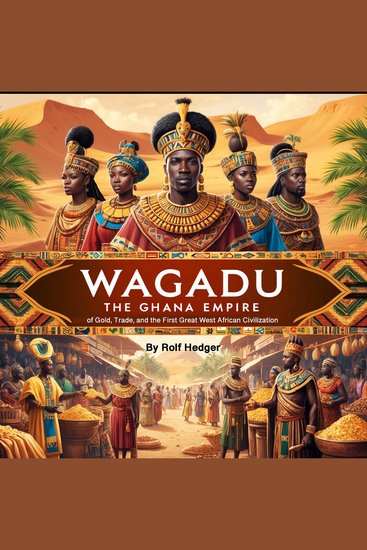
  • Wagadu - The Ghana Empire of Gold Trade and the First Great West African Civilization - cover

    Wagadu - The Ghana Empire of...

    Rolf Hedger

    • 0
    • 0
    • 0
    The origins of Wagadu, known as the Ghana Empire, are deeply rooted in oral traditions, mythology, and historical developments that shaped one of West Africa’s first great civilizations. The Soninke people, the founders of Wagadu, established the empire in a region rich in natural resources, particularly gold. Over centuries, the empire grew into a powerful trading state, controlling key trans-Saharan trade routes and influencing the political and economic landscape of West Africa. 
    According to the oral traditions of the Soninke people, the empire’s foundation is linked to the legend of Dinga Cisse, a mythical leader who is said to have guided his people to the lands of Wagadu. Stories passed down through griots, the custodians of history, describe how Dinga Cisse and his descendants established a ruling dynasty that oversaw the rise of Ghana. These traditions, while not verifiable by modern historical methods, offer insights into the cultural identity and historical memory of the Soninke people. 
    Geographically, the Ghana Empire emerged in what is now southeastern Mauritania and western Mali, an area characterized by vast savannas, river systems, and gold-bearing regions. The Senegal and Niger rivers played a crucial role in sustaining agriculture and facilitating trade. The region's climate, while challenging due to periods of drought, also provided fertile lands that supported farming, livestock, and settlement growth. The natural wealth of Wagadu, particularly its gold mines in Bambuk and Bure, laid the foundation for the empire’s economic dominance.
    Show book