
Join us on a literary world trip!
Add this book to bookshelf
Grey
Write a new comment Default profile 50px
Grey
Subscribe to read the full book or read the first pages for free!
All characters reduced
THE THREE CRITIQUES: The Critique of Pure Reason The Critique of Practical Reason & The Critique of Judgment - Foundational Insights into Ethics and Aesthetics - cover

THE THREE CRITIQUES: The Critique of Pure Reason The Critique of Practical Reason & The Critique of Judgment - Foundational Insights into Ethics and Aesthetics

Immanuel Kant

Translator J. H. Bernard, T. K. Abbott, J. M. D. Meiklejohn

Publisher: Good Press

  • 0
  • 0
  • 0

Summary

In "The Three Critiques: The Critique of Pure Reason, The Critique of Practical Reason, and The Critique of Judgment," Immanuel Kant presents a groundbreaking exploration of epistemology, ethics, and aesthetics, fundamentally reshaping Western philosophy. Each critique acts as a pillar in Kant's critical philosophy, addressing the limits of human understanding, the nature of moral judgment, and the conditions for aesthetic appreciation. The texts are marked by a rigorous analytic style, replete with intricate arguments and foundational concepts such as the categorical imperative and the aesthetic sublime that anchor Kant's transcendental idealism within both metaphysics and human experience. Immanuel Kant (1724-1804), a pivotal figure in Enlightenment thought, was profoundly influenced by the philosophical debates of his time, especially regarding the nature of knowledge and morality. His engagement with rationalism and empiricism led to his distinct method of critical examination, seeking to resolve the tensions between subjective experience and objective reality. The challenges posed by skepticism and dogmatism drove Kant to develop a comprehensive framework that articulated the relationship between reason, will, and the aesthetic experience. Scholars and readers alike will find "The Three Critiques" indispensable for understanding modern philosophy's emergence. With clarity and depth, Kant'Äôs works not only provide a robust foundation for ethical and aesthetic inquiry but also challenge readers to contemplate their own cognitive capacities and moral responsibilities. This collection is essential for anyone seeking insight into the philosophical currents that define contemporary thought.
Available since: 01/08/2024.
Print length: 1050 pages.

Other books that might interest you

  • Warriors Hate War - Strategy politicization successes and failures of the American military - cover

    Warriors Hate War - Strategy...

    Glenn Sturm

    • 0
    • 0
    • 0
    Why, after over 100 Sigma war games showed us that we could not win, did we still go into Vietnam? Why, if one military doctrine irrefutably indicates that it can succeed time after time, is it not adopted in every military action? Why do warriors hate war? Because their bosses don't understand it. What's the mission? How do we win? What is winning? Bush said that winning was when the major combat operations were ceasing. Maybe so, but knowing how to win a war while striving not to be in one makes a real warrior. Warriors Hate War-Strategy, politicization, successes, and failures of the American military by Glenn Sturm explores the military actions since WW11 through lenses that reveal alternate outcomes and pose frameworks that could inform decision-making for the future of war and, more importantly, peace. 
    About the Author 
    Glenn W Sturm earned a Juris Doctor with honors from the Levin College of Law at the University of Florida, where he was named to the Order of the Coif. Sturm served in the U.S. military as a commissioned officer on active duty and in the reserves for over 30 years. In his other lives, he is a best-selling author, photographic artist, and philanthropist, and he strives every day to make the lives of others better while continuing to navigate his way through over a decade and a half of life with incurable cancer.
    Show book
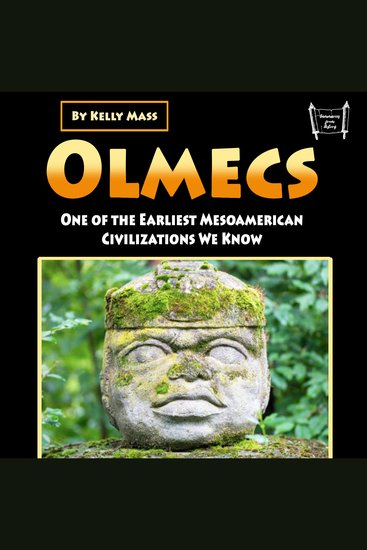
  • Olmecs - One of the Earliest Mesoamerican Civilizations We Know - cover

    Olmecs - One of the Earliest...

    Kelly Mass

    • 0
    • 0
    • 0
    The Olmecs are often regarded as the first significant civilization in Mesoamerica, a region that includes parts of modern-day Mexico and Central America. They emerged in the tropical lowlands of what is now the Mexican states of Veracruz and Tabasco, following a gradual development in the Soconusco region. It is believed that the Olmecs were influenced by neighboring cultures, particularly the Mokaya and Mixe–Zoque tribes, who inhabited the areas around them. These early interactions may have played a role in shaping Olmec society, laying the foundation for their eventual rise as one of the most influential cultures in Mesoamerican history. 
    The Olmecs flourished during the formative period of Mesoamerican civilization, which lasted from approximately 1500 BCE to 400 BCE. The early phase of Olmec culture began around 1600 BCE, with the establishment of their first major center at San Lorenzo Tenochtitlán, located in the southeastern Veracruz region near the coast. While pre-Olmec cultures had been developing in the region since around 2500 BCE, it was by 1600 BCE that the Olmecs began to solidify their cultural and political dominance in the region. They are considered the earliest of the Mesoamerican civilizations, and their cultural achievements and innovations would influence many of the civilizations that followed, including the Maya, Zapotec, and Aztec.
    Show book
  • The African Wars - cover

    The African Wars

    Julius Caesar

    • 0
    • 0
    • 0
    Julius Caesar's African Wars were a series of military campaigns waged by the Roman general and statesman Julius Caesar between 58 and 50 BC in order to expand the Roman Republic's sphere of influence and gain control of the Mediterranean region. During this time, Caesar clashed with several prominent enemies such as King Juba I of Numidia, King Bocchus III of Mauretania, and the forces of Pharnaces II of Pontus. Read in English, unabridged.
    Show book
  • Plantagenets The: A Captivating Guide to the Rise and Fall of the House of Plantagenet - cover

    Plantagenets The: A Captivating...

    Captivating History

    • 0
    • 0
    • 0
    The Plantagenets: A Dynasty Built on Power and Betrayal 
    Do you want to dive into the gripping story of a royal family that changed a whole country? The Plantagenets ruled England with strength and cunning, and their story is filled with drama, battles, and family fights. If you love stories of kings, queens, and the fight for power, keep reading! 
    What You’ll Discover:How It All Began: Learn how the Plantagenets started as a small family and became rulers of England. What challenges did they face to gain power?The Lives of Kings and Queens: Meet rulers like King John, who was such a weak ruler that his people forced him to agree to the Magna Carta, and Richard the Lionheart, who fought bravely but met a tragic end. Also, discover the queens who had just as much power as the kings.Legendary Battles: Explore the famous Wars of the Roses, where family members fought against each other for the throne. See how these battles were about more than just winning—they were about survival.Secrets and Scandals: The Plantagenets didn’t just fight on the battlefield; they also had to deal with backstabbing and secret plots in their own courts. Find out how these hidden betrayals changed the course of history.Lasting Impact: The Plantagenets helped create important laws and systems that we still use today. They weren’t just fighters; they were builders of the future.The Fall of a Dynasty: What caused the end of this powerful family’s rule? See how the Plantagenets went from ruling England to losing it all. 
    Don’t miss out on this thrilling adventure through time. Scroll up and click the “add to cart” button to start your journey into the world of the Plantagenets!
    Show book
  • Universities on Fire - Higher Education in the Climate Crisis - cover

    Universities on Fire - Higher...

    Bryan Alexander

    • 0
    • 0
    • 0
    In 2019, intense fires in the San Francisco Bay Area closed universities and drove afflicted people to shelter at other campuses. At the same time, extraordinary fires ravaged eastern Australia. Several universities responded by promising material and research support to damaged businesses while also hosting refugees and emergency response teams in student residence halls. This was an echo of the devastation wreaked by Hurricane Katrina on Tulane University in 2005.In Universities on Fire, futurist Bryan Alexander explores higher education during an age of unfolding climate crisis. Powered by real-world examples and the latest research, Alexander assesses practical responses and strategies by surveying contemporary programs and academic climate research from around the world. He establishes a model of how academic institutions may respond and offers practical pathways forward for higher education. How will the two main purposes of education—teaching and research—change as the world heats up? Alexander positions colleges and universities in the broader social world, from town-gown relationships to connections between how campuses and civilization as a whole respond to this epochal threat.Current studies of climate change trace the likely implications across a range of domains, from agriculture to policy, urban design, technology, culture, and human psychology. However, few books have predicted or studied the effects of the climate crisis on colleges and universities. By connecting climate research to a deep, futures-informed analysis of academia, Universities on Fire explores how climate change will fundamentally reshape higher education.
    Show book
  • Little Universe - cover

    Little Universe

    Natalie Ann Holborow

    • 0
    • 0
    • 0
    The poems in Natalie Ann Holborow's third collection, Little Universe, are an exploration of tumultuous human emotions and nature's ever-present rhythms.
    
    Lives bustle within a busy hospital's walls, humming against the Gower landscape that stretches beyond its windows. The tiny worlds of a wide cast unfold as they deal with their own emergencies, losses, recoveries, hopes and histories.
    
    Medical students stride along the corridors in rubber shoes, scars running the lengths of their lives. A janitor is crying in the Gents, watching the flowers at the hospital entrance shrug themselves back into earth. The biblical Lilith offers knowledge from one woman to the other. And somewhere in the distance, a bunker dissolves into gold upon Pennard's shoulder, dusk folding to sleep on Rhossili.
    
    The characters in this book are all bound by the undying pulse of existence – yet their stories serve as a reminder that despite these stark contrasts, life persists.
    Show book