Join us on a literary world trip!
Add this book to bookshelf
Grey
Write a new comment Default profile 50px
Grey
Subscribe to read the full book or read the first pages for free!
All characters reduced
John the Baptist - A Play - cover

John the Baptist - A Play

Hermann Sudermann

Translator Beatrice Marshall

Publisher: DigiCat

  • 0
  • 0
  • 0

Summary

In 'John the Baptist,' Hermann Sudermann crafts a compelling narrative that intricately interweaves the biblical account of John the Baptist with profound philosophical inquiries into faith, identity, and societal values. The prose is lyrical yet poignant, reflecting a deep reverence for the themes of redemption and sacrifice. Sudermann's adept use of symbolism invites readers to explore the multifaceted dimensions of John's character, set against a richly detailed historical backdrop that mirrors the sociopolitical tensions of his time. This novel emerges within a literary context that spans both naturalism and expressionism, capturing the essence of human struggle within the divine narrative. Hermann Sudermann, an influential figure in German literature, was known for his vivid portrayals of psychological intricacies in human relationships. His personal experiences with religion and morality profoundly shaped his writing, as evidenced in this work. Sudermann, whose own background included a blend of cultural influences, sought to address the existential dilemmas of modern life through the lens of sacred figures, thereby reaffirming the timeless relevance of biblical stories in contemporary discourse. 'John the Baptist' is highly recommended for readers seeking a thought-provoking exploration of faith that resonates beyond its historical context. Sudermann's masterful storytelling and profound insights will appeal to those interested in the intersections of spirituality and humanity. This novel is not just a retelling; it is a deep, philosophical exploration that invites readers to reflect on their own beliefs and the nature of existence.
Available since: 09/15/2022.
Print length: 62 pages.
Other books that might interest you

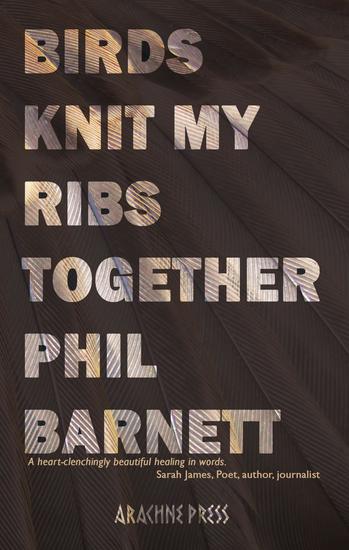
  • Birds Knit My Ribs Together - cover

    Birds Knit My Ribs Together

    Phil Barnett

    • 0
    • 0
    • 0
    what if / I actually – am – a bird / my cupped hands / opening to release me... Phil Barnett's relationship with birds is so close that his poetry blurs the distinctions between himself and the birds - a kind of ornimorphology where rather than giving the birds human characteristics, the reverse happens, and he imagines himself as a bird. Phil Barnett is a photographer, writer, musician, artist and naturalist, who has a passion for the birds that kept him company through a long hard illness. His photography and poetry have quite a following on social media, which is where we found him, on The Daily Haiku. His skill as a photographer leads to an acute visual sensibility, and his slow recovery moves from a tick sheet his mother had to fill in for him, to extraordinary poetry - full of wit and wonder and spectacular language.
    Show book
  • Accessioning - cover

    Accessioning

    Charlotte Wetton

    • 0
    • 0
    • 0
    Through poems about fossilised fruit seeds and the sofa where Emily Brontë died, Wetton questions how we curate the lives of those living and dead in a pamphlet about looking, processing, and memorialising. Whether considering preserved wedding-cakes, a non-existent art exhibition or a human scream, these poems speak to the impossibility of containment and question our ability to map and categorise.
    This is a pamphlet of poems about the stories that we tell ourselves, the memories that we construct, and the ways that we value and devalue people, animals and objects alike.
    Show book
  • Knife Sharpener - Selected Poems - cover

    Knife Sharpener - Selected Poems

    Sargon Boulus

    • 0
    • 0
    • 0
    Knife Sharpener – Selected Poems is a posthumous commemoration and celebration of Sargon Boulus, in a collection of poems, written between 1991 and 2007 that he translated himself, together with an essay, "Poetry and Memory", written a few months before he died in October 2007.
    With a Foreword by Adonis and an Introduction by Dublin poet and publisher Pat Boran, the volume includes nine pages of photographs and tributes from fellow poets and writers Saadi Youssef, Ounsi El-Hage, Amjad Nasser, Abbas Beydhoun, Abdo Wazen, Fadhil al-Azzawi, Kadhim Jihad Hassan, Khalid al-Maaly, and Elias Khoury, assembled and translated by fellow Iraqi poet Sinan Antoon, who described his death as leaving "a gaping wound in the heart of modern Arabic poetry".
    "Sargon seemed to feel also the even greater, historical weight of conflicts, tensions, misunderstandings and oppressions of the spirit, as if his poems came through his own time and language but from somewhere else." – Pat Boran
    Sargon Boulus was unusually influential among young Arab poets, who "found in him the father who refused to practise his patriarchy and a poet who always renewed himself in his rebellion against rhetoric . . ." Abdo Wazen
    Show book
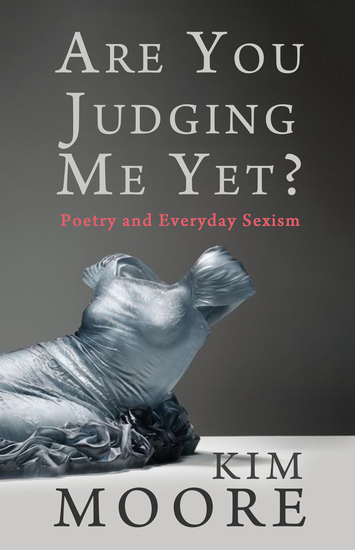
  • Are You Judging Me Yet? - Poetry and Everyday Sexism - cover

    Are You Judging Me Yet? - Poetry...

    Kim Moore

    • 0
    • 0
    • 0
    Five 'lyric essays' exploring the dynamics of performing poetry as a female poet – confronting the implications of being a female on public display, with the connotations of sexual objectification, in a context that traditionally disregards the body. Kim states "With the strides and gains made through the #MeToo movement, I believe the time is right for a book like this to make an impact. As a female poet, I know there is a need for such a book to examine the intersection between writing, performing, feminism and sexism. I wish this book had been written when I first started working as a freelance writer and I've had many conversations with other female poets who have also confirmed my thinking – that female poets are navigating these things regularly, and yet nobody is really writing or talking about them."
    The book draws on her experiences of writing and performing the poems in her second collection All the Men I Never Married. It is a balance of memoir, academic treatise and poetry, though the author's emphasis is on writing in a popular way and making the subject accessible to a wide audience. To achieve this her models have been Maggie Nelson's Bluets, Claudia Rankine's Citizen and Sarah Ahmed's Living a Feminist Life. 
    The book's subjects include heckling at poetry readings and other interactions; problems with the 'male gaze' and what the 'female gaze' might look like in poetry; 'guilty for being a man': how guilt can be useful if it can bring about change; how writing poetry about sexism can shed add meaning to the term; the objectification of men and women, and 'bad faith' arguments.
    Are You Judging Me Yet?, by Kim Moore, is a remarkable collection of essays and poetry that explore, as the tagline suggests, everyday sexism. – neverintimate
    '…Moore's work becomes an even more vital tool in the work being done to challenge everyday sexism. Reading her work is not only a window into her own experiences, but may also act as a means of education, and that's something we all need to see more of.' – Wales Arts Review
    Show book
  • Ever Dark: The Vampire King's Promise - Volume 4 A M M Vampire Romance - cover

    Ever Dark: The Vampire King's...

    X. Aratare

    • 0
    • 0
    • 0
    While Julian and Christian have been struggling to understand what their new Vampire lives will be going forward, they haven’t counted on their prior human lives being much more complicated. But that’s exactly the case as Christian’s parents come to dinner at Ravenscroft Manor. 
    But the boys are not the only ones finding out that their pasts are going to interfere with their presents. Balthazar is struggling to accept that he is the Immortal Eyros reborn. But he may not be the only other Immortal that is back… or maybe never left. 
    This is a FULL CAST audio drama with 12 actors, and all 9 books are complete.
    Show book
  • Silas Marner - cover

    Silas Marner

    George Eliot

    • 0
    • 0
    • 0
    In the town of Reveloe, there lives a man called Silas Marner. A strange little man, a weaver by trade, and seen with suspicion by the other villagers. He's been beset by bad luck all his life. Cast out of his simple religious life in Lantern Yard, and then returns home to find his money stolen. But then, on new years day, his luck changes when he finds a small child sitting before his hearth...  
    Published in 1861, this was the third novel by George Elliot, and delves into the topics of religion, industrialisation and community, and was praised at the time for its realism.  
    Narrated by Michael Ward.
    Show book