Join us on a literary world trip!
Add this book to bookshelf
Grey
Write a new comment Default profile 50px
Grey
Subscribe to read the full book or read the first pages for free!
All characters reduced
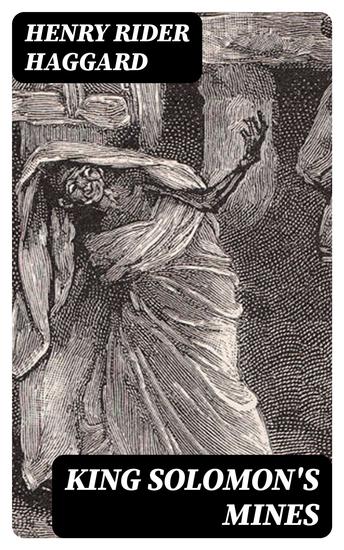
King Solomon's Mines - cover

King Solomon's Mines

Henry Haggard

Publisher: DigiCat

  • 0
  • 0
  • 0

Summary

In "King Solomon's Mines," Henry Rider Haggard masterfully weaves an adventurous narrative that transports readers into the uncharted territories of Africa during the late 19th century. The novel is an early example of the lost world genre, blending exoticism with themes of imperialism and colonial ambition. Haggard employs vivid descriptions and a robust, action-driven prose style that heightens the sense of wonder and danger in the exploration of hidden riches, ultimately addressing the anthropological undercurrents of race and civilization that marked the period. Henry Rider Haggard's background as an English writer, farmer, and adventurer greatly influenced the creation of "King Solomon's Mines." His experiences in South Africa, coupled with his keen interest in mythology and exploration, provided a compelling backdrop for the story. Haggard's immersion in colonial life shaped his vivid imagination and lent authenticity to his portrayal of the African landscape and its people, reflecting both fascination and critique of the imperial worldview of his time. This seminal work is highly recommended for those interested in adventure literature, postcolonial studies, or the historical context of European exploration. Haggard's engaging narrative not only captivates the imagination but also encourages critical reflection on the ethics of empire and the complexities of human interaction across cultures.
Available since: 11/13/2022.
Print length: 230 pages.

Other books that might interest you

  • Les Misérables - Audiobook - cover

    Les Misérables - Audiobook

    Victor Hugo, Classic Audiobooks,...

    • 0
    • 0
    • 0
    Les Misérables is a sweeping epic of human suffering, resistance, and redemption set against the backdrop of 19th-century France. The novel centers on Jean Valjean, a man who transforms from a hardened ex-convict into a symbol of compassion and moral strength. His journey touches the lives of others, including the tragic Fantine, the innocent Cosette, the determined Marius, and the relentless Inspector Javert.Through intersecting stories of love, poverty, injustice, and revolution, Victor Hugo reveals the deep fractures of society while upholding the enduring hope for change. The novel is both a personal tale of redemption and a broader cry for social reform.Profound, emotional, and timeless, Les Misérables remains one of the most powerful novels ever written.
    Show book
  • The Adventure of the Empty House - cover

    The Adventure of the Empty House

    Arthur Conan Doyle

    • 0
    • 0
    • 0
    The Adventure of the Empty House, one of the 56 Sherlock Holmes short stories written by Sir Arthur Conan Doyle, is one of 13 stories in the cycle collected as The Return of Sherlock Holmes.Public pressure forced Conan Doyle to bring the sleuth back to life, and explain his apparently miraculous survival of a deadly struggle with Professor Moriarty. This is the first Holmes story set after his supposed death at the Reichenbach Falls, as recounted in "The Final Problem". The Hound of the Baskervilles had seen the return of a pre-Reichenbach Falls Sherlock Holmes, which only served to whet readers' appetites.Doyle ranked "The Adventure of the Empty House" sixth in his list of his twelve favorite Holmes stories.The story takes place in 1894, three years after the death of Sherlock Holmes. On the night of March 30, an apparently unsolvable locked-room murder takes place in London: the Park Lane Mystery, the killing of the Honourable Ronald Adair, son of the Earl of Maynooth, a colonial governor in Australia. He was in his sitting room, working on accounts of some kind, as indicated by the papers and money found by police. Adair liked playing whist and regularly did so at several clubs, but never for great sums of money. It does, however, come out that he won as much as £420 in partnership with Colonel Sebastian Moran. The motive does not appear to be robbery as nothing has been stolen, and it seems that Adair had not an enemy in the world. It seems odd that Ronald's door was locked from the inside. The only other way out was the open window, and there was a 20-foot (about 6 m) drop below it onto a flower bed, which now shows no sign of being disturbed. Adair was killed with a soft-nosed revolver bullet to the head. No one in the area at the time heard a shot...Famous works of the author Arthur Conan Doyle: A Study in Scarlet, The Sign of the Four, The Adventures of Sherlock Holmes, The Memoirs of Sherlock Holmes, The Hound of the Baskervilles, The Return of Sherlock Holmes, The Valley of Fear, His Last Bow, The Case-Book of Sherlock Holmes, Stories of Sherlock Holmes, The Lost World.
    Show book
  • Chimney Smoke - cover

    Chimney Smoke

    Christopher Morley

    • 0
    • 0
    • 0
    Before time as we know it began, gods and goddesses lived in the city of Asgard. Odin All Father crossed the Rainbow Bridge to walk among men in Midgard. Thor defended Asgard with his mighty hammer. Mischievous Loki was constantly getting into trouble with the other gods, and dragons and giants walked free. This collection of Norse sagas retold by author Padraic Colum gives us a sense of that magical time when the world was filled with powers and wonders we can hardly imagine.
    Show book
  • Sherlock Holmes: The Boscombe Valley Mystery - cover

    Sherlock Holmes: The Boscombe...

    Arthur Conan Doyle

    • 0
    • 0
    • 0
    Immerse yourself in the suspenseful world of Sherlock Holmes with The Boscombe Valley Mystery, the fourth part of the Sherlock Holmes Short Story collection, narrated by Jake Urry. In this thrilling tale by Sir Arthur Conan Doyle, Holmes and Watson are called to the countryside to investigate the murder of Charles McCarthy. With the primary suspect being McCarthy's son, the case seems straightforward, but Holmes's keen insight reveals deeper layers of intrigue. 
    Jake Urry's narration breathes life into the characters and the atmospheric setting of Victorian England. Perfect for both avid Sherlock Holmes fans and new listeners, this audiobook offers a captivating journey through one of Holmes's most challenging cases. Experience the deductive brilliance and suspense of The Boscombe Valley Mystery in this new recording.
    Show book
  • Schalken the Painter - cover

    Schalken the Painter

    Joseph Sheridan Le Fanu

    • 0
    • 0
    • 0
    "He was not a man of this world, and the gold he paid with had a cold, ancient gleam."
    
    In the workshops of 17th-century Leyden, the young and talented artist Godfried Schalken falls in love with Rose, the beautiful niece of his master, Gerard Douw. But their romance is shattered by the arrival of a mysterious suitor: Minheer Vanderhausen. Blue-skinned, breathless, and draped in magnificent but outdated finery, Vanderhausen offers a chest of gold so immense that Douw cannot refuse. Rose is bartered away to this living corpse, disappearing into a nightmare from which there is no return. Years later, Schalken is granted one final, terrifying glimpse of his lost love—and the horrific entity she now serves in the shadows.
    
    The Horror of the Visual: Le Fanu, himself an admirer of art, uses the techniques of the Dutch masters to tell his story. He describes scenes as if they were paintings, utilizing chiaroscuro—the intense contrast between deep shadows and bright light—to hide the grotesque features of the supernatural antagonist. The result is a story that feels as textured and atmospheric as an oil painting come to life.
    
    A Tale of Moral Decay: At its heart, the story is a critique of avarice. Gerard Douw's willingness to sell his niece for a chest of gold is the "true" horror that invites the supernatural in. Le Fanu explores the idea that human greed can be more monstrous than any phantom, leading to a tragedy that haunts the protagonist until his dying day.
    
    The Legacy of the "Demon Lover": Schalken the Painter is a foundational text in the "demon lover" tradition of Gothic fiction. It avoids the typical "clanking chains" of 18th-century ghosts, opting instead for a quiet, physical, and deeply uncanny presence. The final image of the story—the "living" painting—remains one of the most famous and frightening endings in horror literature.
    
    Don't look too closely at the shadows. Purchase this masterpiece of the macabre today.
    Show book
  • The Original Dracula - cover

    The Original Dracula

    Bram Stoker

    • 0
    • 0
    • 0
    Dracula is a novel by Bram Stoker, published in 1897. As an epistolary novel, the narrative is related through letters, diary entries, and newspaper articles. It has no single protagonist but opens with solicitor Jonathan Harker taking a business trip to stay at the castle of a Transylvanian nobleman, Count Dracula. Harker escapes the castle after discovering that Dracula is a vampire, and the Count moves to England and plagues the seaside town of Whitby. A small group, led by Abraham Van Helsing, hunt Dracula and, in the end, kill him. 
     
    Dracula was mostly written in the 1890s. Stoker produced over a hundred pages of notes for the novel, drawing extensively from Transylvanian folklore and history. Some scholars have suggested that the character of Dracula was inspired by historical figures like the Wallachian prince Vlad the Impaler or the countess Elizabeth Báthory, but there is widespread disagreement. Stoker's notes mention neither figure. He found the name Dracula in Whitby's public library while holidaying there, picking it because he thought it meant devil in Romanian.
    Show book