Join us on a literary world trip!
Add this book to bookshelf
Grey
Write a new comment Default profile 50px
Grey
Subscribe to read the full book or read the first pages for free!
All characters reduced
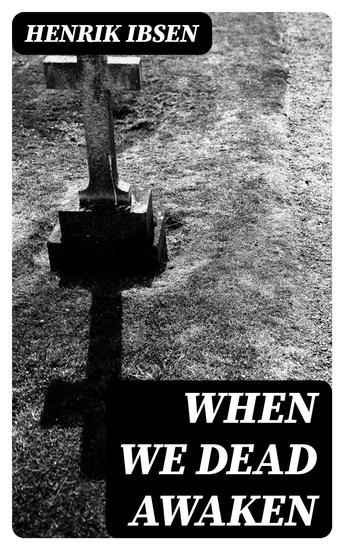
When We Dead Awaken - cover

When We Dead Awaken

Henrik Ibsen

Translator William Archer

Publisher: DigiCat

  • 0
  • 0
  • 0

Summary

"When We Dead Awaken" is the final play of Henrik Ibsen, encapsulating his profound exploration of existential themes and the human condition. Written in 1899, this poignant work employs a symbolist style, blending realism with allegorical elements to investigate the complexities of identity, art, and the inevitability of mortality. Centered around the encounter between a sculptor and the women in his life, Ibsen crafts a narrative steeped in metaphysical inquiry, prompting readers to reflect upon the nature of awakening and the consequences of creative endeavor in a world fraught with societal constraints. Henrik Ibsen, often hailed as the father of modern drama, drew from his own experiences and societal observations when crafting his plays. His struggles with personal identity and the moral dilemmas of artistic expression in a rapidly changing world profoundly influenced his later works. Ibsen's own conflicts with societal expectations and his longing for authenticity resonate through the characters and themes of "When We Dead Awaken," reflecting a culmination of his philosophical and artistic journey. This remarkable play is highly recommended for those exploring the intersections of art, identity, and mortality. Ibsen's rich characterizations and thought-provoking dialogue make it a must-read for scholars and enthusiasts of modern literature alike, inviting readers to confront their own awakenings as they navigate the intricacies of life.
Available since: 05/28/2022.
Print length: 49 pages.


Other books that might interest you

  • Remember Rhymes - cover

    Remember Rhymes

    Michael Bouchard

    • 0
    • 0
    • 0
    A Poetic Love Story told in three acts.
    Show book
  • Time Is The Essence Of Grace - cover

    Time Is The Essence Of Grace

    Sonita Fryman

    • 0
    • 0
    • 0
    When the Father asked, ‘Do you want to write?’ the invitation was presented, and the response was a resounding ‘Yes!’ This book offers a unique opportunity to glimpse into the Father’s heart, as the author put pen to paper, often unsure of what would come forth. Within these pages, you will find solace for the lonely, hope for the longing, and comfort for those who feel forgotten. You may even discover your own story woven into the lines. At times, you will find yourself choking back tears, while at others, smiling at the victories. Yet, you will never be left without hope, just as the Father intended. 
     
    Each poem takes you on a soul-stirring journey, opening up your imagination. Much like the man in the hospital who found his Savior at the very end, or the woman in the park who discovers the answer she desperately seeks, these poems offer connection and guidance. The young teenager, unsure of her path, finds the courage to step out and embrace Hope. The poems in this collection are both inspiring and encouraging. Each one is unique and timely, serving as a gentle reminder of the deep love and care the Creator has for every human being. As you spend time meditating on the lines penned herein, you will undoubtedly find yourself uplifted and enriched.
    Show book
  • The Frozen Earth & Other Poems - Poems from the author of South Riding - cover

    The Frozen Earth & Other Poems -...

    Winifred Holtby

    • 0
    • 0
    • 0
    Winifred Holtby was born on 23rd June 1898 to a prosperous farming family in the village of Rudston in Yorkshire.  
     
    A governess provided her early education before she went to Queen Margaret's School in Scarborough.  After passing the entrance exam for Somerville College, Oxford in 1917, she decided to join the Women's Army Auxiliary Corps in early 1918.  However, soon after her arrival in France, the War ended. 
     
    She returned to study at Oxford and met fellow student Vera Brittain.  After graduating from Oxford, in 1921, Winifred and Vera moved to London, hoping to establish themselves as authors. 
     
    Her early novels met with only moderate success but as a journalist she was both prolific and increasingly well-known.  Her articles graced more than 20 newspapers and magazines, including the Manchester Guardian newspaper.   
     
    Winifred was a committed feminist, socialist and pacifist.  She gave many lectures for the League of Nations Union.  She was also active in the Independent Labour Party and was a campaigner for the unionisation of black workers in South Africa. 
     
    In 1931 the symptoms of high blood pressure, recurrent headaches and bouts of lassitude brought forth a diagnosis of Bright's disease.  She was given two years to live and now put all her efforts into what was to become her crowning achievement: South Riding.  Released posthumously it received lavish praise and enormous sales.  Her canon of works tackle difficult subjects head on, many in unusual ways, brimming with verve and usually strong female protagonists. 
     
    Winifred Holtby died on 29th September 1935 in London.  She was 37. 
    01 - The Frozen Earth & Other Poems by Winifred Holtby - An Introduction 
    02 - The Frozen Earth by Winifred Holtby ''Edwards's Funeral March'' 
    03 - Two Early Poems (No Mourning by Request & The Debt) by Winifred Holtby 
    04 - The Foolish Clocks by Winifred Holtby 
    05 - Prayer by Winifred Holtby 
    06 - Hills in the Transvaal by Winifred Holtby 
    07 - The Grudging Ghost by Winifred Holtby 
    08 - Trains in France by Winifred Holtby 
    09 - The Frozen Earth Symphony by Winifred Holtby - The Dead Musician 
    10 - For the Ghost of Elinor Wylie by Winifred Holtby 
    11 - House on Fire by Winifred Holtby 
    12 - Happy Ending by Winifred Holtby
    Show book
  • The Poetry of William Morris - Poems from the multi talented 19th Century poet painter and activist William Morris - cover

    The Poetry of William Morris -...

    William Morris

    • 0
    • 0
    • 0
    William Morris was born in Walthamstow, London on 24th March 1834 and is regarded today as a foremost poet, writer, textile designer, artist and libertarian.   
    Morris began to publish poetry and short stories in 1856 through the Oxford and Cambridge Magazine which he founded with his friends and financed while at university. His first volume, in 1858, The Defence of Guenevere and Other Poems, was the first published book of Pre-Raphaelite poetry. Due to its luke warm reception he was discouraged from poetry writing for a number of years. 
    However, his return to the form was met with great success in the poem The Life and Death of Jason in 1867, which was followed by The Earthly Paradise, themed around a group of medieval wanderers searching for a land of everlasting life; after much disillusion, they discover a surviving colony of Greeks with whom they exchange stories. In the collection are retellings of Icelandic sagas. From then until his Socialist period Morris's fascination with the ancient Germanic and Norse peoples dominated his writing and he was the first to translate many of the Icelandic sagas into English; the epic retelling of the story of Sigurd the Volsung being his favourite. 
     In 1884 he founded the Socialist League but with the rise of the Anarachists in the party he left it in 1890 and the following year he founded the Kelmscott Press, publishing limited edition illuminated style books.  His design for The Works of Geoffrey Chaucer is a masterpiece. Morris was quietly approached with an offer of the Poet Laureateship after the death of Tennyson in 1892, but declined. 
    William Morris died at age 62 on 3rd October 1896 in London. 
     This volume comes to you from Portable Poetry, a specialized imprint from Deadtree Publishing.  Our range is large and growing and covers single poets, themes, and many compilations.
    Show book
  • The Hound of the Baskervilles - cover

    The Hound of the Baskervilles

    Arthur Conan Doyle

    • 0
    • 0
    • 0
    Sir Arthur Conan Doyle's most celebrated Sherlock Holmes story gets a gloriously funny makeover.
    When Sir Charles Baskerville is found dead on his estate, with a look of terror still etched on his face, and the paw prints of a gigantic hound beside his body, the great detective Sherlock Holmes is summoned from Baker Street, with Dr Watson in tow, to unravel the mysteries surrounding his death, and investigate the ancient curse of the Hound of the Baskervilles...
    Packed full of the verbal and visual ingenuity that hit comedy team Peepolykus is known for, and offering abundant opportunities for riotous comedy and slapstick, The Hound of the Baskervilles will suit any theatre company looking to dust off their deerstalkers for a sublimely funny adaptation of a classic tale.
    It was adapted by Olivier Award nominees Steven Canny and John Nicholson, and first performed by Peepolykus at the West Yorkshire Playhouse, Leeds, in 2007, before transferring to the West End. It has since become a firm favourite with theatre companies – both professional and amateur – around the world.
    This revised, definitive version of the play was first seen in a revival at Theatre by the Lake, Keswick, in 2024, directed by John Nicholson.
    Show book
  • Here and There - Poetry of rural Prince Edward Island - cover

    Here and There - Poetry of rural...

    Roderick MacDonald

    • 0
    • 0
    • 0
    In this song-like collection of 50 short poems inspired by rural Prince Edward Island, Canada, Roderick MacDonald elevates the commonplace and simple in entertaining and thoughtful verse. 
    Through his poetry MacDonald invites the listener to accompany him on a gentle walk through the changing seasons on his beloved island. His words evoke the beach: sand under foot, lapping waves, and spectacular sunsets anointing old, abandoned lighthouses. He celebrates the harvests of both land and ocean. With him we tread red-dirt roads past fields of barley and tiny fishing harbours. We feel the island’s rhythms and glimpse its treasures: soaring eagles, shimmering lakes, and crackling campfires at end of the day…. 
    Listen now and be transported!
    Show book