Join us on a literary world trip!
Add this book to bookshelf
Grey
Write a new comment Default profile 50px
Grey
Subscribe to read the full book or read the first pages for free!
All characters reduced
Notes on Democracy - cover

Notes on Democracy

H. L. Mencken

Publisher: e-artnow

  • 0
  • 0
  • 0

Summary

Notes on Democracy is a critique of democracy. The book places political leaders into two categories: the demagogue, who "preaches doctrines he knows to be untrue to men he knows to be idiots" and the demaslave, "who listens to what these idiots have to say and then pretends that he believes it himself." Mencken depicts politicians as "men who have sold their honor for their jobs."
Available since: 01/25/2022.
Print length: 128 pages.
Other books that might interest you

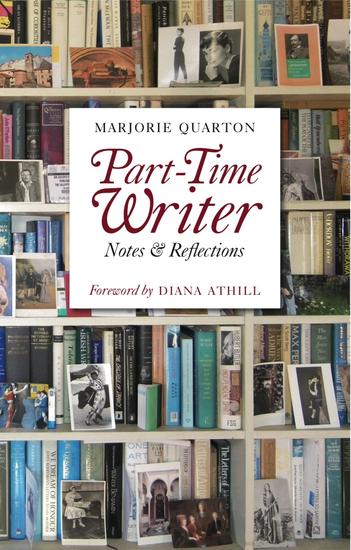
  • Part-Time Writer - Notes and Reflections - cover

    Part-Time Writer - Notes and...

    Marjorie Quarton

    • 0
    • 0
    • 0
    Part-time Writer guides the reader through all aspects of writing – from the embryonic stages of researching and planning, to the hard slog of the writing and editing, through to the presentation of the manuscript, and finally, approaching agents and publishers. At each stage, the author explains how she did it – and how the reader can do it too. * How can I write engaging dialogue? * What can I do to make my characters 'live' on the page? * Must I always 'show and not tell'? * How can I transform a hobby into a book? * When is the right time to show my work to others? * How should I present my manuscript? * Do I need an agent? * Should I self-publish? * Where can I find the time to write a novel? In her inimitable style, Marjorie Quarton merges literary memoir, anecdotes and straight talking to provide invaluable insights into the realities of being a writer, while offering indispensable advice on the trade, making this book a must-have for any aspiring author.
    Show book
  • The History of Emotions - A Very Short Introduction - cover

    The History of Emotions - A Very...

    Thomas Dixon

    • 0
    • 0
    • 0
    Emotions are complex mental states that resist reduction. They are visceral reactions but also beliefs about the world. They are spontaneous outbursts but also culturally learned performances. And just as our emotions in any given moment display this complex structure, so their history is plural rather than singular. The history of emotions is where the history of ideas meets the history of the body, and where the history of subjectivity meets social and cultural history. 


    In this Very Short Introduction, Thomas Dixon traces the historical ancestries of feelings ranging from sorrow, melancholy, rage, and terror to cheerfulness, enthusiasm, sympathy, and love. The picture that emerges is a complex one, showing how the states we group together today as "the emotions" are the product of long and varied historical changes in language, culture, beliefs, and ways of life. 


    With examples from ancient, medieval, and modern cultures, this Very Short Introduction sheds new light on our emotions in the present, by looking at what historians can tell us about their past. Dixon explains the key ideas of historians of emotions as they have developed in conversation with psychology and psychiatry, with attention paid especially to ideas about basic emotions, psychological construction, and affect theory.
    Show book
  • Late night hotel gym - Gay erotica short story - cover

    Late night hotel gym - Gay...

    Finn Meller

    • 0
    • 0
    • 0
    After a grueling trip filled with endless meetings and relentless jet lag, I found solace in the hotel’s impressive gym. Switching to evening workouts, I enjoyed a rare moment of solitude until a chance encounter with a friendly stranger named Robert. What started as a casual conversation in the gym could lead to something much more intriguing. 
    Dive into my story where the mundane turns extraordinary. With a backdrop of business travel and the unexpected connections made along the way, this book promises a blend of intense personal moments and thrilling encounters. My journey from exhaustion to excitement, coupled with the allure of new feelings, makes this a must-read for anyone who loves a mix of real-life struggles and serendipitous adventures.
    Show book
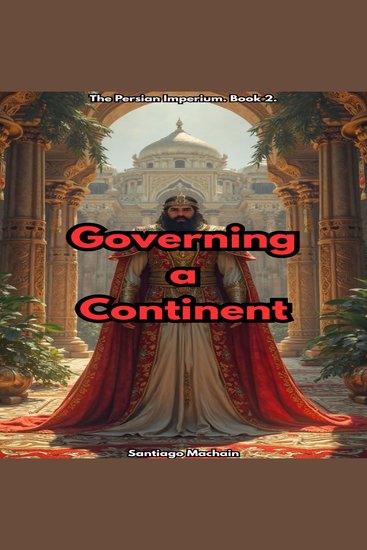
  • Governing a Continent - cover

    Governing a Continent

    Santiago Machain

    • 0
    • 0
    • 0
    Governing a Continent takes readers inside the real machinery of large-scale rule—where institutions outlast leaders, where roads and courts shape daily routines, and where culture, science, and trade knit diverse peoples into a common future. Through vivid analysis and human-centered storytelling, the book reveals how stable governance is built not only by grand strategy but by dependable services, fair laws, resilient budgets, and inclusive rituals. 
    Spanning provincial administration, taxation, logistics, military pluralism, legal pluralism, court ceremony, work and markets, art and identity, and the governance of knowledge and time, this volume shows how empires and federations maintain continuity through crisis and change. It explains how legitimacy is earned every day—at border posts and bus stops, in clinics and classrooms, through the choices of judges, engineers, quartermasters, and archivists.
    Show book
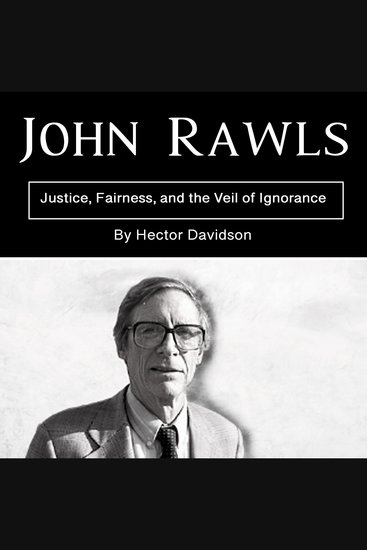
  • John Rawls - Justice Fairness and the Veil of Ignorance - cover

    John Rawls - Justice Fairness...

    Hector Davidson

    • 0
    • 0
    • 0
    John Rawls, one of the most influential philosophers of the 20th century, fundamentally reshaped the field of political philosophy with his groundbreaking work, A Theory of Justice (1971). His vision of "justice as fairness" offered a robust framework for understanding social cooperation and the principles that should govern a just society. By blending elements of social contract theory with contemporary concerns about inequality and human rights, Rawls addressed timeless questions about the nature of justice and the moral obligations of institutions.  
    Born on February 21, 1921, in Baltimore, Maryland, Rawls’ early life was marked by tragedy and intellectual rigor. He lost two brothers to illness at a young age, experiences that profoundly influenced his outlook on morality and the fragility of human life. Rawls attended Princeton University, where he earned his undergraduate degree in philosophy, and later completed his doctorate at Harvard University after serving in the U.S. Army during World War II. These formative years shaped his commitment to exploring ethical frameworks that could withstand the complexities of a modern, pluralistic world.  
    Rawls’ magnum opus, A Theory of Justice, introduced several key concepts that would come to define his philosophy. Central to his work was the idea of the "original position," a hypothetical scenario in which individuals design the principles of justice behind a "veil of ignorance." This veil prevents individuals from knowing their social status, wealth, abilities, or personal biases, compelling them to choose rules that are fair and impartial. The result is a system that prioritizes equal basic liberties for all, coupled with the difference principle, which allows social and economic inequalities only if they benefit the least advantaged members of society. 
    Show book
  • Summer of 1876 The: Book Summary & Analysis - cover

    Summer of 1876 The: Book Summary...

    Alexander Pike

    • 0
    • 0
    • 0
    This content is an independent and unofficial summary created for informational and educational purposes only. It is not affiliated with, authorized, approved, licensed, or endorsed by the original author or publisher. All rights to the original work belong to its respective copyright holders. This summary is not intended to substitute the original book, but to offer a concise overview and interpretation of its main ideas.


    Step into one of the most pivotal seasons in American history—a time of invention, ambition, and reckoning. The Summer of 1876 brings to life a whirlwind of events that reshaped a nation on the edge of transformation. From the smoky battlefields of Little Bighorn to the clinking poker chips of Deadwood, from the rising hum of telegraphs to the thunder of trains racing across the plains, this gripping chronicle captures a summer when destiny galloped forward.
     
    Meet iconic figures like George Armstrong Custer, Wild Bill Hickok, and Wyatt Earp—not as legends, but as men driven by urgency, ego, and fate. Witness how innovation collided with conflict, and how small choices sparked massive consequences. With vivid detail and cinematic pace, this audiobook transforms the past into a blueprint for personal growth, leadership, and decision-making in high-stakes environments.
    Show book